
The writer and collector behind @rehaut on growing up around a 5513, owning fewer watches, and why there’s no such thing as a “well-rounded” collection.
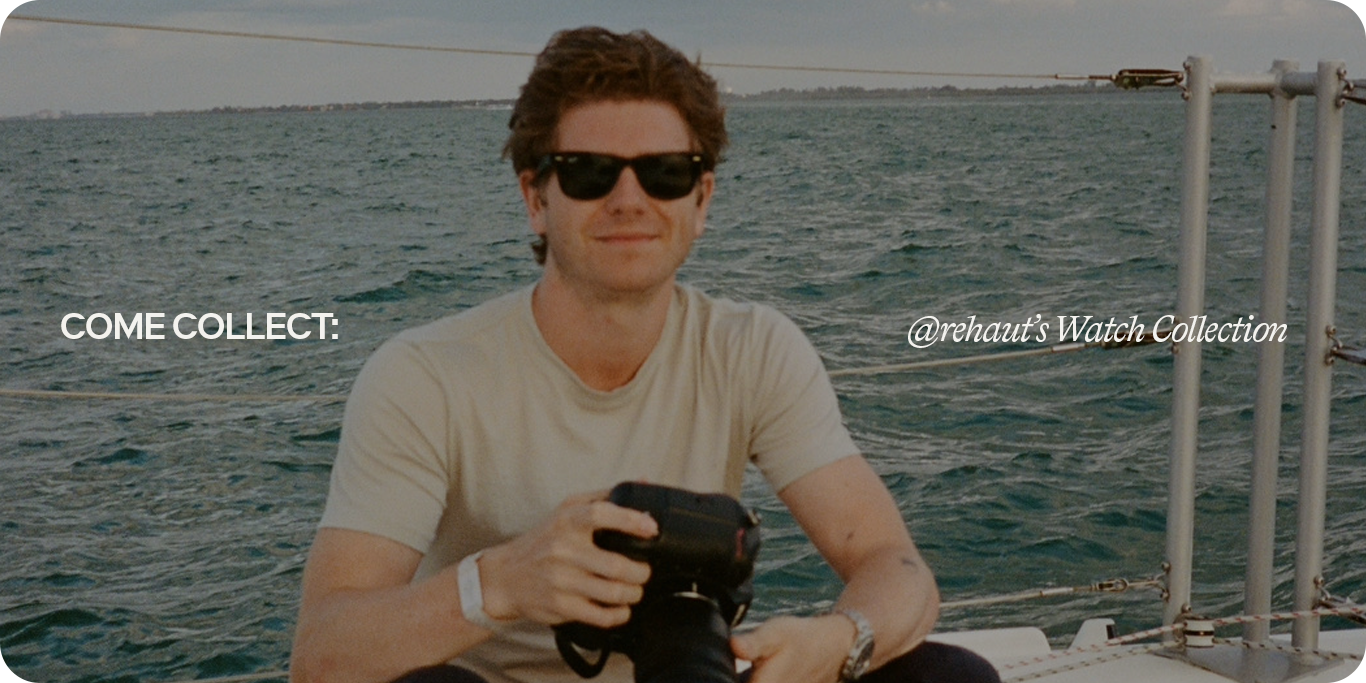
For Austin Rogers, the watch came before the collecting. Growing up, his grandfather wore a Rolex Submariner ref. 5513 that he’d bought from a coworker who needed money for motorcycle parts. The bike eventually disappeared. The Submariner didn’t. Decades later, it remains on his grandfather’s wrist, and is still the watch Rogers thinks of when he thinks about watches at all.
These days, Rogers is better known to collectors as @rehaut, where his writing tends to approach watches from angles that don’t fit neatly into a press release. Sometimes that means obsessing over a tiny technical detail. Other times it means zooming out and asking how a watch fits into a much bigger human story.
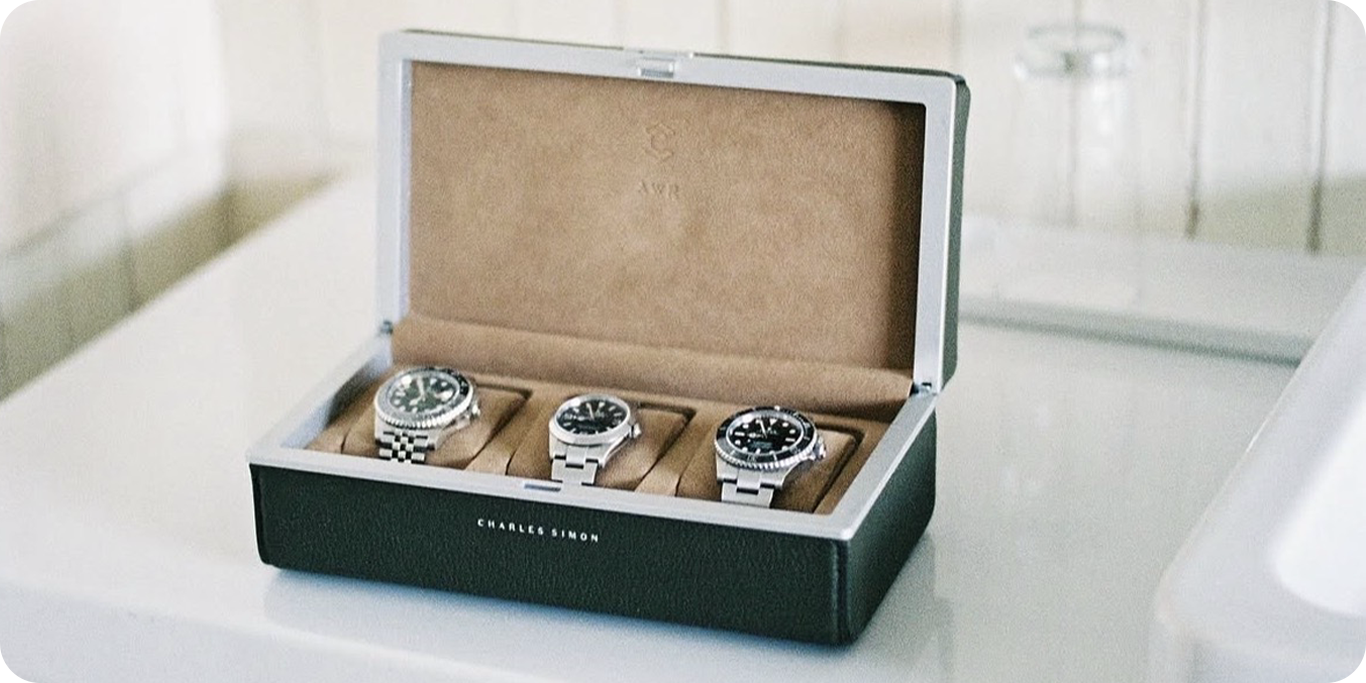
His own collection is surprisingly restrained: mostly steel Rolex, by his admission, and an enduring preference for the simplest possible dive watch. But working in watch media has exposed him to everything from Chronoswiss and Girard-Perregaux to Laurent Ferrier, complicating a taste he once thought was fairly settled.
We spoke with Rogers about inherited taste, learning from watches you wouldn’t necessarily buy, and why collectors might be better off forgetting almost everything they’ve been told they’re supposed to own.
Isaac Wingold: When you think back to becoming interested in watches, what first pulled you in?
Austin Rogers: That’s actually super easy for me. When I was growing up, my grandpa wore a 5513 Submariner. He got it off a coworker who wanted to sell it for money for motorcycle parts. The story goes that Grandpa bought it from him for basically nothing; the guy eventually got rid of the bike, and he had nothing to show for it.
As I grew up, that watch was pretty much always on my grandpa’s wrist. As far as I’m aware, it has literally never been serviced, which is crazy. It’s gotten this really nice, worn-down look.
When I think about a watch, that’s the one I think of. As a kid, I wore a Timex Weekender. It was as close as I could get to that feeling. Now that I’m an adult, I have my own Submariner and get sort of the same feeling looking at it.
IW: Is your grandfather’s watch still in the family?
AR: For sure. Grandpa’s still around and still wearing it. But he knows how much that watch means to me, and he’s made it clear that someday it’ll stay in the family..
IW: How did your own collection progress from the Timex?
AR: Throughout childhood it was that Weekender, which also got me into NATO straps. They sold them at Target, which was huge for a suburban kid. You could just go in and buy their version of a NATO.
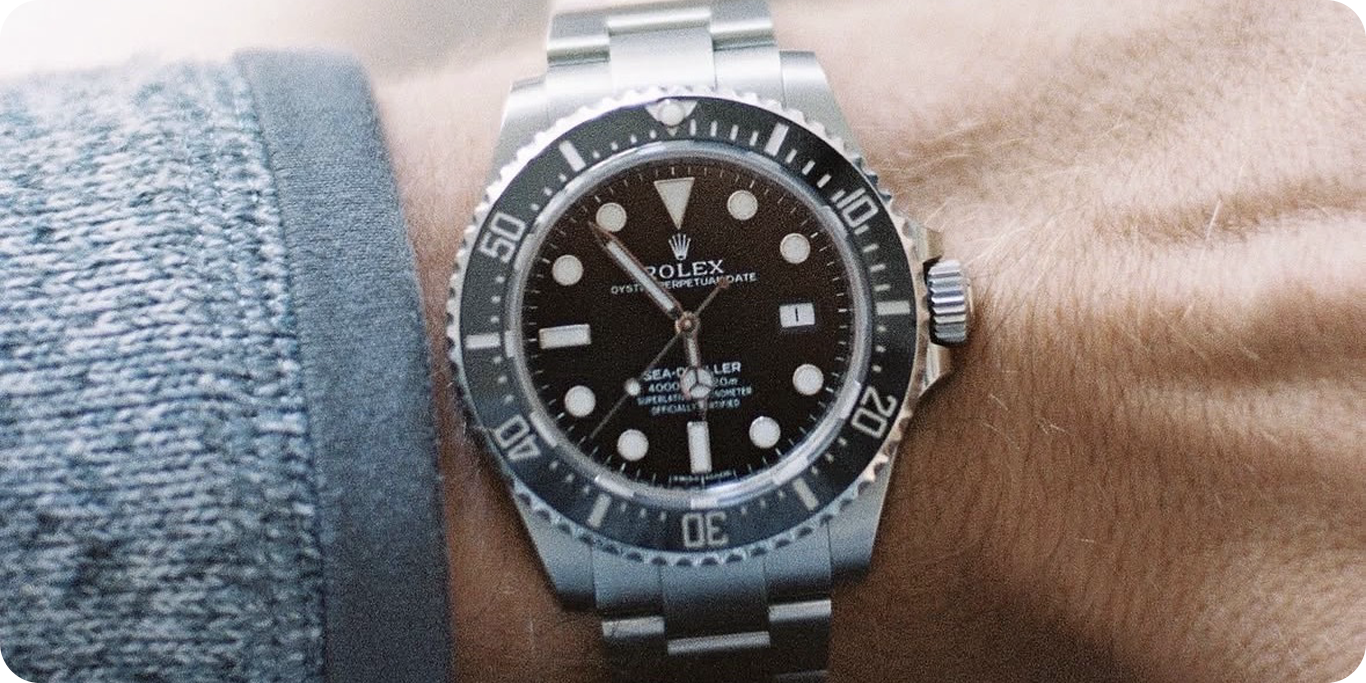
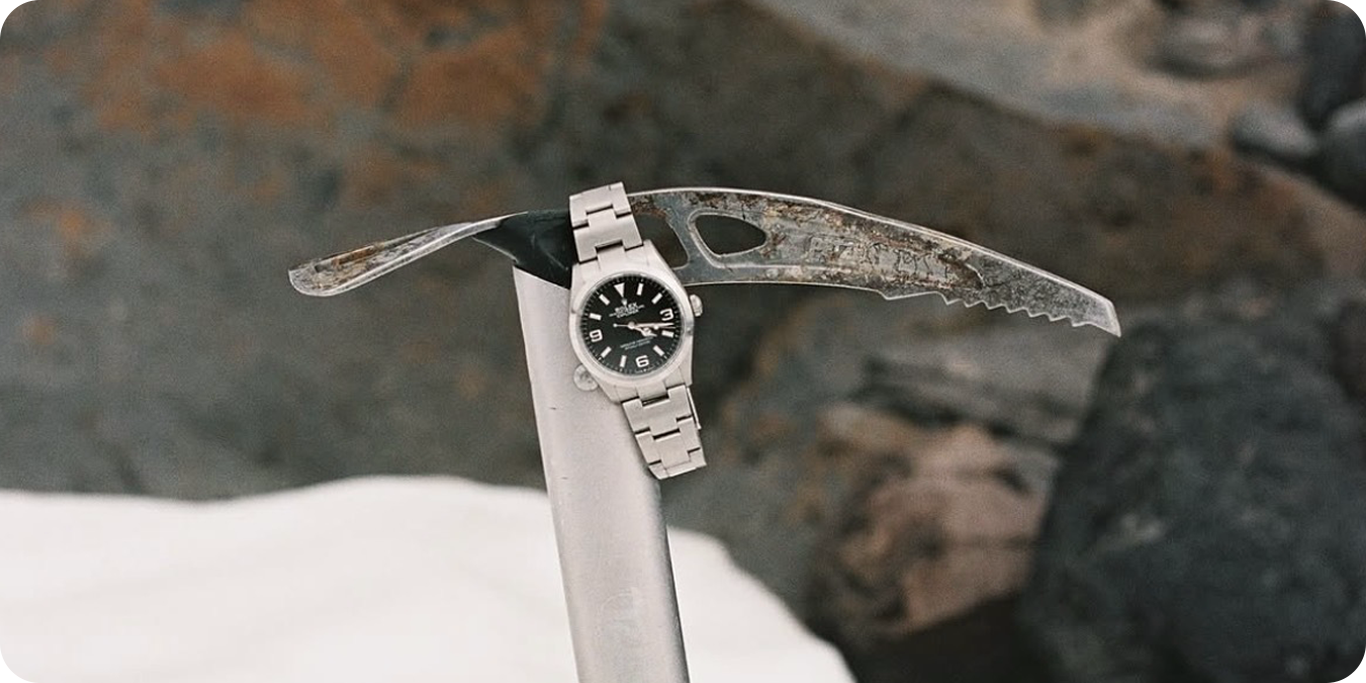
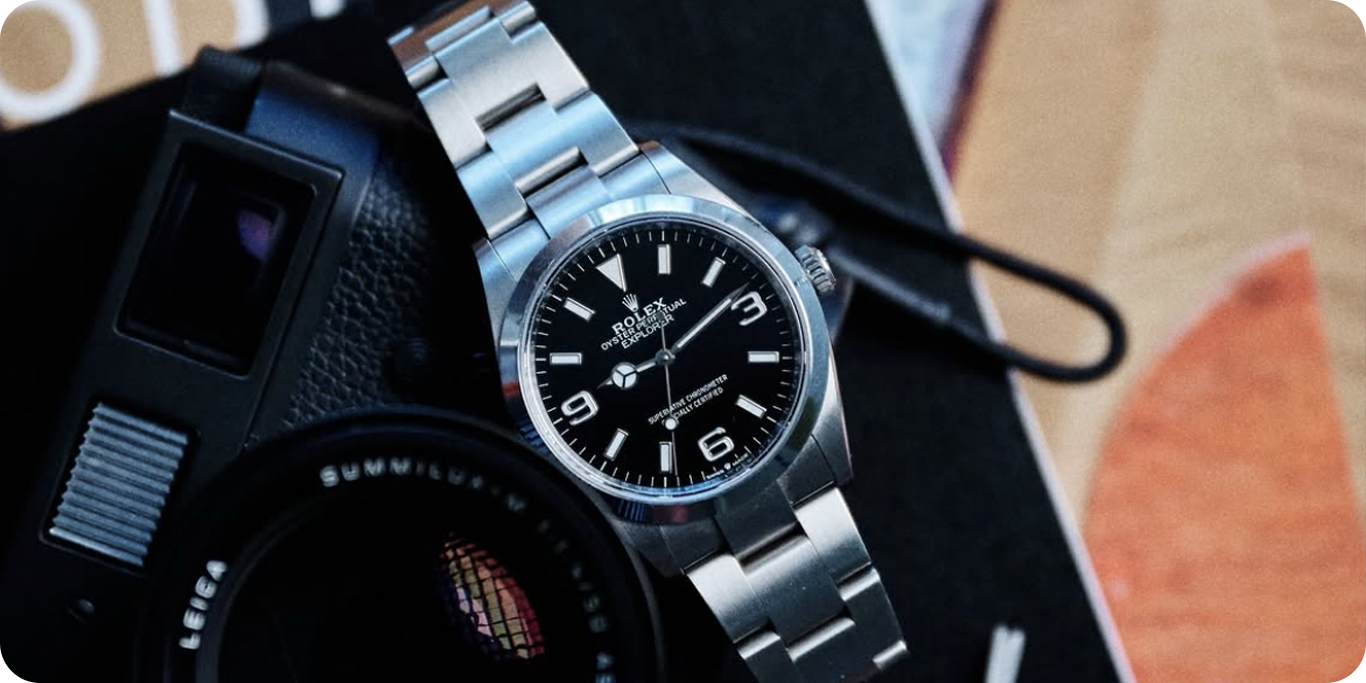
Then in college I got one of the Timex and J.Crew collaborations—same sort of idea, but a little nicer. From there, it got more serious. I really love Rolex, so there have been a couple Explorers, a few Explorer IIs, a Sea-Dweller, that sort of thing.
Right now, I’m really spoiled by the watches I have access to through media, so I don’t actually own too many. I really like the idea of being more minimal with it. As far as my personal collection goes, it’s a lot of really identical-looking steel Rolexes.
IW: Does having access to watches through media make owning fewer of them easier?
AR: Totally. It’s been such a gift to have all these incredible watches come in and out of my life for a few weeks at a time. I get to scratch that itch of, “What is it like having a ceramic IWC?” or “What is it like having a Parmigiani?” without needing to pony up the twenty or forty thousand dollars required otherwise.
At this point, I’m the guy with the friend in watch PR who can send you the damn watch.
IW: You also came into watches during a period when watch media was expanding enormously. Did that accelerate the interest?
AR: Absolutely. I’m an OG Hodinkee reader and viewer—to the point where, when I made my first trip to New York in college, I sought out Little Prince, the restaurant where they shot the first John Mayer Talking Watches. I was like, “I’ve got to go.”
It’s been such a wonderful time to get into the hobby. There’s almost too much good media now, whether it’s big institutional websites, indie Substacks, or independent magazines. Knowledge has never been more accessible.

IW: One thing that stands out in your writing is that you’re willing to question the received wisdom around watches rather than simply repeat whatever a brand says is important. Where does that instinct come from?
AR: I’m really privileged to be in this as an enthusiast. The lens I bring to what I write and speak about is basically: What do I find interesting about this? Usually that isn’t what appears in the press release.
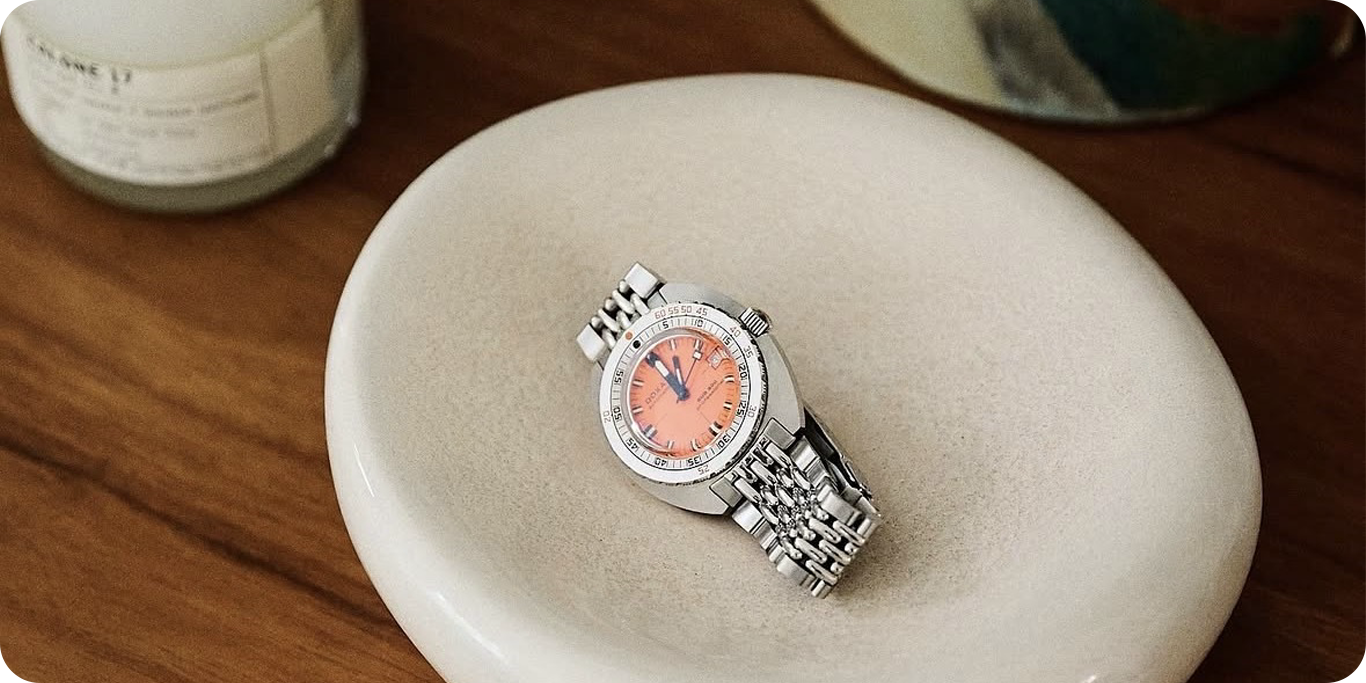
I’m a big Doxa guy, for example. They recently did another limited edition around Clive Cussler. There was all this fanfare about the books and everything, but what was really cool to me was that they had done a sandwich-style dial. I think it was the first time they’d ever done that, and you almost had to go through the press release with a microscope to find it.
I’d like to think the enthusiast side of the collecting community is more interested in those little thoughtful details than in the big, bombastic stuff. I’m going to get hyped about the improvements Zenith made to its clasp.
IW: So what makes watch writing interesting to you?
AR: I think things get more interesting when you either zoom really far in or really far out.
You can be Jack Forster and write 10,000 words about, “Here’s what a spring bar is. Here’s where it came from.” Or you can zoom way out and ask how a watch fits into a bigger human story. Both are really appealing to me.
A lot of watch media online can fall into the same ground that’s been trodden pretty thoroughly. “Did you know Tudor is actually owned by Rolex?” There has to be something else there.
IW: Who's influenced the way you think about watches and watch media?
AR: Stephen Pulvirent and Justin Hast are right at the top, both independently and now together with The Enthusiasts. I don’t want to call them my North Star, but when it comes to thoughtful, fun, kind, considerate media, they’re really hard to beat.
Jack Forster is the godfather of getting lost in the sauce on the most minute thing and somehow making it profound. Tony Traina and Andy Hoffman are both doing incredible work, too.
The coolest thing is that they’re all such great people. Over the last year, going from being relatively anonymous in the watch world to being on a semi-first-name basis with some of these people has been absolutely buck wild.
IW: Having all these watches come through your hands, which ones have challenged your existing taste most?
AR: That’s probably been the most interesting part. I have this really narrow lane personally. It’s basically: man, I like dive watches without a date. I’m pretty locked in.
But then I’ll get something from a brand I would never have sought out as a consumer.
Chronoswiss is a good example. I’d never really given them much thought, then I spent a couple of weeks with their Pulse GMT and thought it was phenomenal. It was a watch I never would have pulled out of a case myself.
Girard-Perregaux is another one. Zenith has been really interesting, particularly the GFJ. And I have this crazy love for hyper-expensive, time-only watches now. The GFJ, Chopard L.U.C., Laurent Ferrier—I always have a tab open on my computer with a Classic Origin staring at me.
Any opportunity I’ve had to broaden my taste has been such a delight.
IW: What is it about those very simple, very finely made watches that appeals to you?
AR: There’s nothing to hide behind.
The simpler the watch, the more exceptional every component needs to be. If you don’t have crazy complications, if it’s relatively small and maybe it’s just on a strap, all the individual details become much more important. When they all work together, it becomes this phenomenal thing.
It’s a genre I really hadn’t had much exposure to as a consumer, and I’ve absolutely fallen in love with it. It’s dangerous, but holy cow, there’s an incredible amount of craftsmanship going into these watches.
IW: You’ve watched the hobby grow dramatically since you first got into it. How do you think collecting has changed?
AR: There was this sort of crazed thing that happened around COVID, but I think it left behind a lot of legitimate new people who are interested, which is really cool.
Watches feel like a much more normal thing to be into in 2026. When I was in college, it was definitely more of a fringe, weird thing. Now it’s pretty normal.
IW: What do you hope collectors get better at?
AR: My hope is that collectors get better at listening to what they actually like and finding their own voice, rather than collecting by checklist. You don’t have to say, “Okay, I need a 15202. I need my Rolex.” Get weird with it.
Find the thing IWC made in 2008 that you love, and spend a year trying to track it down. Get into funky, transitional ‘90s Breguets.
There’s this enormous back catalog of watches, and now there’s an enormous group of people looking around. Hopefully that means we get much more variety in what people are into and what they can bring to the conversation based on their own idiosyncratic interests.
IW: There’s a funny tension there, because your own collection is still pretty straightforward.
AR: I do sometimes feel hypocritical about what I wear versus what I’m nominally interested in.
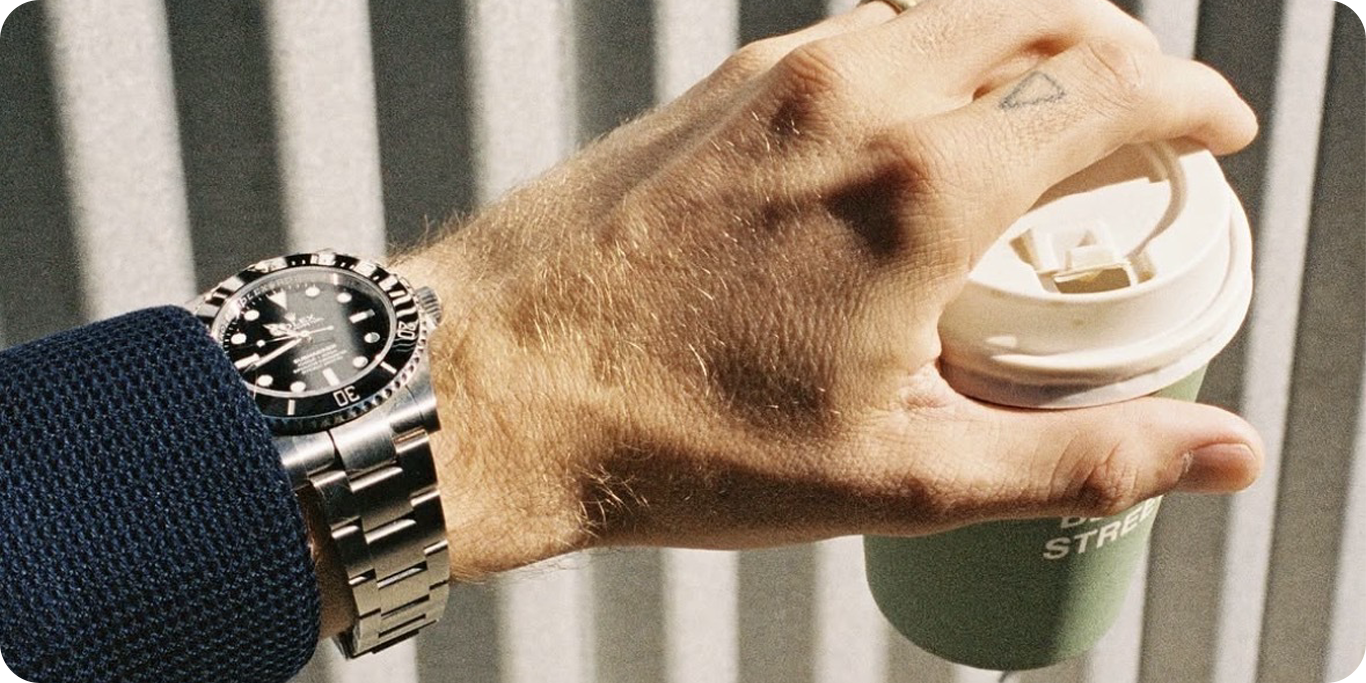
I think a lot of it is just liking this really simple, pared-back era of my own collecting. I’m a pretty simple dude otherwise. Nine times out of ten, if you bump into me on the street, I’m wearing a gray T-shirt, and I’ve got a Sub on. It’s not something I spend much time thinking about in the morning.
But I like broadening my taste. Whether that means something actually comes into my collection, or it’s something I’m interested in academically and can enjoy in that way before moving on, is still TBD.
IW: If there were one piece of commonly repeated collecting advice you could wipe from the internet, what would it be?
AR: Almost every platitude could probably go. For beginners specifically, there’s this idea that you need to ask: “Do you have a dress watch? Do you have a chronograph? Do you have a diver?” If you like each of those categories, fantastic. If you have a need for them, fantastic. But the idea that you need to make a “well-rounded collection” is crazy to me.
So many serious watch people you encounter will show you a collection where, to a layperson, everything looks exactly the same. But those watches mean the world to them.
Maybe the biggest thing for me is just the knee-jerk reaction to anyone telling you what you should be into. “If you don’t have a Tank, what are you doing?” Well, I don’t wear a lot of leather. My wife has a Tank that she loves. It’s just not for me.
IW: So what rabbit hole are you going down right now?
AR: Watches that combine complications or ideas that don’t really make sense together. Dive chronographs are a great example. Historically, chronographs are terrible in the water. You have these pushers that can effectively pump water into the case when actuated underwater.
But a few times throughout history, brands have specifically made chronographs with diving in mind. Doxa has done it. IWC has done it. JLC has done it.
Those weird juxtapositions are really cool to me right now. Something tangentially similar is the Breguet Type XX. It’s Breguet, this high-horology house, making a really simple military-ish chronograph. I love seeing how a high-horology brand approaches a sporty watch.
I like when you get that little wink from a brand that says, “We’re all just having fun here.” Breguet hasn’t had a military contract supplying aviation chronographs for probably 50 years, but they’ll still make you one if you want it. That’s kind of cool.
Have someone in mind that you'd like to see featured? Interested in submitting a story of your own? Reach out to us at editorial@getbezel.com.
- Isaac Wingold
About Bezel
Bezel is the top-rated marketplace for buying and selling luxury watches. We give you access to tens of thousands of the most collectible watches from the world's top professional sellers and private collectors. Every watch sold goes through our industry-leading in-house authentication process, so you can buy, sell, and bid with confidence.
Download the Bezel app on the iOS App Store or start searching for your next watch today at getbezel.com.
Bezel is available to download on the App Store now. Please reach out to our concierge team if there is anything we can help you with!

©2026 Bezel Inc.
All rights reserved.