
From dive watch utility to design statement, discover how luminous watches evolved and what separates good lume from great.
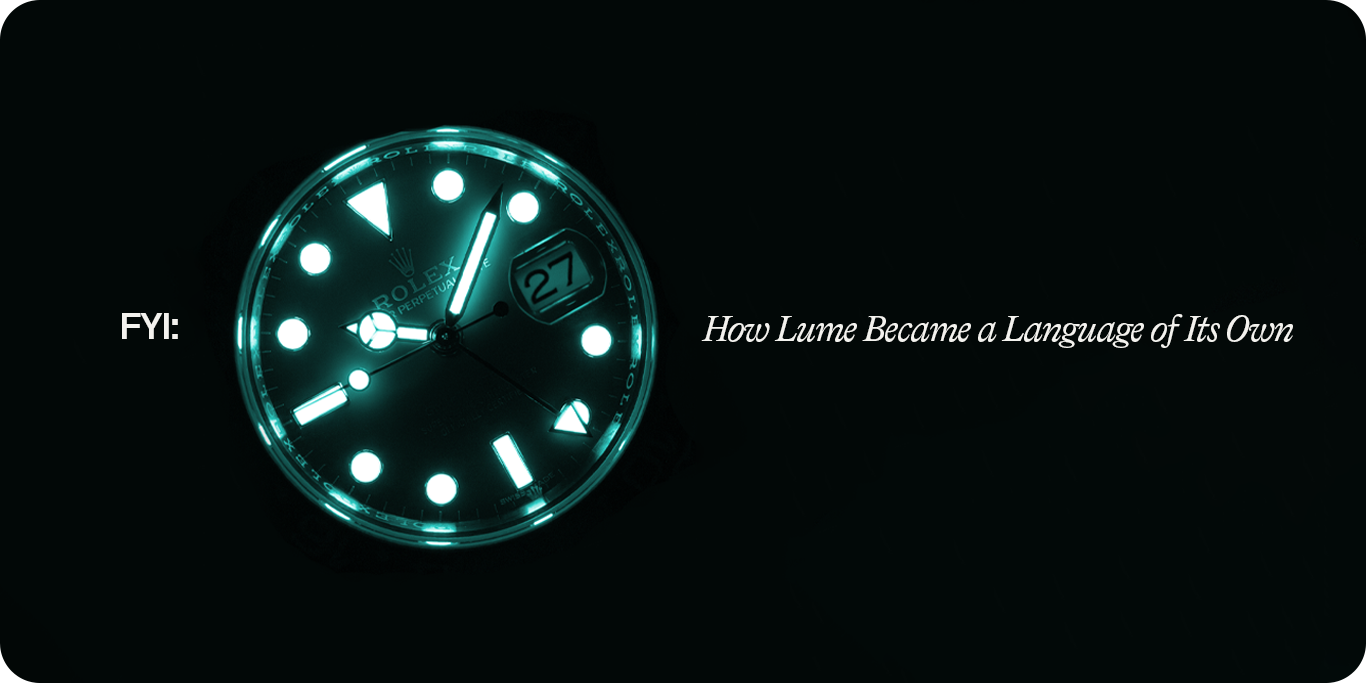
There’s a particular moment that happens when you step out of a dark theater and glance at your wrist. The dial doesn’t just sit there. It answers back.
For most of watchmaking history, luminous applications existed for one reason: legibility. If a watch couldn’t be read at night, underwater, or in a cockpit, it wasn’t doing its job. But somewhere along the way, watch lume stopped being purely functional. It became aesthetic. Emotional. Even competitive.
Today, collectors debate brightness, longevity, and color tone the way they might argue over case proportions or dial texture. Lume has moved from the margins to the center of the conversation.
Early luminous watches were tools, not indulgences. Soldiers needed to read time in the trenches. Pilots needed visibility in unlit cockpits. Divers depended on glowing markers to measure decompression stops.
The earliest solutions were radioactive. Radium-based paint, introduced in the early 20th century, glowed continuously without needing light exposure. It was effective, but dangerous. By the 1960s, tritium replaced radium as a safer alternative, though it too relied on radioactivity and eventually faded as its half-life ran its course.
Modern luminous watches rely primarily on Super-LumiNova, a non-radioactive photoluminescent material that charges under light and emits a glow in darkness. It is brighter, safer, and more stable than its predecessors, but the objective remains the same: make time readable when light disappears.
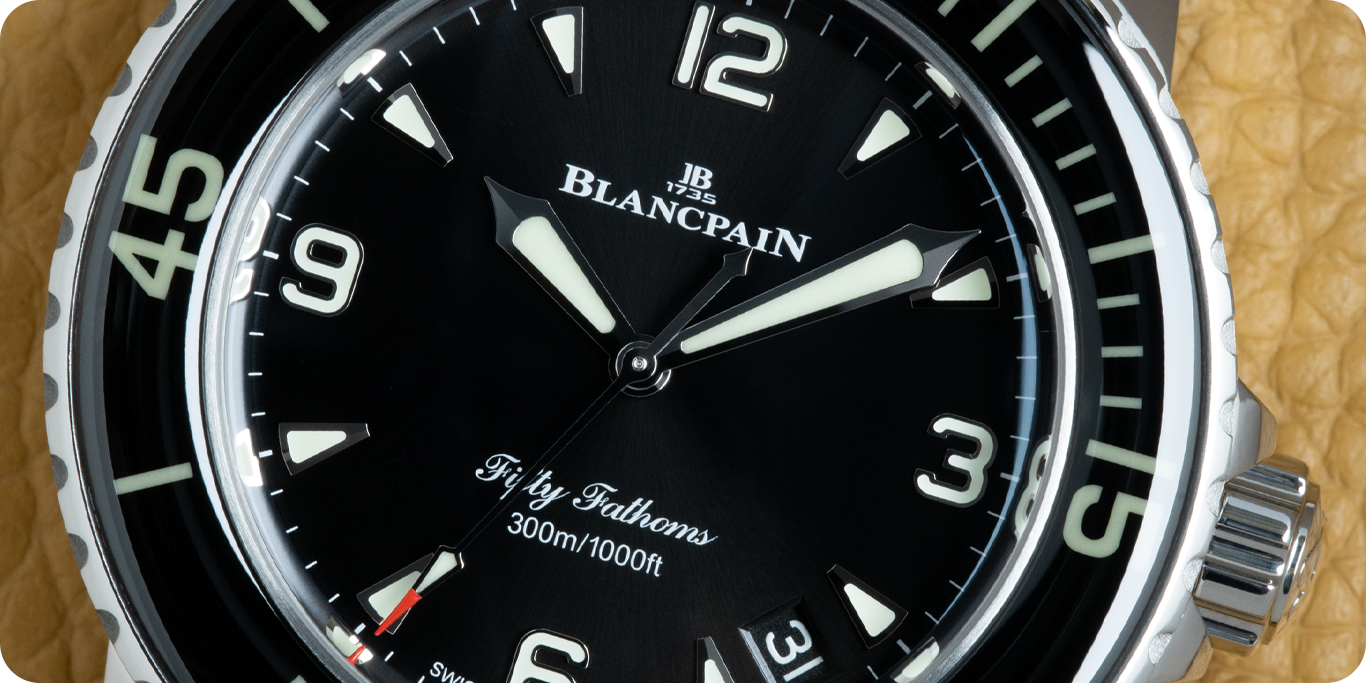
Dive watches still depend on it. A watch like the Blancpain Fifty Fathoms or a Panerai Luminor would feel incomplete without generous luminous markers. Even a Rolex Submariner, including references like the 14060, carries forward that utilitarian expectation.
The principle hasn’t changed. Legibility comes first.
At some point, though, glow stopped being invisible engineering and became part of the design brief.
Modern watch lume is rarely accidental. It outlines hands with precision. It highlights applied numerals. It isolates complications. In some cases, it transforms the entire dial after dark.
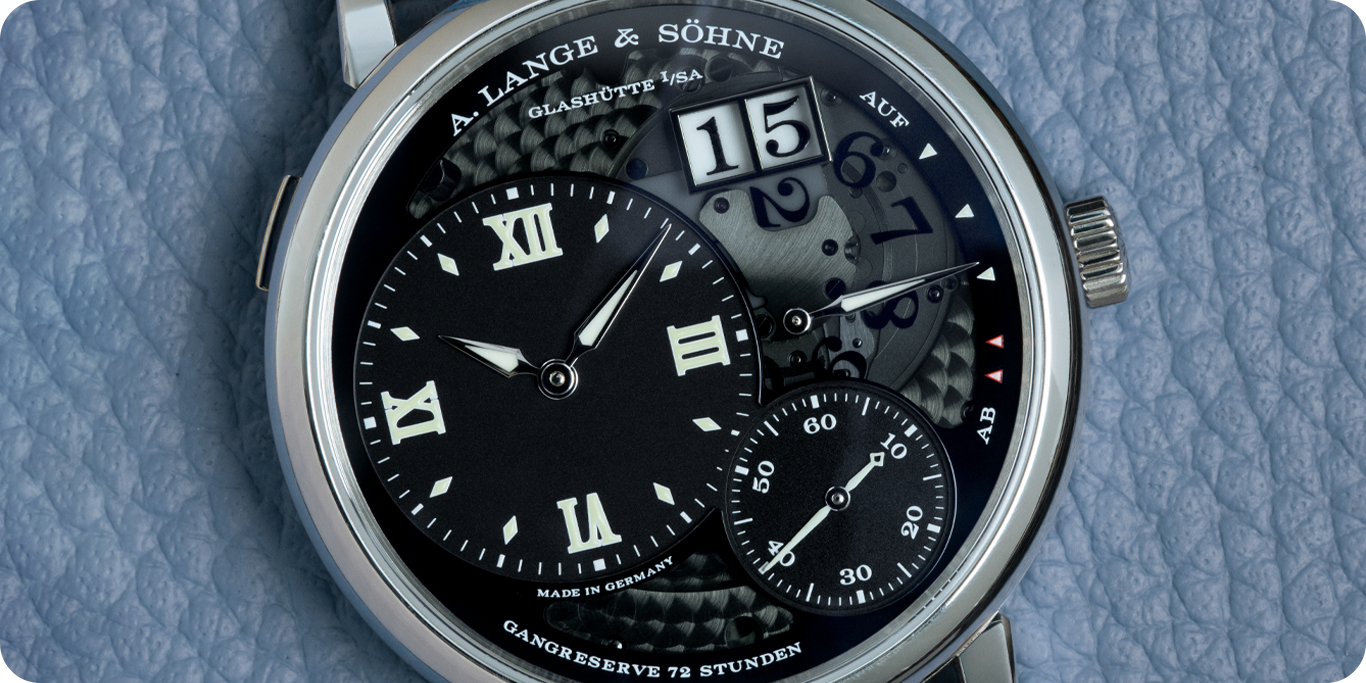
The A. Lange & Söhne Grande Lange 1 Lumen, for example, makes its date discs glow through a semi-transparent dial. The effect feels deliberate rather than decorative. Other brands use lume to shift mood entirely, turning a restrained daytime watch into something more graphic at night.
Even brands not traditionally associated with tool watches now incorporate luminous details subtly. A Patek Philippe Calatrava may only glow at the hands, but that small gesture changes how the watch behaves after sunset. Lume has become a second dial of sorts, one that only reveals itself under certain conditions.
Collectors notice the differences. Some prefer the icy blue glow of modern Super-LumiNova. Others chase the warm, creamy patina of aged tritium. The color, the intensity, even the fade rate can shape how a watch feels on the wrist.
There is also something undeniably immediate about lume. Cup your hands over the dial for a moment. Step into a dim hallway. Walk outside after dusk. The watch comes alive in a way that feels almost mechanical, even though the mechanism itself is hidden.
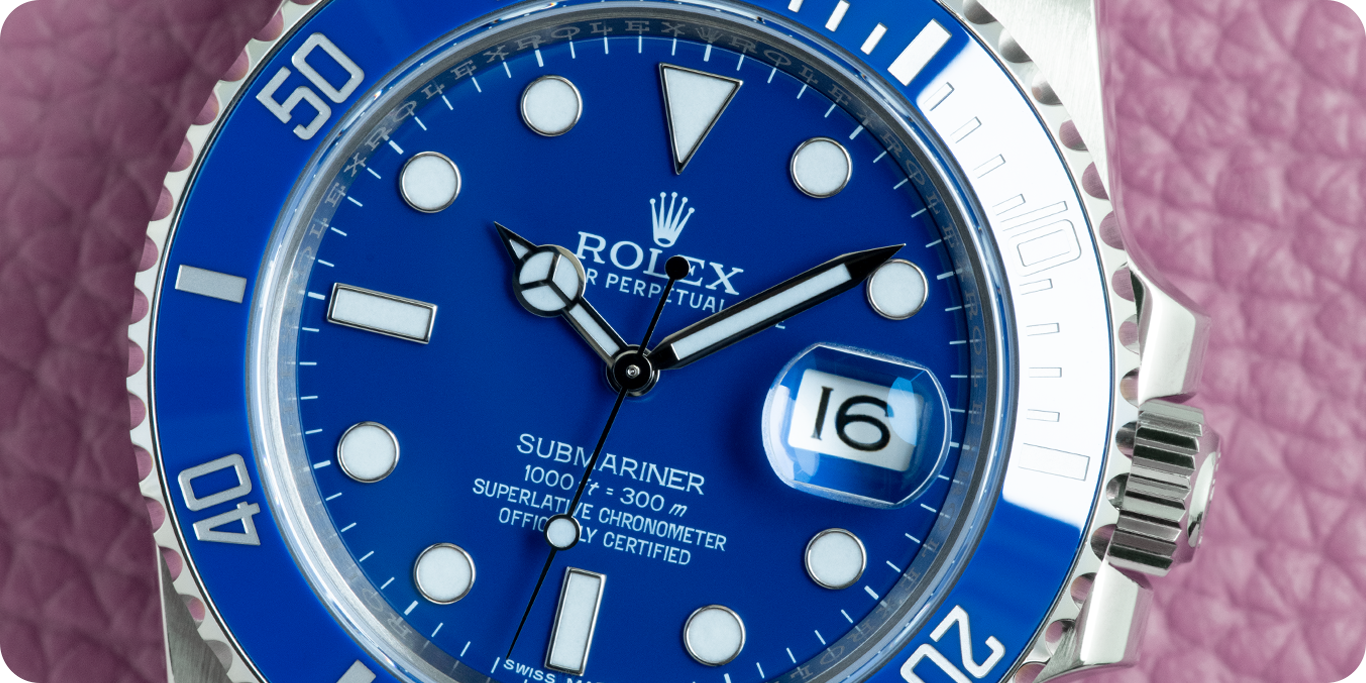
Some watches lean into that effect. A Rolex Submariner Date “Smurf” amplifies its blue tones under low light. The Omega Planet Ocean Ultra Deep glows with the intensity you’d expect from a watch designed for extreme depths. Even bolder pieces, like certain Royal Oak Offshore models, use lume to emphasize architecture and contrast.
None of this is strictly necessary. Smartphones tell time perfectly well in the dark. But lume taps into something older than convenience. It makes the watch feel active, responsive. It reinforces the idea that a mechanical object can still adapt to its environment without a battery or a backlight.
In an era where most screens glow by default, there’s something satisfying about a dial that earns its light.
Not all luminous applications are equal. Thickness matters. Surface area matters. The formulation itself matters. A thin strip of lume may look elegant but fade quickly. A generously filled diver’s dial will often glow longer and more evenly.
Execution also plays a role. Clean application, crisp edges, and thoughtful placement can elevate even a simple three-hand watch. Poorly applied lume, on the other hand, is immediately visible.
For collectors, this is part of the appeal. Evaluating lume means paying attention to something that only reveals itself under certain conditions. It rewards curiosity.
In the end, luminous applications still serve the same practical purpose they always have. They allow a watch to function when light is gone. But they also do something less measurable. They give the watch a second life after dark.
Bezel is the top-rated marketplace for buying and selling luxury watches. We give you access to tens of thousands of the most collectible watches from the world's top professional sellers and private collectors. Every watch sold goes through our industry-leading in-house authentication process, so you can buy, sell, and bid with confidence.
Download the Bezel app on the iOS App Store or start searching for your next watch today at getbezel.com.
Bezel is available to download on the App Store now. Please reach out to our concierge team if there is anything we can help you with!

©2026 Bezel Inc.
All rights reserved.