
An IWC Ingenieur Automatic 40 arrived from an established professional seller looking correct, but came apart under closer inspection.
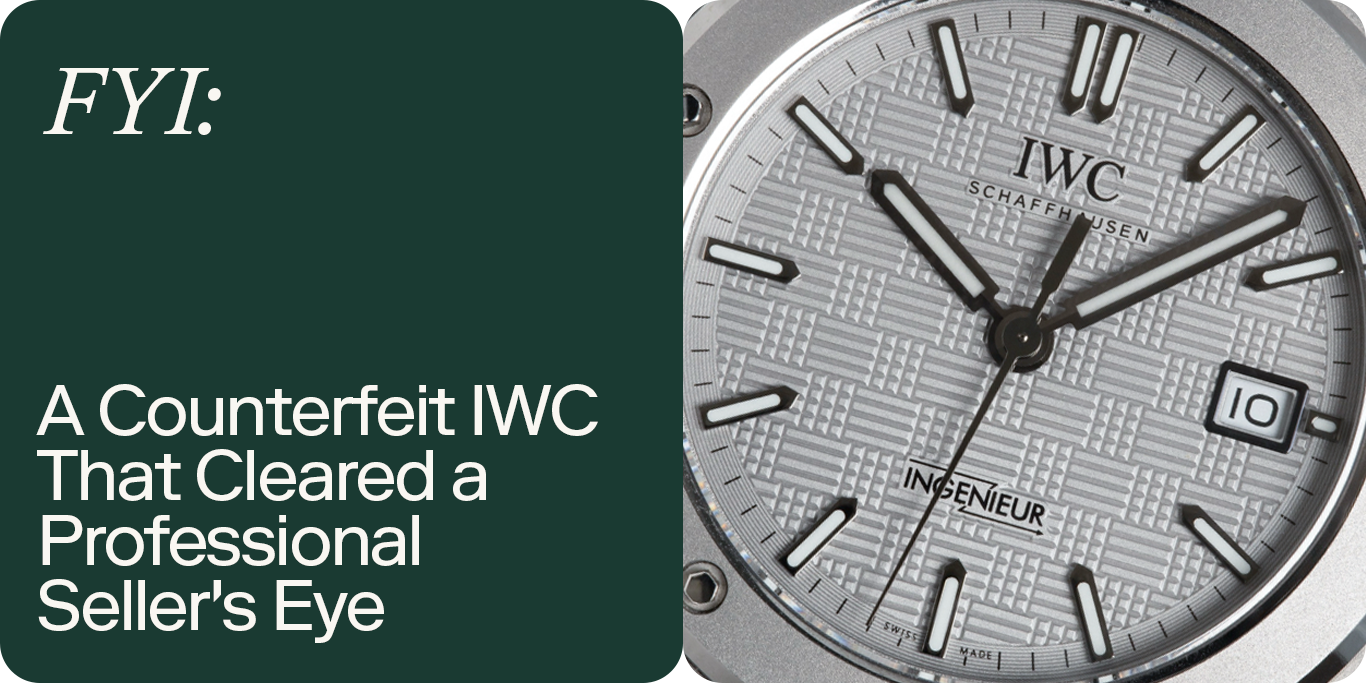
A listing from an established professional seller carries a certain trust. These are people who move real volume and stake their reputation on getting it right, so they often give watches a fast, confident look rather than a slow forensic one. The best counterfeits are built for exactly that, made to pass the kind of quick check a busy seller has the time for.
An IWC Ingenieur Automatic 40, reference IW328904, came in from a seller exactly like that. It is a watch that trades around $13,000, and it arrived the way convincing fakes usually do, quietly. Nothing about it announced itself.
That's the whole reason every watch on Bezel goes through the same in-house authentication, no matter who is selling it. Under that closer look, the Ingenieur started to come apart.
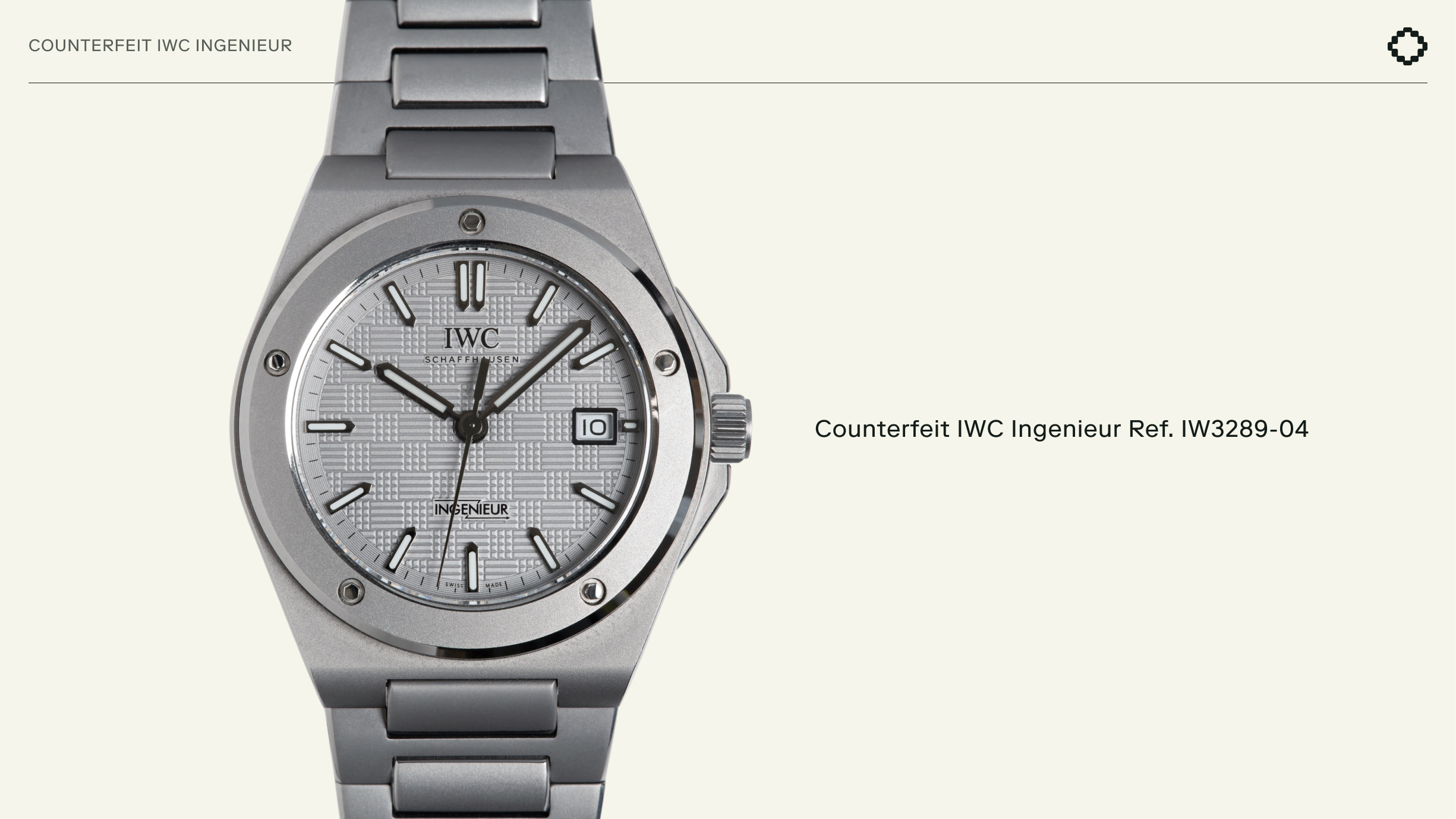
The first tell was on the dial, under magnification. The printing carried a faint crudeness, with the edges of some lettering bleeding past where they should have stopped. Set against the genuine examples the team had handled in recent weeks, the difference was clear.
The bracelet gave up the second tell. The quick-release links and the micro-adjustment clasp both felt stiff, rigid and short of the finishing that lets a real IWC clasp operate smoothly. On a genuine watch, those mechanisms are worked to a standard this one had not matched.
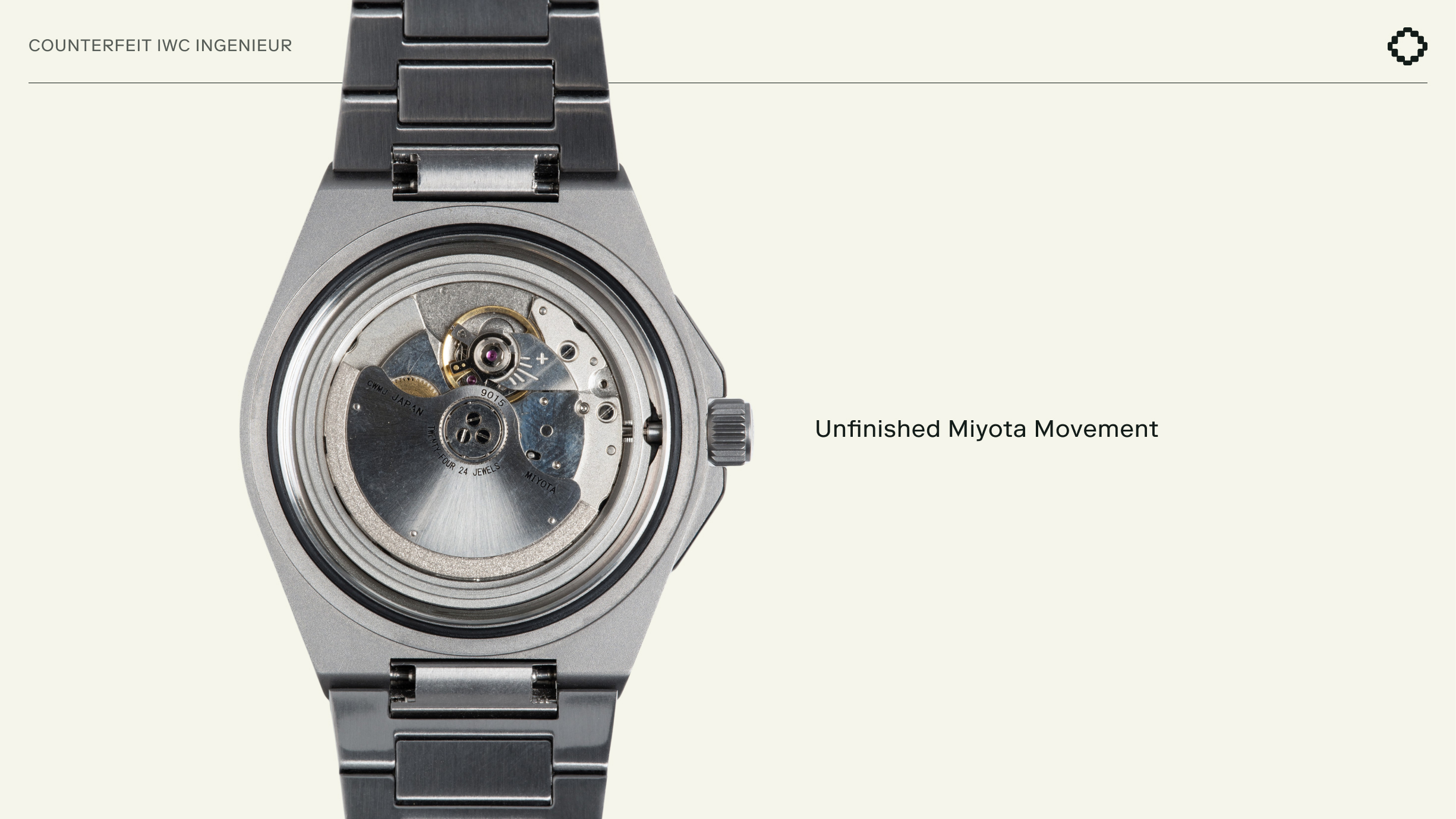
The clearest tell was inside. With the case open, an unfinished Miyota movement sat where the genuine IWC caliber 32111 belongs. There was no ambiguity left after that, and the watch was determined to be a counterfeit.
A counterfeit at this level is built to survive exactly the kind of look a high-volume listing tends to get. The work was good. It was made to pass, and for most of its journey it did.
The seller’s standing was never the safeguard, and it was never meant to be. A professional listing raises the odds that a watch is what it claims to be, but it cannot replace an inspection that reaches the movement. That is the gap the in-house check exists to close.
Every watch sold on Bezel goes through the same in-house authentication, from the surface details down to the movement, regardless of who is selling it. A layered process that starts with what the eye can catch and ends with the case open is what separates a convincing counterfeit from the real thing.
In this case, the sale was reversed and the buyer was made whole, and the counterfeit did not go back into circulation. Bezel’s concierge team then helped the buyer track down a genuine Ingenieur, the watch they had wanted from the start.
A watch that looks right, listed by a seller who looks right, can still be wrong. Counterfeits at this level are designed to clear the quick, confident inspection that most watches get. The only way to be sure is to look past the surface, into the parts a counterfeit cannot cheaply reproduce.
Bezel will continue to share cases like this so collectors can understand how these situations arise and what careful authentication prevents.
Bezel is the top-rated marketplace for buying and selling luxury watches. We give you access to tens of thousands of the most collectible watches from the world’s top professional sellers and private collectors. Every watch sold goes through our industry-leading in-house authentication process, so you can buy, sell, and bid with confidence.
Bezel is available to download on the App Store now. Please reach out to our concierge team if there is anything we can help you with!

©2026 Bezel Inc.
All rights reserved.