
Counterfeit Rolex papers are reshaping the pre-owned Rolex market. A recent authentication case reveals how easily provenance can be misrepresented.
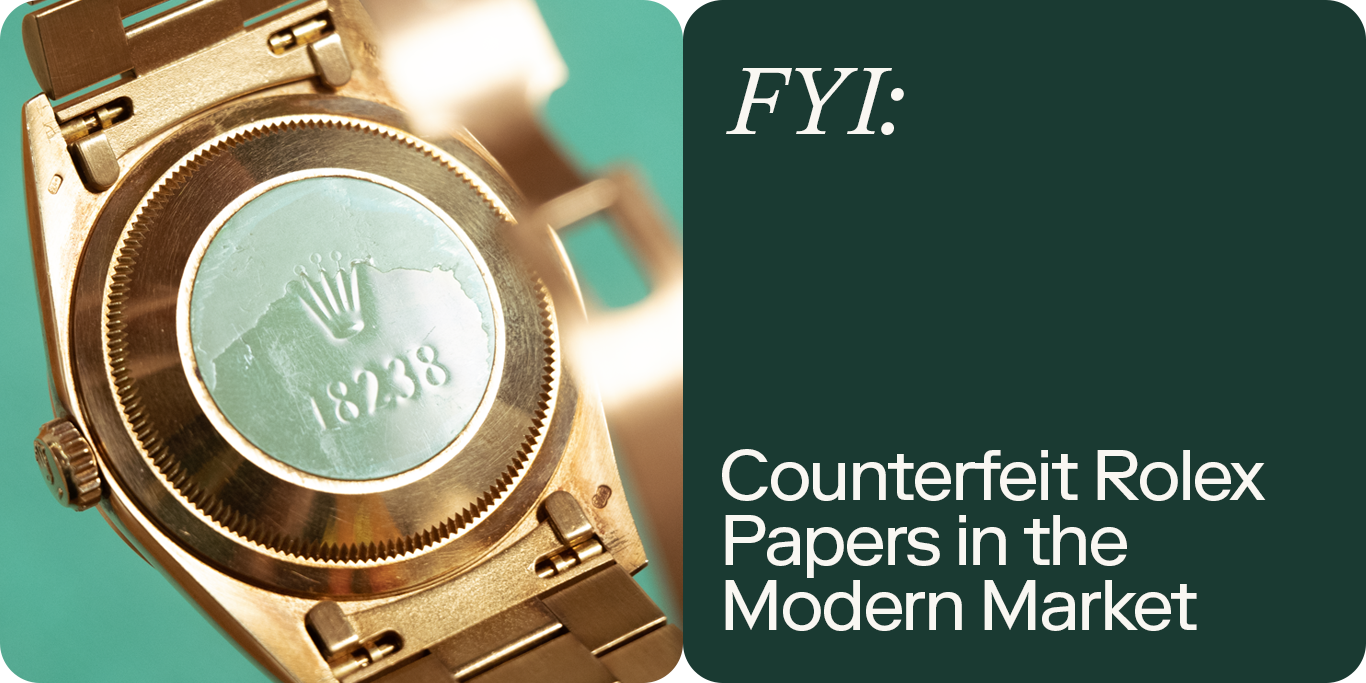
In the world of pre-owned Rolex collecting, the idea of a complete set still holds a quiet influence. A watch may draw the eye first, but original boxes and papers help shape the story around it. They offer a sense of origin, continuity, and care. That feeling of completeness is part of what gives certain Rolex references their lasting pull.
“Papers” is the shorthand for the guarantee papers or, more recently, plastic warranty cards issued by Rolex when a watch is first sold. The previous generation of guarantee papers confirmed the serial number, reference, retailer who delivered the piece, and date of sale, at which point the warranty was activated. For seasoned collectors and newer buyers alike, these documents act as an impactful testament to provenance. As a result, examples of Rolex watches that include their original paperwork can carry a noticeable premium on the secondary market.
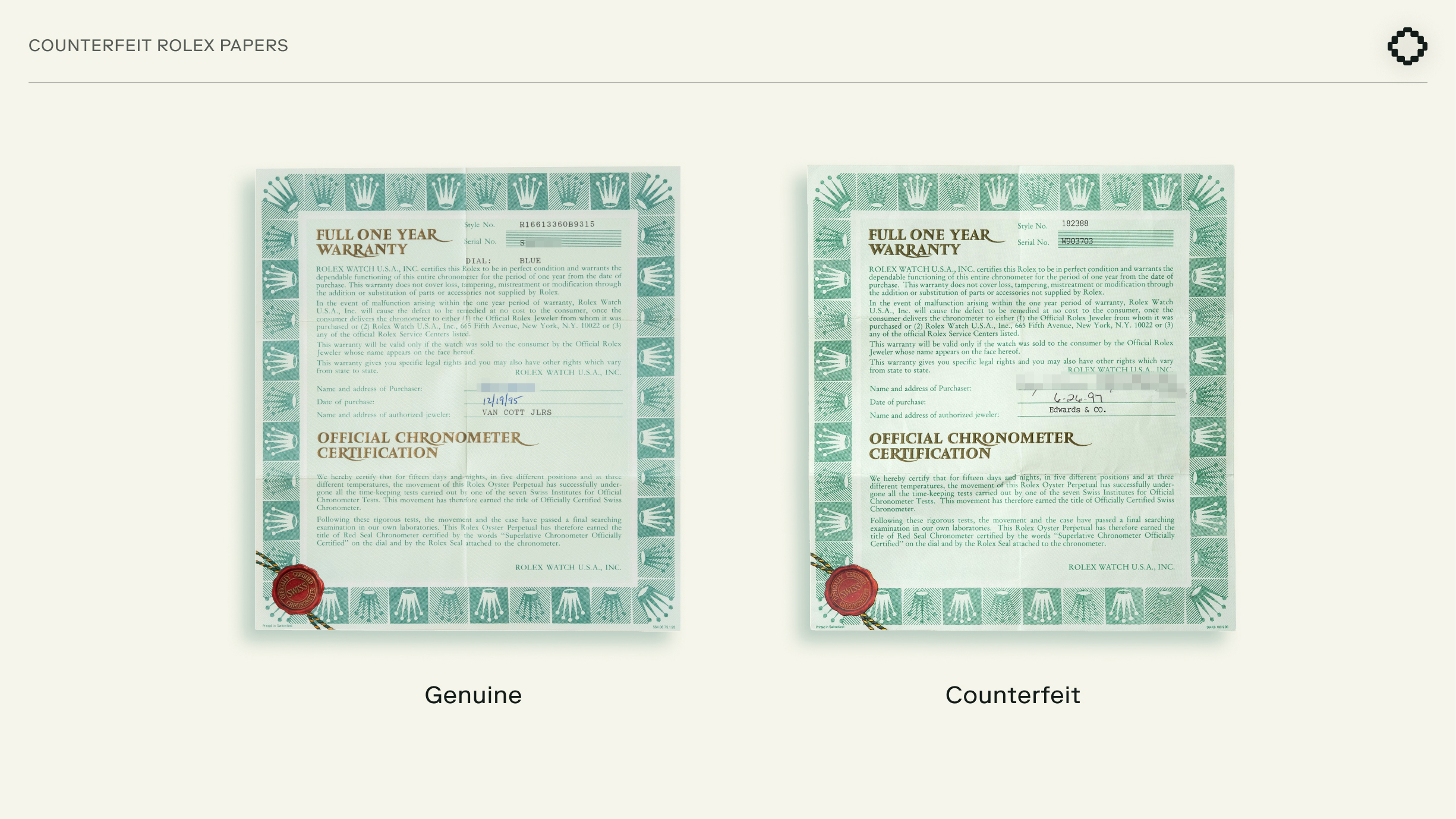
That premium has created space for deceptive practices, including the pairing of authentic watches with counterfeit paperwork. A recent attempt to sell a full-set Rolex Day-Date on Bezel offered a clear look at how this can happen, and why authentication matters more than ever.
In 2025, the sale of a yellow gold Rolex Day-Date 36 was recently attempted on Bezel with what appeared to be its full set from the mid-1990s. Once the seller shipped the watch, its accompanying box, and papers to Bezel HQ, our authentication team began its industry-leading review. While the watch itself was entirely authentic and accurately represented, inspection of its corresponding paperwork revealed concerning inconsistencies detailed below.
This resulted in the buyer being notified by their Bezel Client Advisor, the sale being canceled, and a refund issued, protecting them from receiving anything less than an entirely authentic full set.
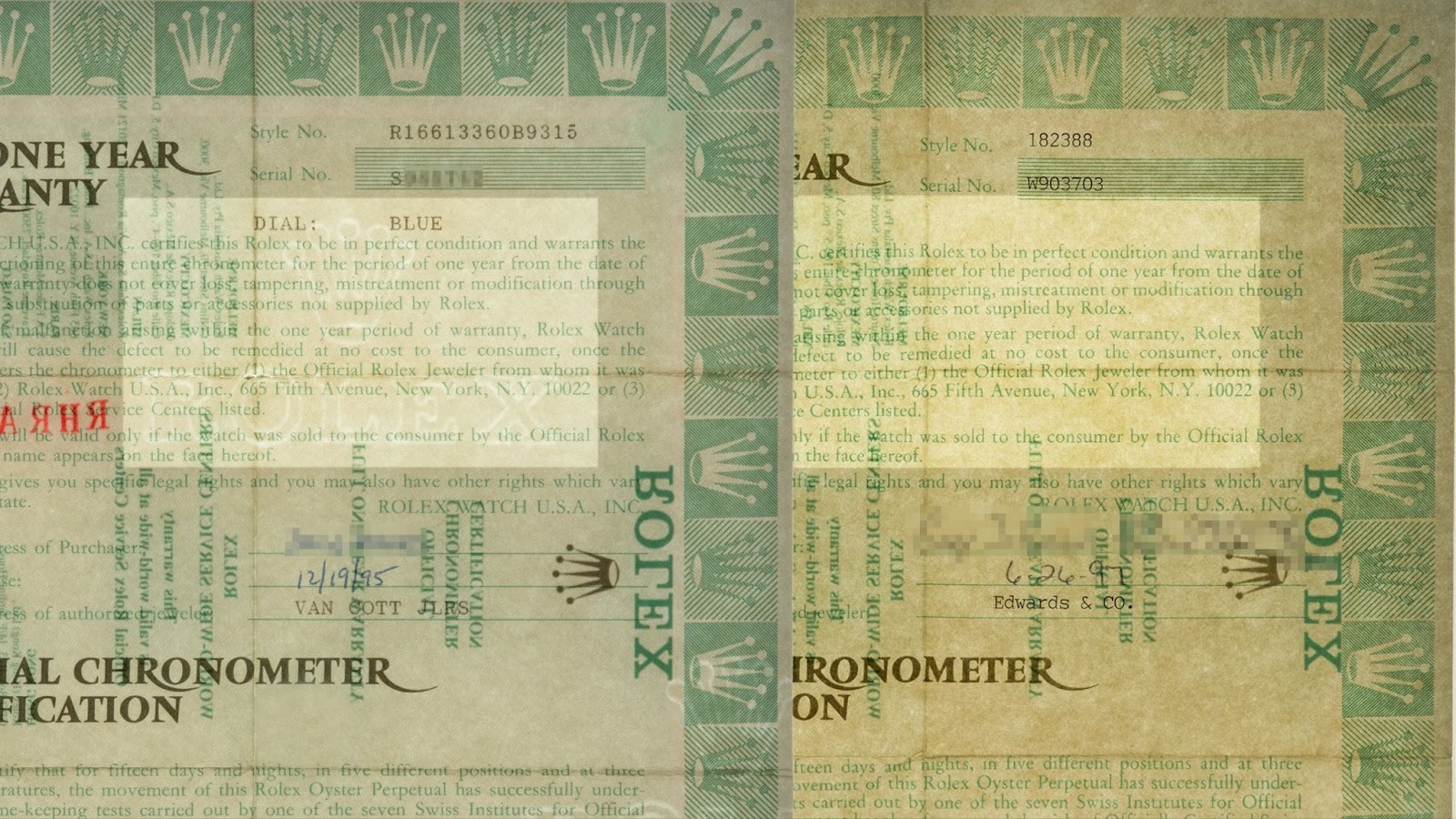
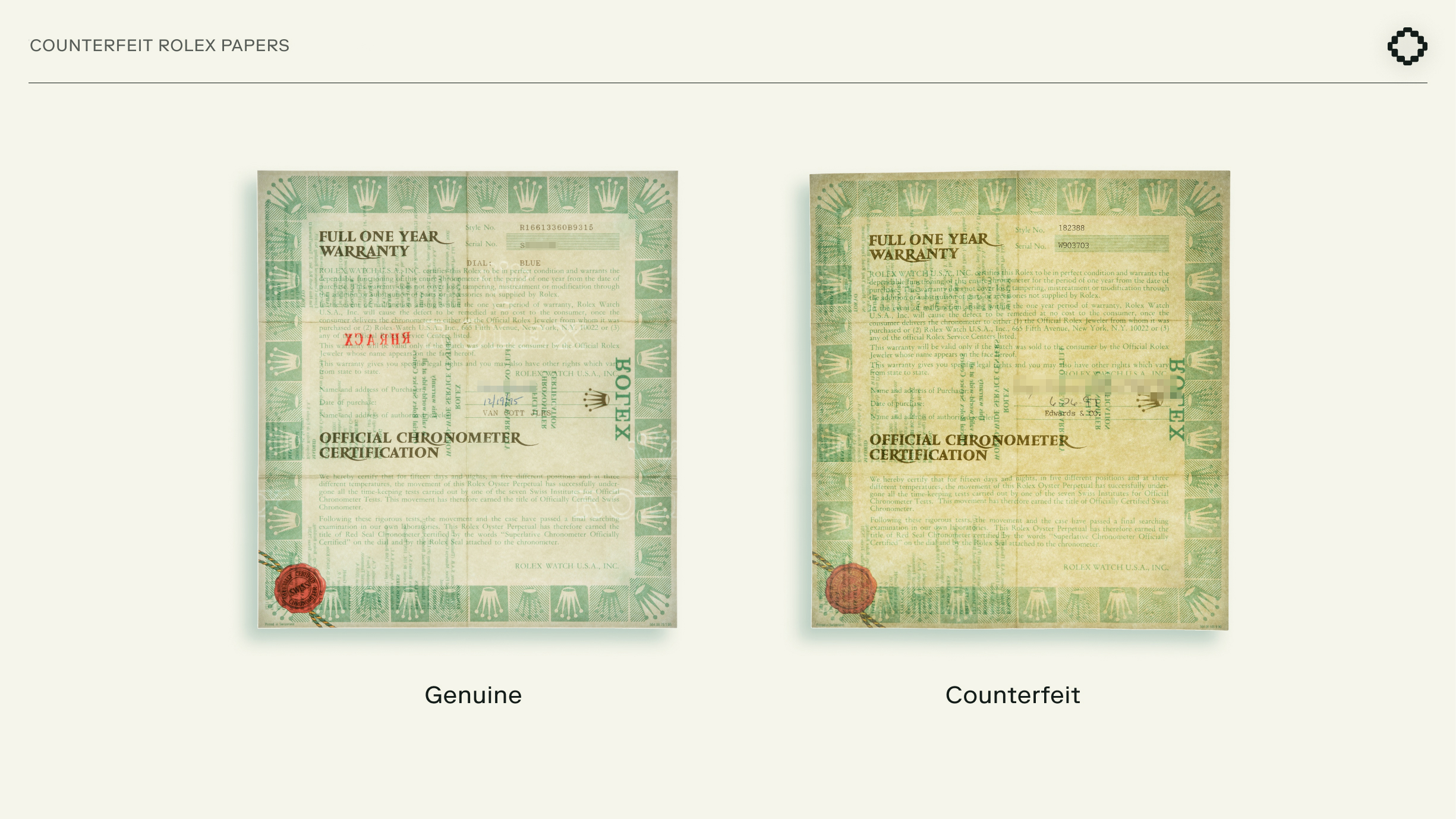
The documents listed a W serial number, placing the watch’s production to circa 1994/1995. During that era, Rolex used a particular style of printed paper certificates. This allowed our team to line up the submission against authentic examples from the same period. Genuine paperwork from that time reveals a faint coronet and Rolex text when backlit. On these papers, that pattern never appeared. In other words, they lacked the telltale watermarks that would confirm their authenticity.
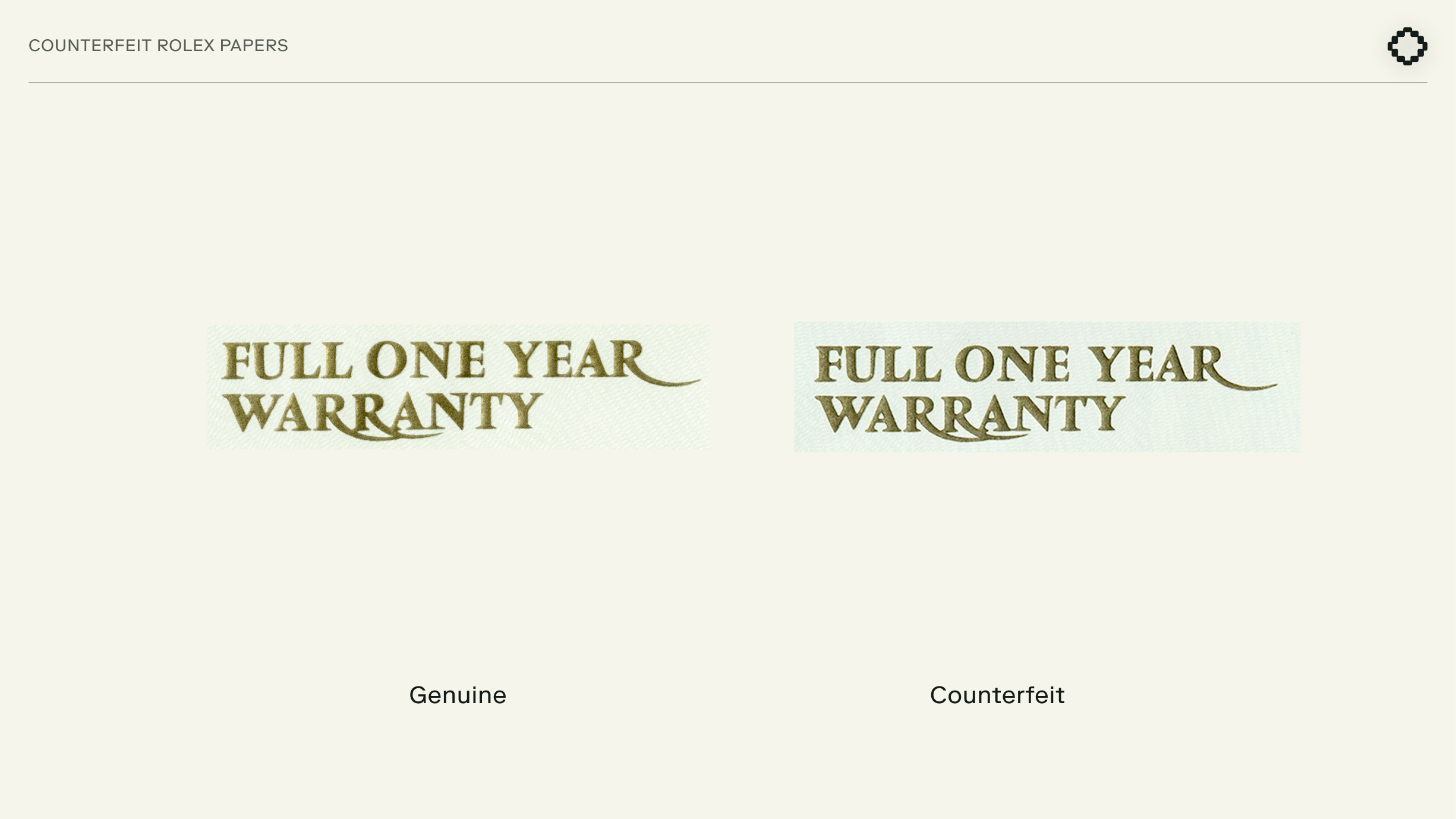
Further inspection showed that the gold foil text used to denote the warranty and chronometer certification didn’t match the tone or finish seen on verified Rolex papers from the same period. This subtle, albeit impactful difference becomes apparent through side-by-side comparison.
Other inconsistencies reinforced that conclusion. The reference number printed on the document read “182388,” which is not a valid Rolex reference. A yellow gold Day-Date from that period would have been marked as 18238. When Bezel’s authentication team handles paperwork daily, subtle mismatches like that become clear. Any one of these details might raise a question, but taken together, they told a clear story: the papers were not genuine, and the set was misrepresented.
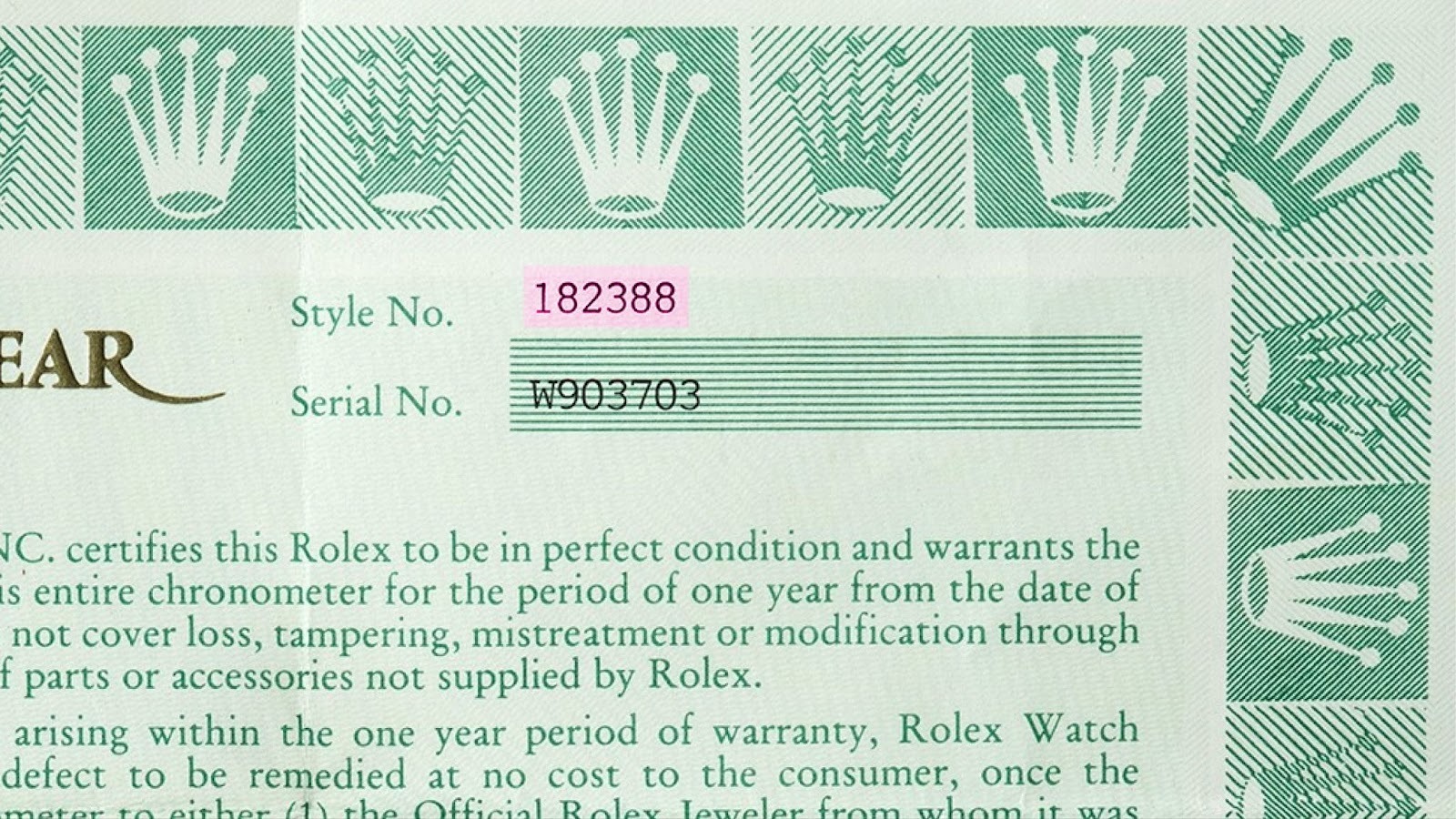
Because the papers were not authentic, the watch ultimately failed authentication. The buyer was informed, the sale was canceled, and our team helped source a correct example that met Bezel's industry-leading authentication standards. This demonstrated just how quickly a full set can be misrepresented, and why each piece, from the watch to the paperwork, needs its own careful review.
Counterfeit papers do not make a watch itself counterfeit. Instead, they alter perceived value. A watch accompanied by its original paperwork often feels more intact, almost as if its history has been kept together rather than scattered over time. That impression tends to influence how collectors evaluate rarity and pricing.
Some sellers may hope to close the gap between watch-only pricing and full-set pricing. Others inherit watches without paperwork and seek ways to improve their resale potential. These actions rely on the assumption that most buyers focus on the presence of papers rather than the subtle differences that distinguish real from fabricated.
As Bezel Chief Marketplace Officer Ryan Chong notes, “There’s a lot of scholarship related to the authentication of watches. There’s not much out there when it comes to accessories, and that’s where the experience of our team is crucial to authenticating boxes and papers.”
Every watch listed on Bezel undergoes a detailed review, where the watch and its documents are examined independently. Authenticators compare paperwork to known examples from the same era, assess printing and typeface characteristics, and verify retailer information when possible. They look at how the document feels, how it is printed, and how it appears when held to light. Each step helps prevent misrepresented sets from reaching buyers.
Bezel CEO Quaid Walker explains it simply: “Our authentication process is designed to protect collectors from risks that are not always visible at first glance. Cases like this show why that level of care matters.”
In this case, the process worked as intended. The compromised set never reached a buyer, and a legitimate full-set example was secured instead. The goal is not only to identify issues but to guide buyers toward verified examples they can trust.
This story is a reminder that the value of a Rolex often extends beyond the watch itself. Provenance shapes how collectors understand a piece and how they feel about owning it.
Just as standards evolve with the passing of decades, the tactics used to imitate those standards evolve with them. Close examination helps separate what belongs to the watch’s era from what was added long after.
For anyone buying a pre-owned Rolex, the takeaway is simple. Ask questions, look closely, and rely on authenticators trained to catch what the untrained eye might miss.
Bezel will continue to share insights like this so collectors can move through the market with clarity and understand the forces shaping the watches they love.
Bezel is the top-rated marketplace for buying and selling luxury watches. We give you access to tens of thousands of the most collectible watches from the world's top professional sellers and private collectors. Every watch sold goes through our industry-leading in-house authentication process, so you can buy, sell, and bid with confidence.
Download the Bezel app on the iOS App Store or start searching for your next watch today at getbezel.com.
Bezel is available to download on the App Store now. Please reach out to our concierge team if there is anything we can help you with!

©2026 Bezel Inc.
All rights reserved.