
Courtney Bachrach came to watches through family, art history, and increasingly, through the idea that owning something isn't the same as understanding it.
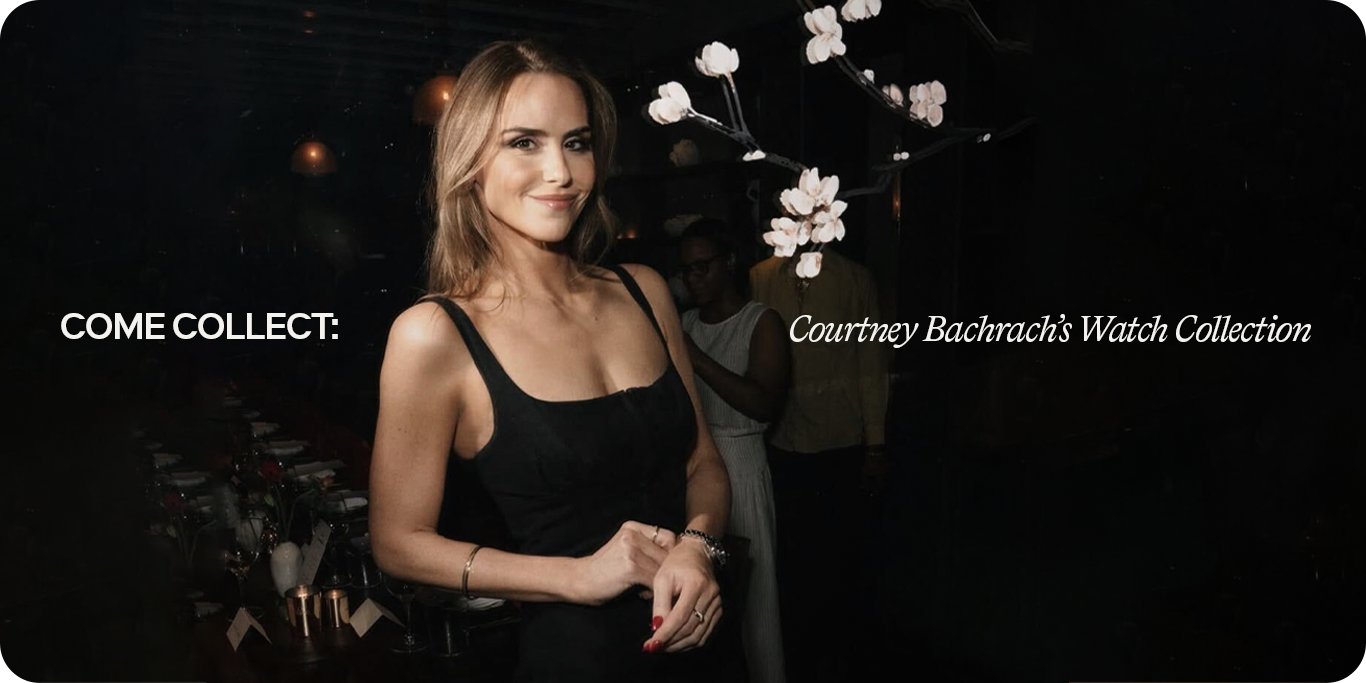
Courtney Bachrach doesn't talk about watches the way most people do. She's more interested in the era and culture behind a piece than the reference number, an instinct she traces back to an art history degree and growing up in a family of collectors. It shows up in the voice she's built as @tinywristcheck: less new-release coverage, more why a particular dial finish matters, or why vintage Cartier is having a moment right now.
It's also behind the term she's become known for, literate luxury, the idea that real value in this hobby comes from understanding a piece, not simply owning it. In this edition of Come Collect, she talks about her collection, her collecting philosophy, and where that instinct actually comes from.
Isaac Wingold: Let's start at the beginning. Where does your relationship with watches actually start?
Courtney Bachrach: With my dad. He collected, and watches have been woven in and out of my life, some periods more than others. When I was really young, my family went back and forth to London a lot, where my Dad would take me with him to dealers. They'd pull out these trays of thin diamond women’s pieces just to keep me busy and call them “Princess Watches”. Now that I am older, I know them as 20s Art Deco cocktail watches. I recognize pieces from the Art Deco era because of the geometric lines; I see the silk rope bracelets due to the popularity of ribbonwork. That's just always been how I look at a piece, less about the reference and more about the fashion of the era it's coming from and why.
It's likely why my eye developed the way it did with modern pieces, too. When I was in high school, I would go sit in my Dad’s office and bug him to see pieces. He was really into Cartier in the 90’s, and by the early 2000’s, sitting in his office, driving him nuts, something would inevitably end up on my wrist. I knew they were 90’s Cartier or Patek because I remember him wearing it with specific styles and suits.
My early 2000’s uniform was mostly bulky “men’s” watches I acquired from my father, likely worn to Coachella with my Balenciaga motorcycle bags. Looking back, that's how I started learning to place a piece in time, the fashion I associated it with, long before I thought of myself as a collector.
IW: Are there specific pieces you associate with him directly?
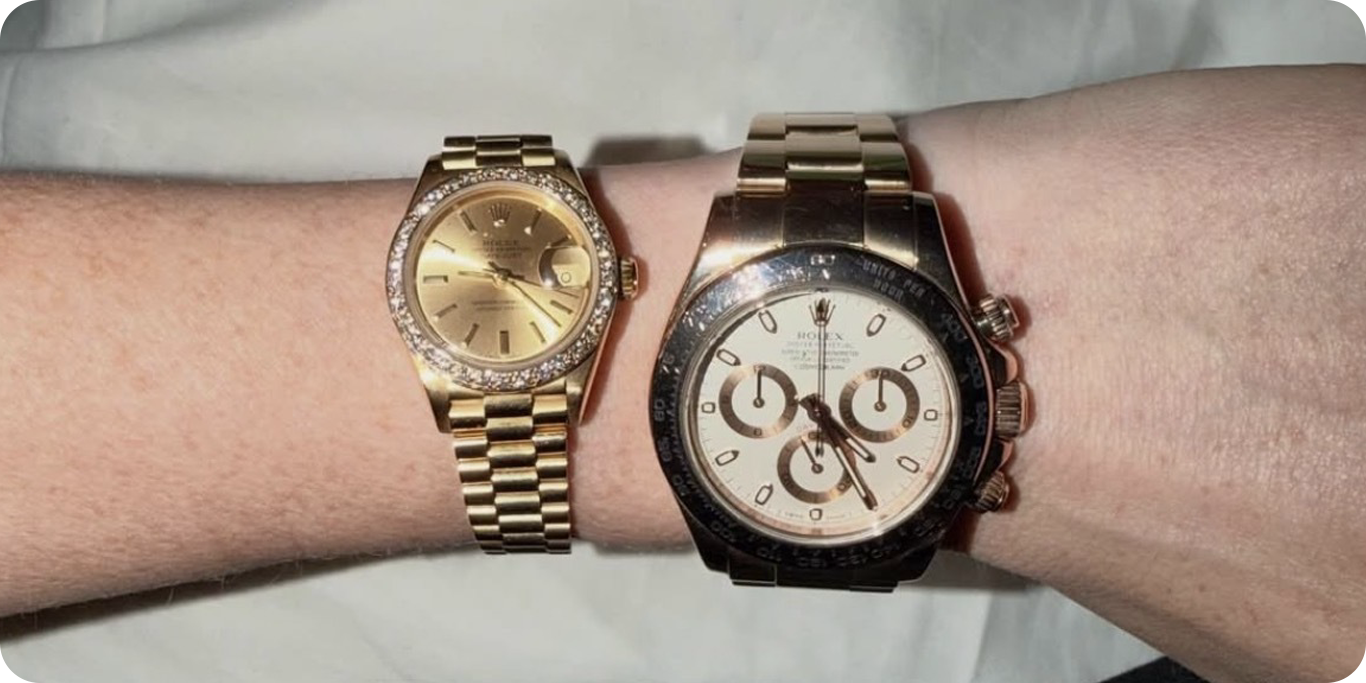
CB: A few. A Rolex Daytona Ref. 116505 in Everose gold with an ivory dial that I received for my 25th birthday. I asked for it specifically with absolutely no idea how absurd a request it was. I simply liked the way it looked. My dad, on the other hand, was just relieved I'd finally asked for what he considered a "real" watch. I was very into TechnoMarine quartz at the time. As the reference grew in popularity and price, we would joke that the watch was “on loan” to me.
There's also my mom's yellow gold Lady-Datejust, which my dad bought for her the day I was born, back when you could still walk into a boutique in Beverly Hills and simply buy a Rolex. Family lore has it that after I was born, he went to the office for a few hours. When he returned to the hospital, he gifted my mom the watch. She looked at him and said, "Where's yours?" There was no chance he'd gone out and bought only one Rolex that day. His was waiting for him back at the office. I don't have the one he bought himself, but I do have hers, and I wear it often.
Right before my Dad passed two years ago, there was a week or so when he didn’t recognize me. One day I wore the Daytona, and he knew I was his daughter because of the watch. That's stayed with me more than almost anything else about collecting. These stories behind the pieces that shaped my childhood and inside jokes with my dad.

IW: What shaped the way you look at watches most?
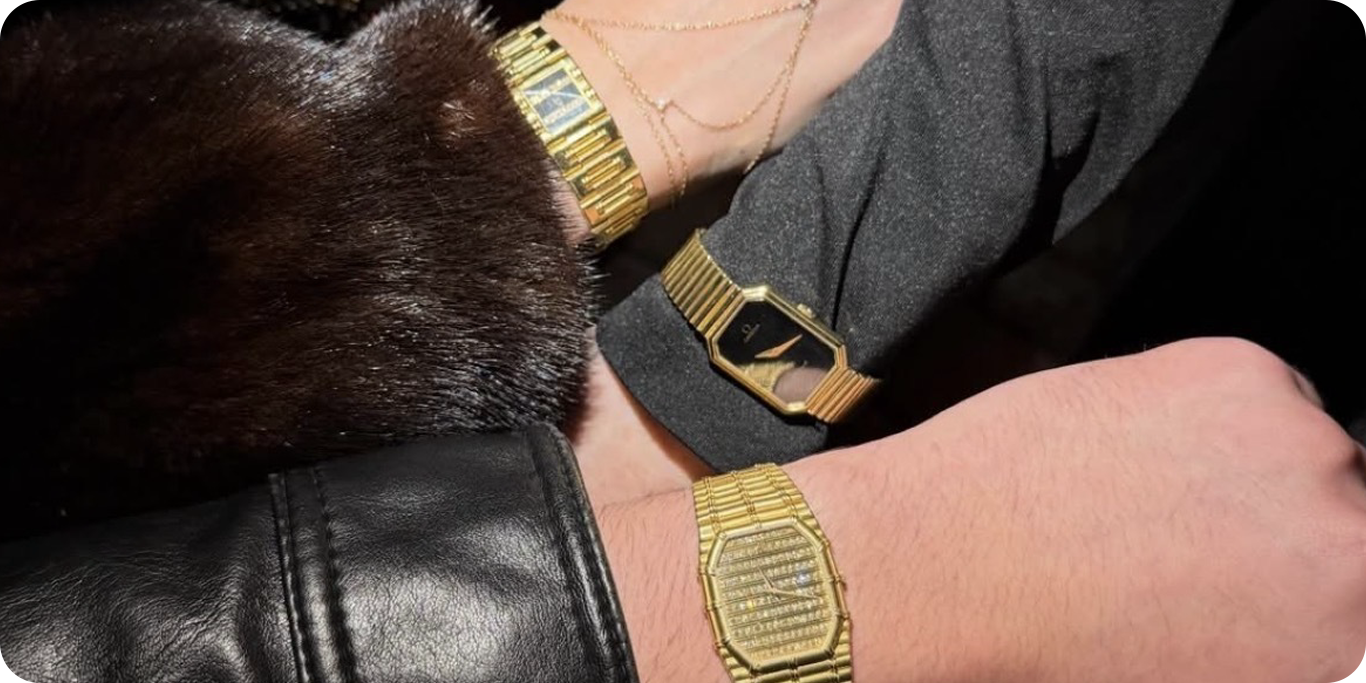
CB: I have a master's in art history and a background in film. I think I look at a watch the way you'd look at an object as a piece of design history, for what it says about the moment it came from. I think about how referential fashion has become. You turn on red carpet coverage, and someone's dissecting how a dress references Dior under Galliano, 90s Fendi. That vocabulary already widely exists in fashion, and I think women’s watches are primed to sit right into that spot. There's also a social media / luxury-economy angle to it, everyone chasing the one thing nobody else has seen. There are a plethora of Birkins, not a plethora of some of these vintage pieces.
IW: Is that what you mean by "literate luxury"?
CB: Exactly. My dad and his friends spent decades building his knowledge the hard way, through relationships with dealers and retailers, physically going and seeing pieces. There's so much more information available now, and Bezel is a good example of that shift. It's not always organized in the most useful way, but if you're a good researcher, you can still find what you need. Access alone doesn't guarantee understanding; the story and the search matter as much as having the information in front of you. I think knowing what you’re buying, why a specific piece is a good example, is so important to learn.
IW: How would you describe your own collecting philosophy?
CB: I make a distinction between "women's watches" and watches that women actually wear, which aren't always the same thing. And in my experience, there's a real difference in how men and women tend to collect. A lot of men think about resale before they've even bought a piece: what will I get for this if I sell it? I don't see women buy that way as often. We tend to buy things we want to live with.
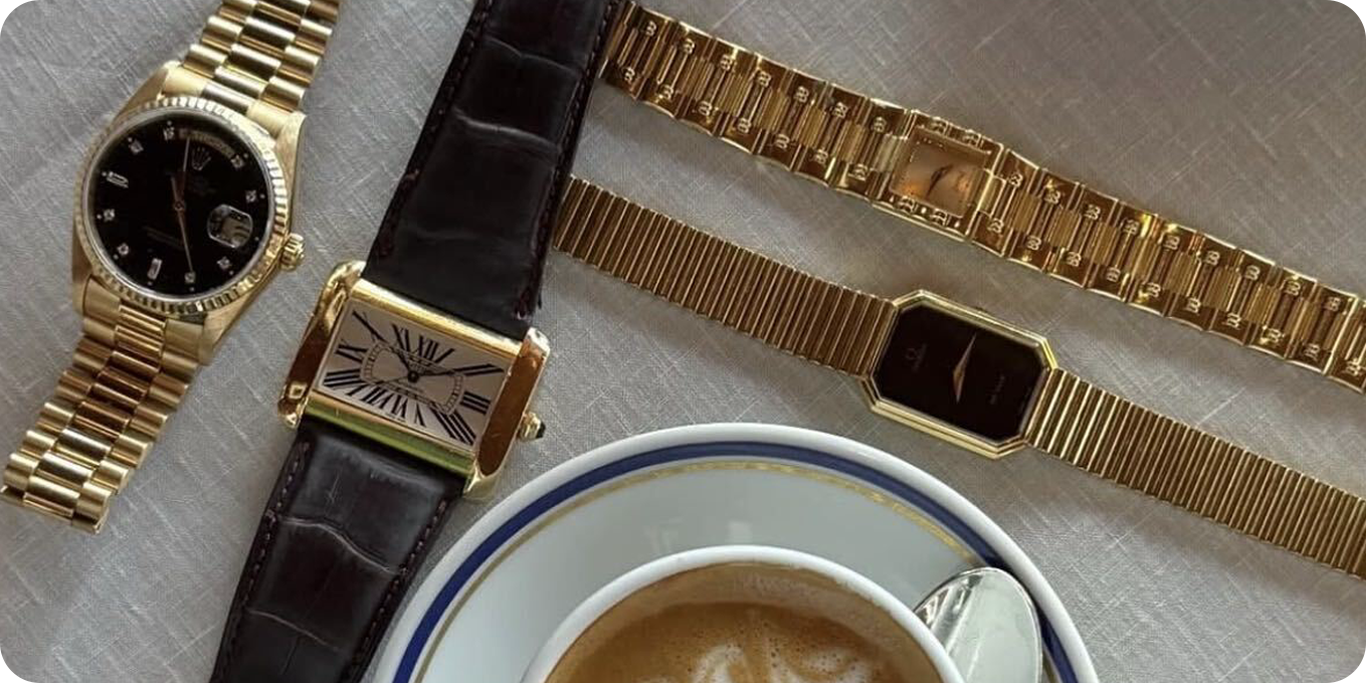
I've never been a handbag girl, but I switch out my watches the way my friends switch handbags: evening watches, cocktail watches, ones I wear during the day, seasonal pieces. That's just how I wear the collection.
IW: You've become known partly for championing vintage. How do you see that fitting into where collecting is headed?
CB: I do get called a vintage girl, but I'd say I'm personally drawn equally to vintage and modern. However, plenty of wonderful content creators and media cover the new Watches and Wonders releases. I have grown more by spending my time on pieces that used to be a niche interest. The other day, I posted about a handful of famous women wearing lesser-known vintage Audemars Piguet, and the response was wild. With social media, I think a lot of the women sharing their watches online are becoming genuinely influential in a way that wasn't possible for past generations, and it's cool to see them wearing something different instead of the same three hype watches.
IW: What's the through-line in how you actually research a piece?
CB: Honestly, the most useful thing I ever learned wasn't about watches specifically. It was research. Sometimes you have to open a book. I still work that way. Before I post anything, I read every article and look at every ad I can get my hands on that resembles it.
That means actually digging into the history of a piece, figuring out what's unique about it, why it looks the way it does, what changed and when, rather than just skimming a website for reference numbers. I joke that half of what I post is my trying to write an auction essay and half of it is just my sparkling personality, and somehow that combination has worked out.
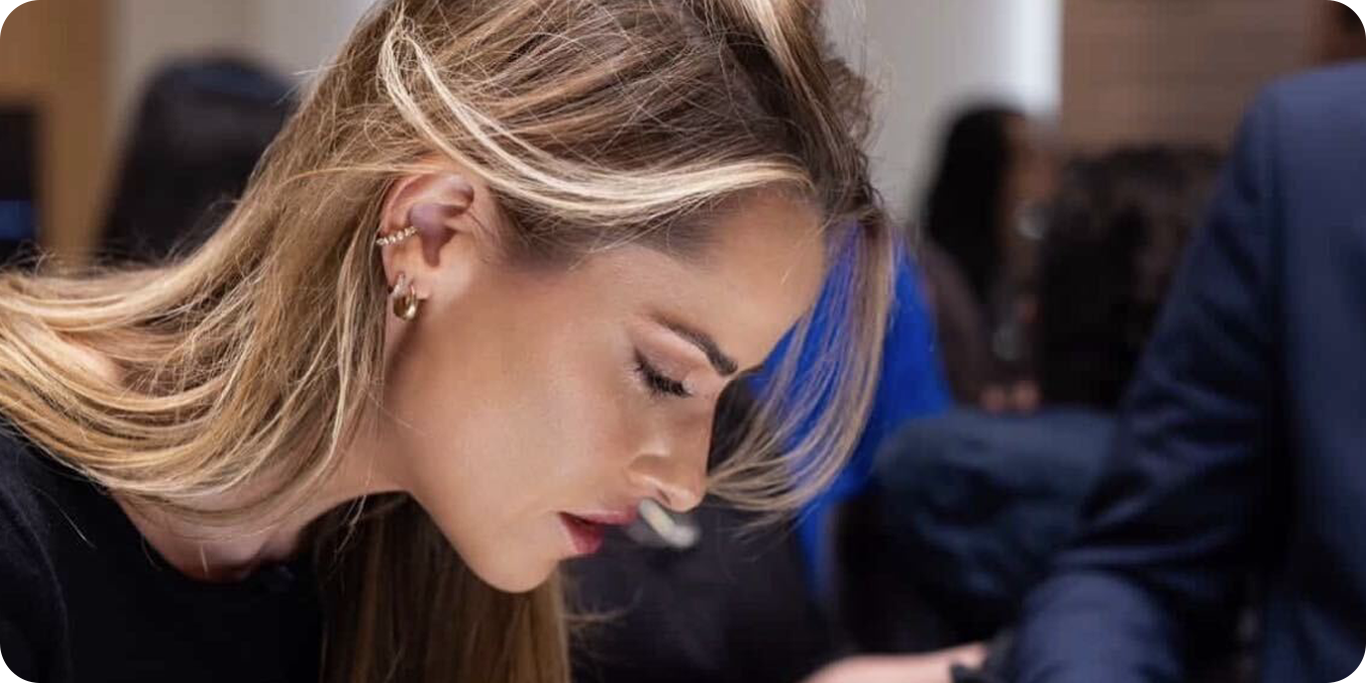
IW: Can you walk me through what that actually looks like with a specific piece?
CB: I was in Las Vegas for US Antiques to make content, and a dealer I love had a bag of “goodies.” One of the pieces was this really gorgeous yellow gold and diamond cocktail watch with these leaf-motif links, which appeared more like a tennis bracelet. I know him well enough to know this couldn’t be just an ordinary 40’s cocktail watch if he had bought it. He told me it was Vacheron Constantin for Pierre Sterlé. Then I did a deep dive on Sterlé, a name I knew but I certainly was no expert on. I found pieces with those same leaf-link motifs. I asked him to show me what the hallmarks should look like. I asked more dealers; I looked through some more images of other pieces from his collaboration with Vacheron Constantin. I looked into the recurring motifs in his work revolving around nature. I do all this before I post anything on social media. Yes, I could’ve just seen a beautiful diamond cocktail watch and posted it, but I want to learn.
I lean on a small network of dealers I trust, and I'm always asking if they've seen something before. Most of the time they have, but every so often something comes out of nowhere. The longer I have been around, asking questions, putting pieces on my wrist, the more exciting I have found the entire process. Learning why certain stones were more or less available, when they were introduced, what materials were popular in what time periods–it’s all so interesting to me.
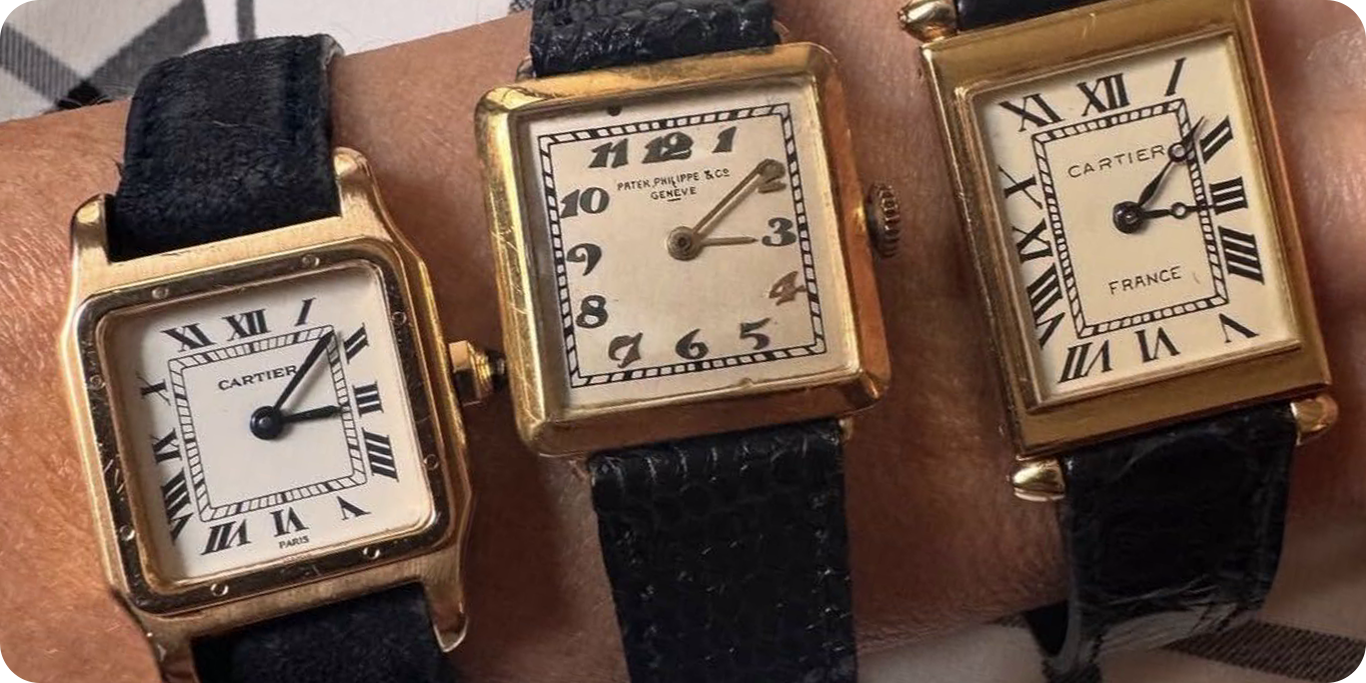
IW: After all these years, what keeps that kind of digging exciting to you?
CB: That's the gap between just having a vintage stone dial Rolex and knowing why that particular one is special. What materials were hardest to work with and which are rarer to find. And honestly, it's the same instinct that had me sorting through my dad's trays of watches as a kid. A lot of asking questions, a lot of research. That's really what I spend most of my time doing.
Have someone in mind that you'd like to see featured? Interested in submitting a story of your own? Reach out to us at editorial@getbezel.com.
- Isaac Wingold
About Bezel
Bezel is the top-rated marketplace for buying and selling luxury watches. We give you access to tens of thousands of the most collectible watches from the world's top professional sellers and private collectors. Every watch sold goes through our industry-leading in-house authentication process, so you can buy, sell, and bid with confidence.
Download the Bezel app on the iOS App Store or start searching for your next watch today at getbezel.com.
Bezel is available to download on the App Store now. Please reach out to our concierge team if there is anything we can help you with!

©2026 Bezel Inc.
All rights reserved.