
The limited edition that opened the collection’s fiftieth year becomes a standing line, adding the first enamel dial with a Clous de Paris in the Laureato's history and a 36mm case, all priced below the watch that started it.
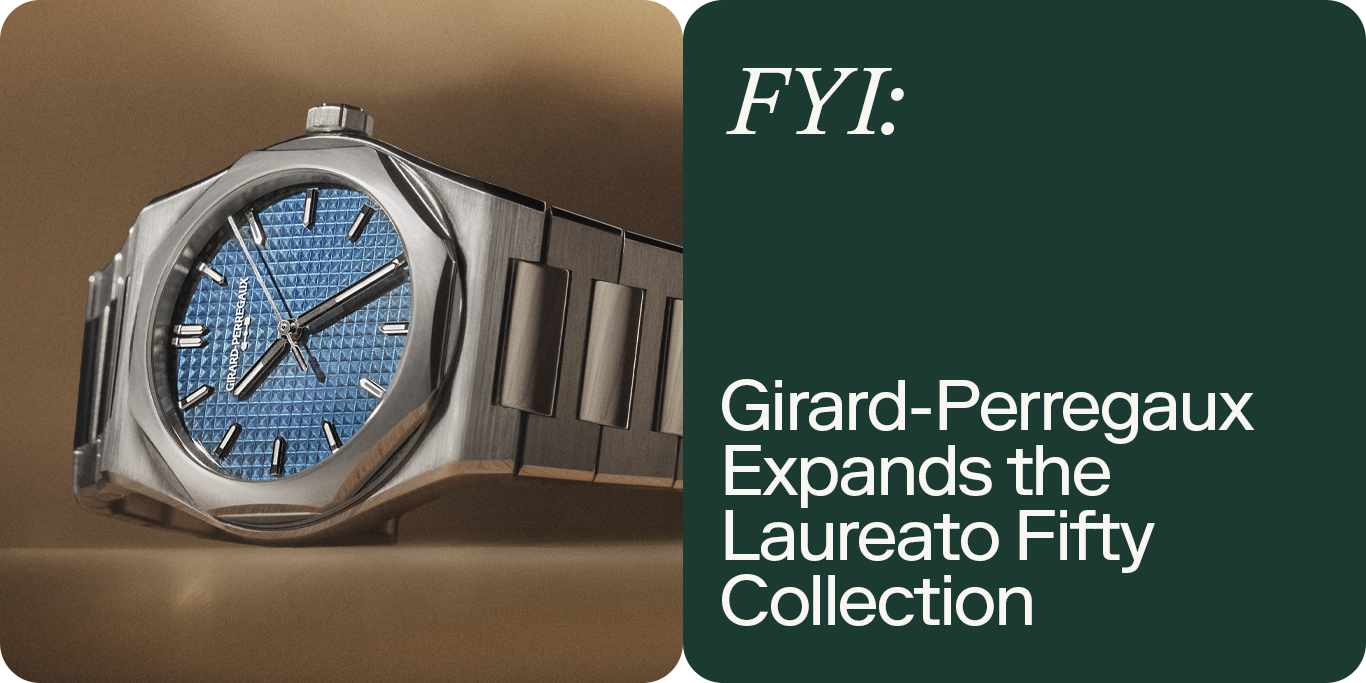
The Laureato Fifty arrived last October as a single object. Two hundred pieces, two-tone steel and yellow gold, a grey hobnail dial, and a brand-new automatic movement making its debut. It read as a celebration, the kind of one-off a manufacture builds to mark a round number and then sets aside. The expansion arriving now reframes it as the first move in something larger. The Fifty is becoming the Laureato.
Girard-Perregaux is expanding the Fifty into four new references, all in steel, all carrying the same revised case and the same Calibre GP4800 that debuted in the anniversary piece. Two of them do something the Laureato has never done. One brings the watch back to a size it hasn't worn in years. And every one of them lands below the price of the limited edition that introduced the design language, which is a shrewd way to evolve the collection, and tells you most of what you need to know about Girard-Perregaux's intentions. The Fifty has stopped being a souvenir and has become the shape of the collection going forward.
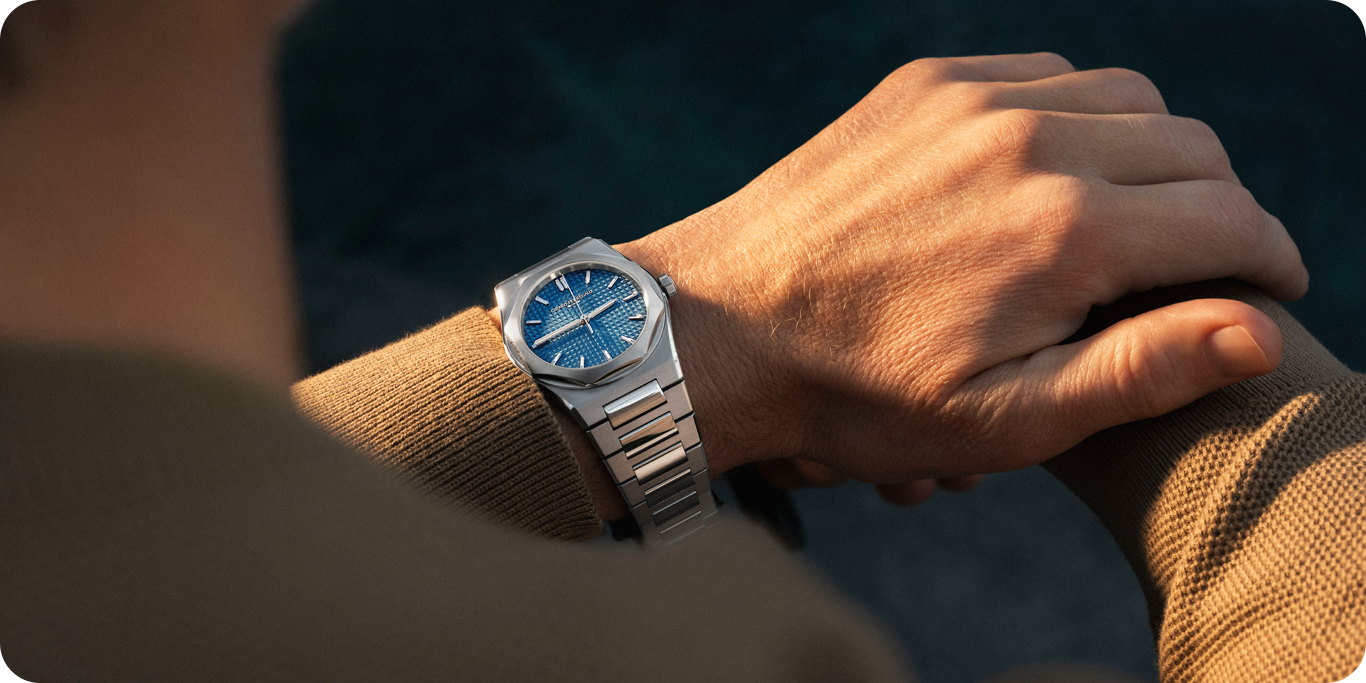
The Laureato was born in 1975, one of the original integrated-bracelet luxury sports watches, arriving in the same handful of years that gave the world the Royal Oak and the Nautilus. Where those two leaned into angular drama, the Laureato organized itself around an octagonal bezel set on a circular plinth, a tonneau case, and a bracelet that flowed into the lugs with unusual smoothness. It was the quieter sibling, and it's spent fifty years being the one collectors discover rather than the one they line up for.
What gets lost in the genre comparison is that Girard-Perregaux had the technical bona fides to back the design. The first Laureato ran on an in-house quartz movement at a time when GP was at the absolute forefront of that technology, having developed the 32,768 Hz frequency in 1971, which the entire industry still uses today. The collection went mechanical over the following decades, found its modern footing with the 2016 reinterpretation that drove its current resurgence, and carried on as one of the most consistently underrated watches at its price. That's the one time the word underrated appears in this piece, because the more interesting story is what Girard-Perregaux has done since it bought itself back. The 2022 management buyout from Kering restored the brand's independence alongside sister maison Ulysse Nardin, and the watchmaking has had a different energy ever since. The GP4800 was the first of three new calibres in under a year, followed by a Grand Complication and an automatic minute repeater. A manufacture that skips Watches and Wonders entirely has spent the last twelve months releasing movements at a pace that suggests it's got a great deal more to say.
When the Fifty launched, watch media flagged that its updated case looked less like a one-off and more like a preview of the whole line, and these four references are the confirmation.
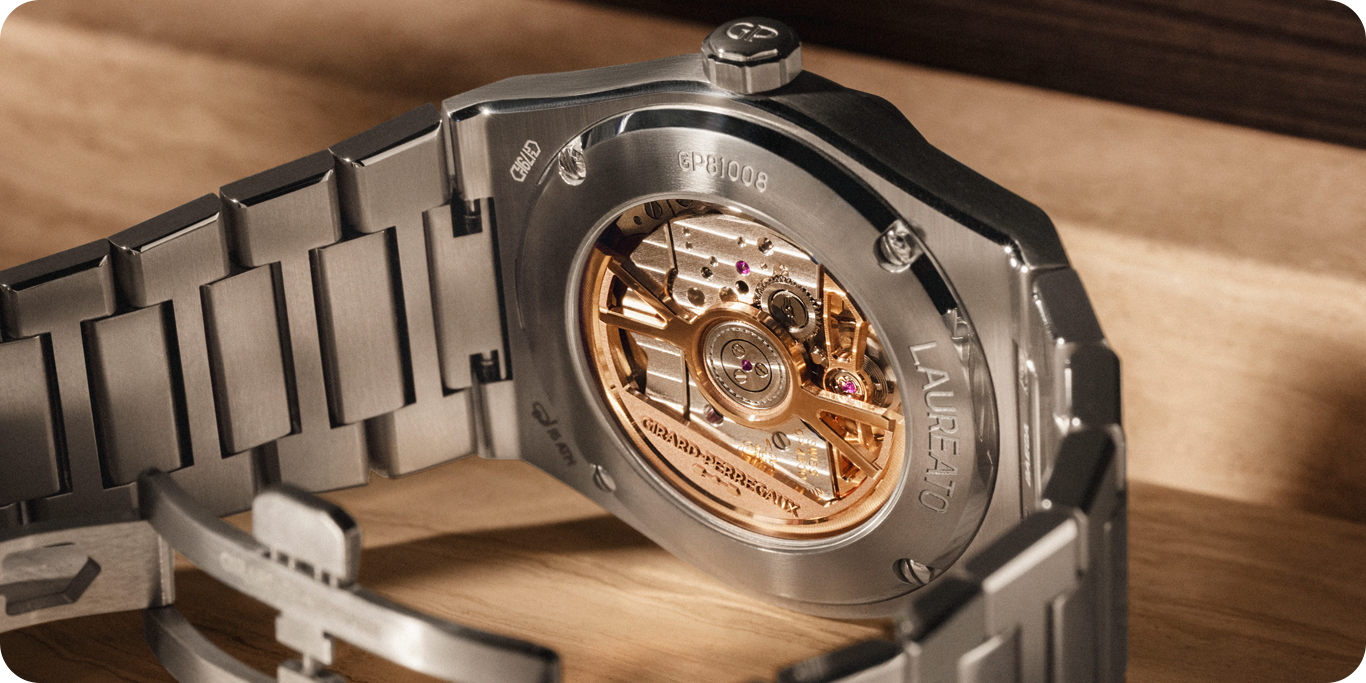
Most anniversary watches sell on nostalgia. The Fifty sells on its movement, and the GP4800 is the reason this expansion matters more than a color-and-size exercise.
It's a modern automatic built to be a workhorse, running at 4 Hz with a reserve GP rates at around sixty hours and a silicon escapement that keeps it antimagnetic and low-maintenance, a specification that marks it as a watch built to be worn rather than babied. Girard-Perregaux organized the architecture as a tribute to its own most famous signature, the Three Bridges, reinterpreting that motif so the layout you see through the sapphire caseback follows the same structural logic, every bridge placed where the eye can track it. The detail that sets these watches apart from the workaday is the balance bridge, executed in rose gold and exclusive to this release. The gold pulls the eye straight to the balance, the moving heart of the movement, and gives an architecture otherwise built in cool greys a single, deliberate point of warmth.
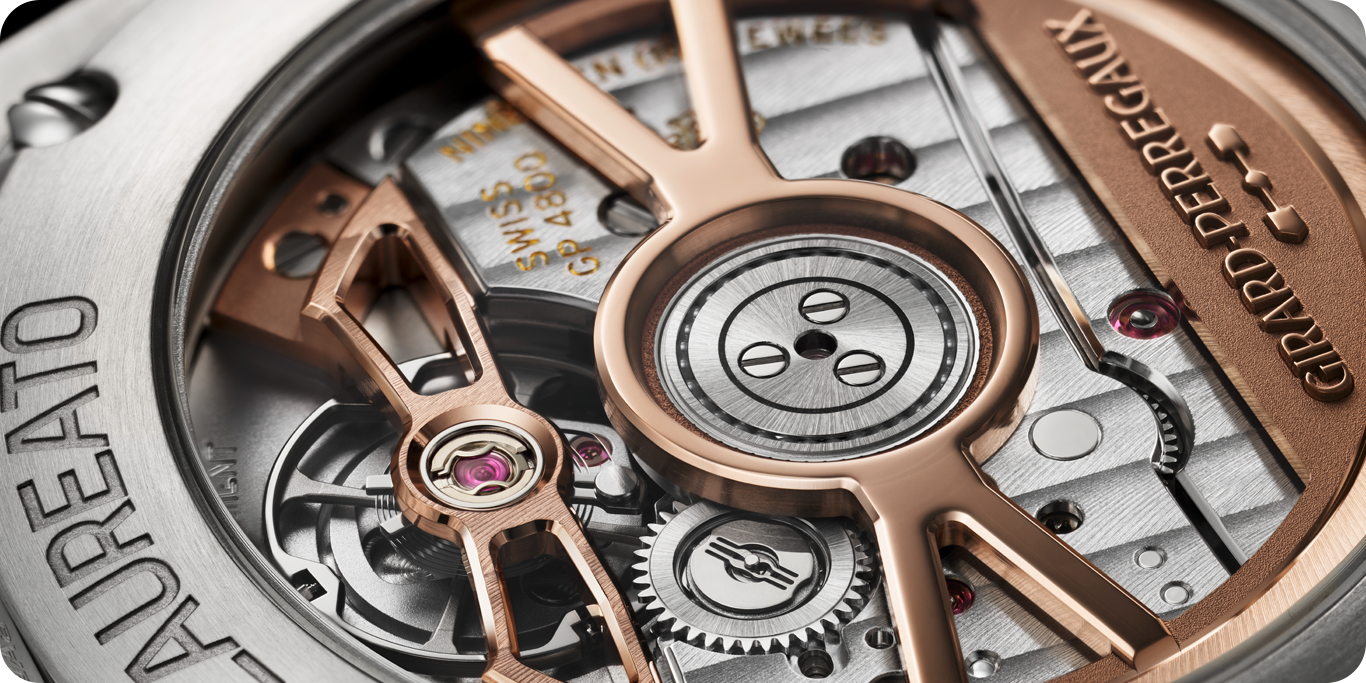
And the finishing is where Girard-Perregaux shows its hand. The GP4800 carries ten separate finishing techniques, all done in-house, and the spread is what impresses. There's the bright work, polishing, anglage, and Geneva stripes; the textured work, sandblasting, snailing, circular graining, and straight graining; the directional brushing, circular satin and sunray; and hand engraving tying the whole thing together. That's a level of hand-work most brands reserve for watches at twice the price. The case-side proportions are equally serious, with the whole collection coming in at 9.8mm thick, water resistant to 150 meters, and capped front and back with sapphire. The bracelet is a big part of why the Laureato wears as well as it does, its tapering H-links flowing off the case and closing the distance between sports watch and something you forget you have on. Every reference rides on that steel bracelet, finished with a triple-folding clasp and a four-millimeter micro-adjustment, which sounds like a footnote until you've spent a summer day fighting a fixed clasp and understood why it belongs near the top of the list.
The four references share a case and a dial pattern, then split four ways on a single question: how a dial should handle light. Girard-Perregaux holds the Clous de Paris hobbing constant while changing everything around it, resulting in a small, coherent family rather than four unrelated watches sharing a case.
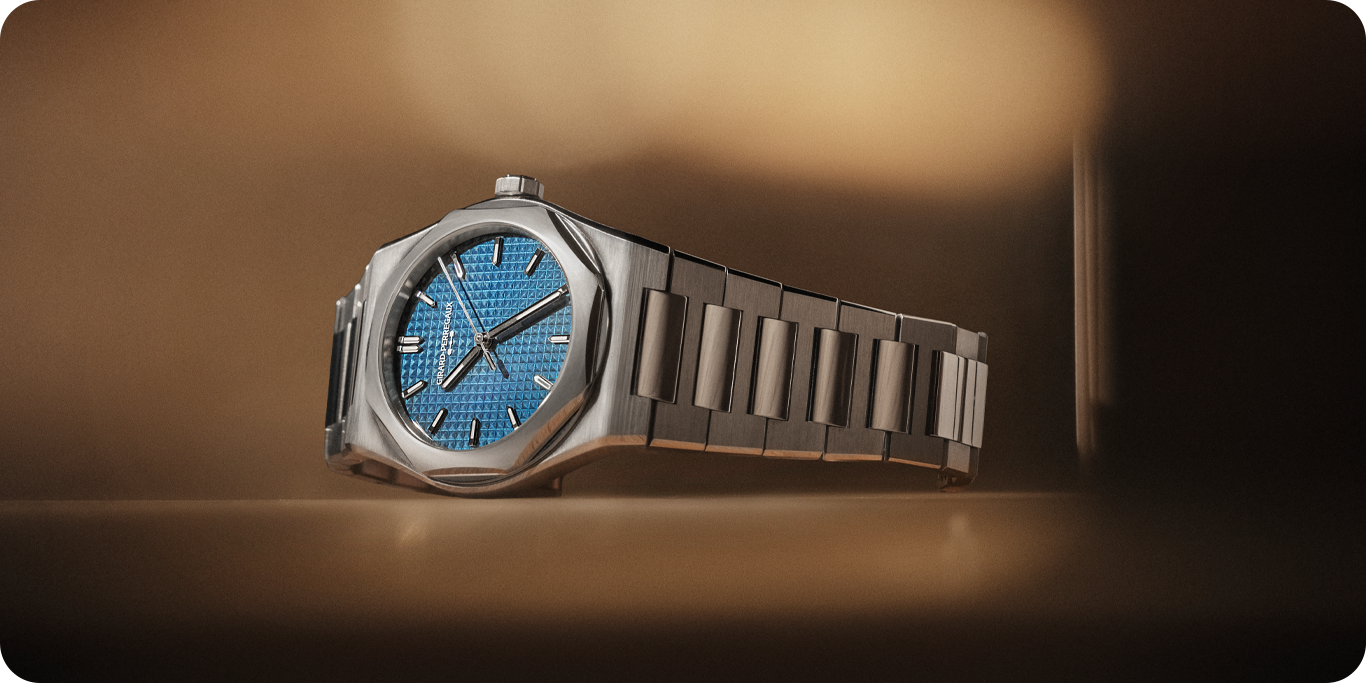
This is the one collectors will fixate on, and rightly so. It's the first enamel dial in the Laureato's history, with blue enamel worked over the hobbed Clous de Paris motif, which is genuinely difficult to execute on a textured surface and is a technique almost never seen on an integrated-bracelet sports watch. The payoff is depth that rewards the wrist, shifting between deep blue and near-black as the light moves and the relief catches it. Moreover, both its hands and indexes are executed in white gold. Photos simply don't do it justice. In person, you catch yourself tilting your wrist just to watch the color move. Girard-Perregaux kept this one clean and time-only, and dropping the date was the right move. A symmetrical, uninterrupted surface is exactly what a dial like this wants, and the choice is part of why the movement here runs a slightly different component count than its dated siblings. At $24,500, it's the most expensive of the four, and it's the easiest to justify. You're paying for a craft dial, and you're getting one.
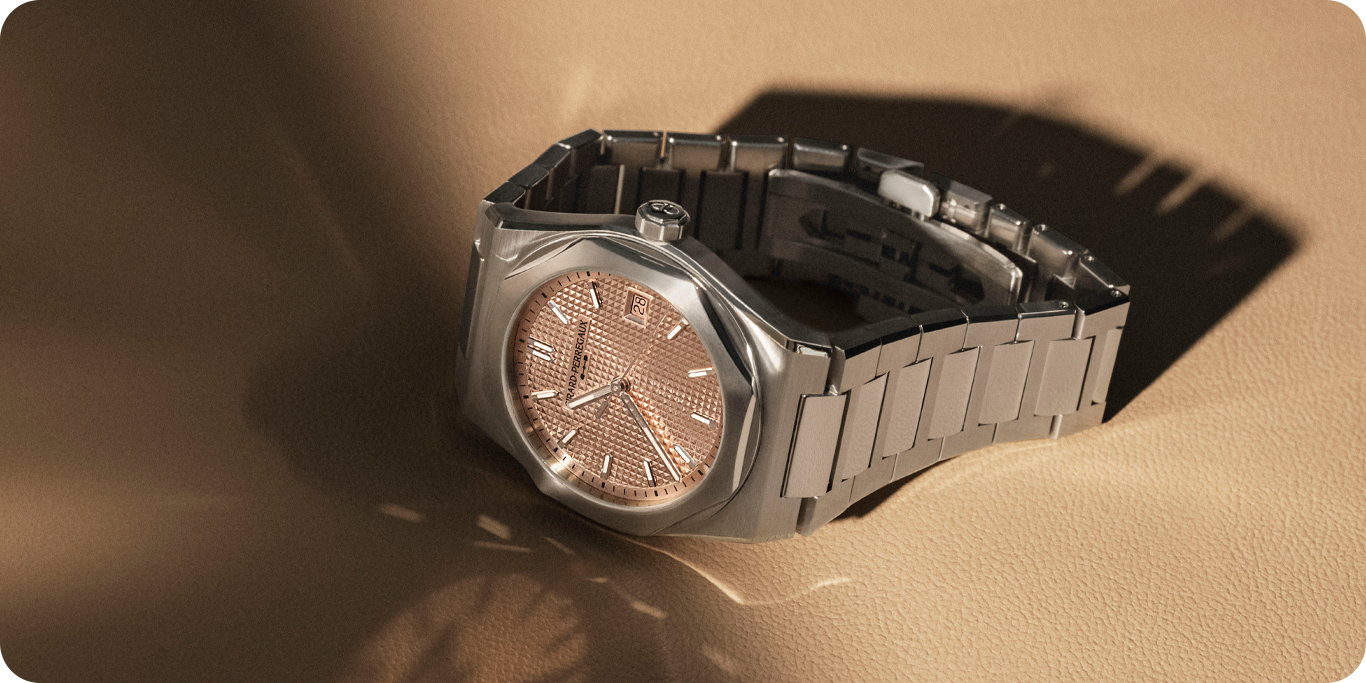
The pink gold dial gets to the same place by the opposite road. Where the enamel finds depth through translucency, the solid 18k gold dial finds it through reflection, the warm metal playing off the Clous de Paris relief to throw a different cast depending on how the light hits. It's the more classical of the two 39mm watches, a date at three keeping it grounded as an everyday piece, and at $23,100 it's also the value play of the collection. A gold dial, an in-house movement, and that finishing in steel, for less than the limited-edition charged for two-tone.
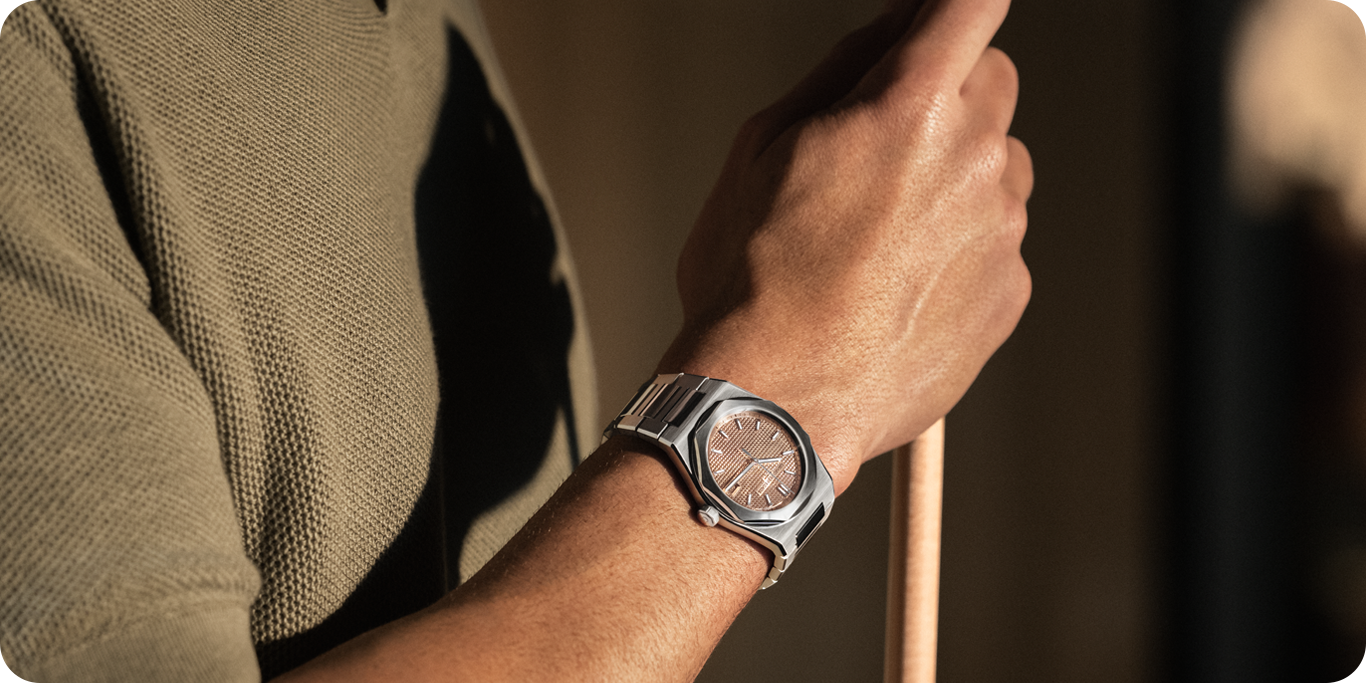
Here's the size story. At 36mm, this is the most compact Laureato in the modern line, a real shift from the 38mm and 42mm cases that have defined the collection lately, and it echoes the compact wrist presence the watch had in its early years. On the wrist, it's the one collectors will reach for, the proportion that lets the Laureato's geometry sit close and disappear under a cuff. The same pink-gold dial and date carry over, and at $23,100, it shares the same value position as its larger sibling. The only honest caveat is that 9.8mm of thickness sits a touch taller on a smaller case than it does on the 39mm, which is the trade for housing a full automatic movement at this diameter, and it's one most people will happily make.
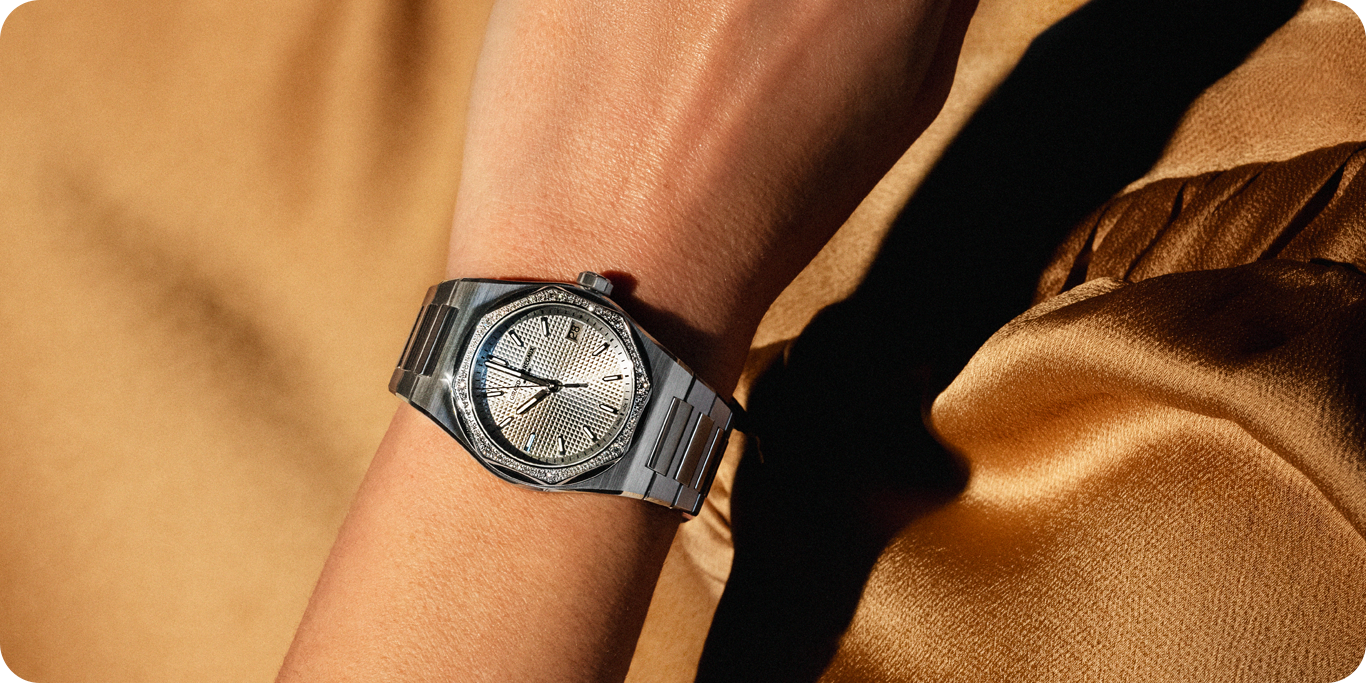
The most luminous of the four, and the one that handles light most literally. A mirror-finished silver dial sits under a bezel set with 64 brilliant-cut diamonds totaling roughly 0.55 carats, and the restraint is the point: the stones trace the octagon and let the dial do the reflecting, so it stays a sports watch first and a jeweled one second. At $24,200, it's the piece that reaches a buyer the other three don't.
The clearest read on this release is the pricing, and it's generous. The original Fifty launched at roughly $28,320 as a two-tone limited edition. These four production watches range from $23,100 to $24,500, and they manage it while adding a fired-enamel dial on one and diamonds on another. Something is lost in the move to steel, and it's worth saying plainly: the two-tone gold is what made the original feel like an occasion, and that particular warmth is harder to find here. But steel is what lets the Fifty work as a standing collection, putting the in-house movement and the hand-finishing on the wrist for the price of a serious steel watch rather than an anniversary object.
That's also where the Laureato makes its strongest case. An integrated-bracelet sports watch with a manufacture movement, ten finishes, and a craft dial, at this price, sits in a very different conversation than the genre's waitlisted icons. You're buying a watch on its merits, and the merits are real.
Fifty years in, Girard-Perregaux has stopped treating the anniversary as a backward glance. The Fifty is the template now, and on this evidence, it's a good one.
Bezel is the top-rated marketplace for buying and selling luxury watches. We give you access to tens of thousands of the most collectible watches from the world’s top professional sellers and private collectors. Every watch sold goes through our industry-leading [in-house authentication process](https://getbezel.com/authentication), so you can buy, sell, and bid with confidence.
Bezel is available to download on the App Store now. Please reach out to our concierge team if there is anything we can help you with!

©2026 Bezel Inc.
All rights reserved.