
A recent attempted sale of a Rolex GMT-Master II on Bezel offered a rare example of how a watch can be entirely authentic in its core components, yet compromised in ways that fundamentally alter its legitimacy, serviceability, and long-term value.
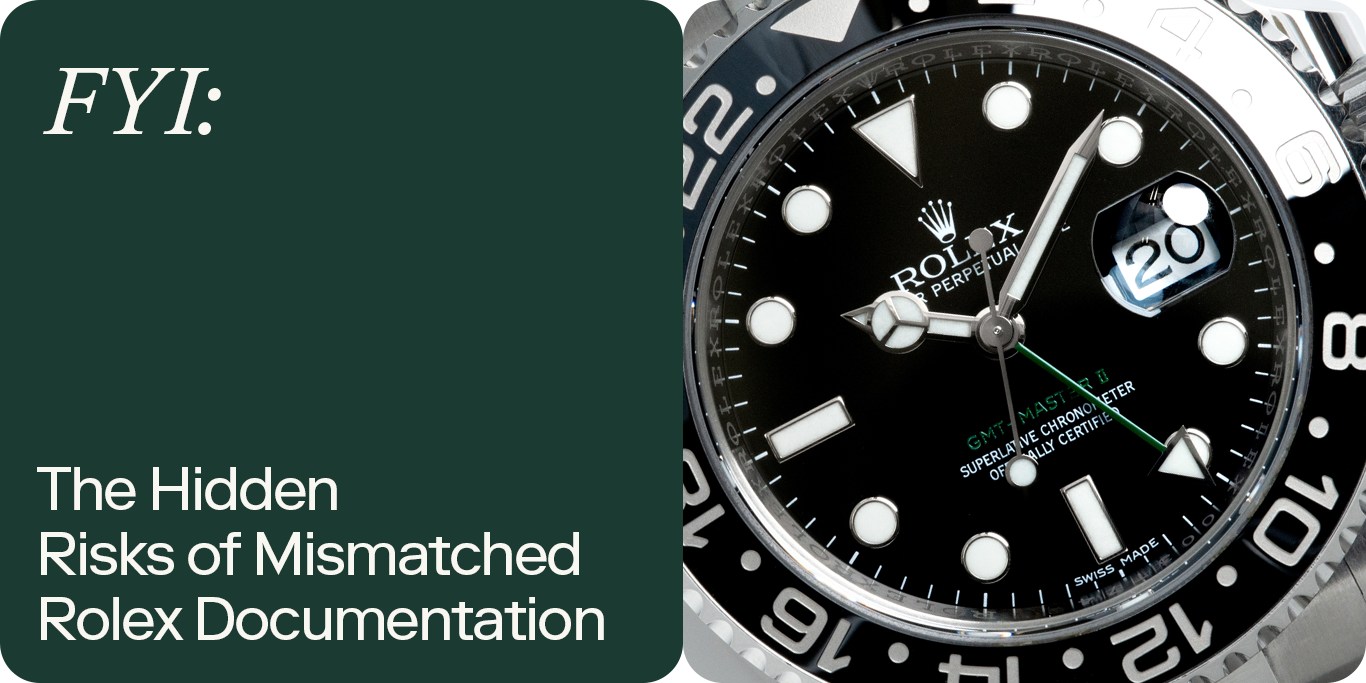
In the pre-owned Rolex market, trust and authenticity are often built on small details. Serial numbers, warranty cards, engravings, and finishing all play a role in determining whether a watch is not only genuine but also correctly represented. Most of the time, those elements reinforce one another. Occasionally, they do not.
A recent attempted sale of a Rolex GMT-Master II on Bezel offered a rare example of how a watch can be entirely authentic in its core components, yet compromised in ways that fundamentally alter its legitimacy, serviceability, and long-term value. The case highlights why modern authentication requires looking beyond surface confirmation and into areas most buyers never see.
The watch in question was a stainless steel Rolex GMT-Master II Ref. 116710LN-0001 on an Oyster bracelet. On initial inspection, it appeared to be a normal, correctly represented example. The condition matched the seller’s description, and the Rolex warranty card included with it was itself authentic.
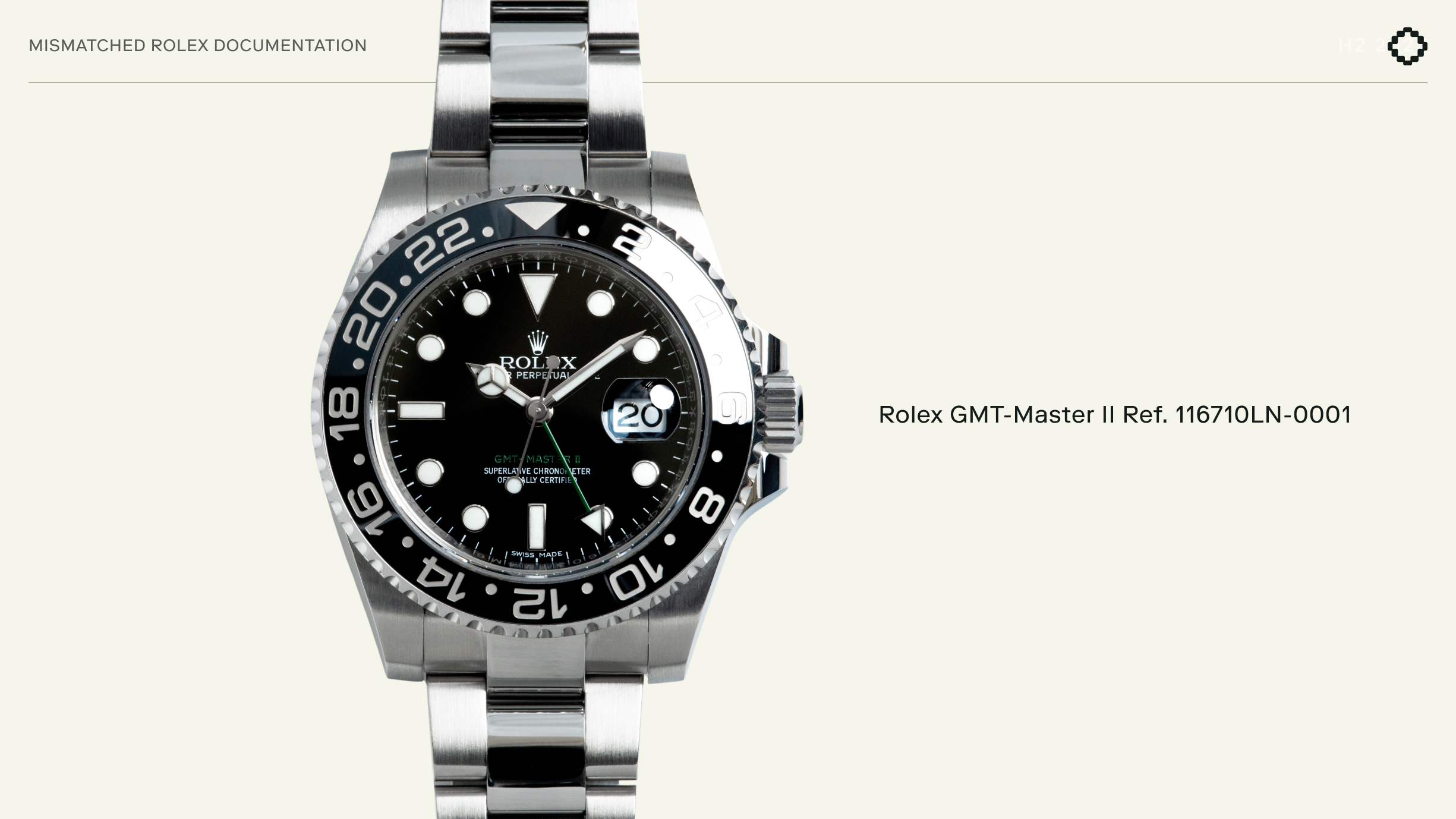
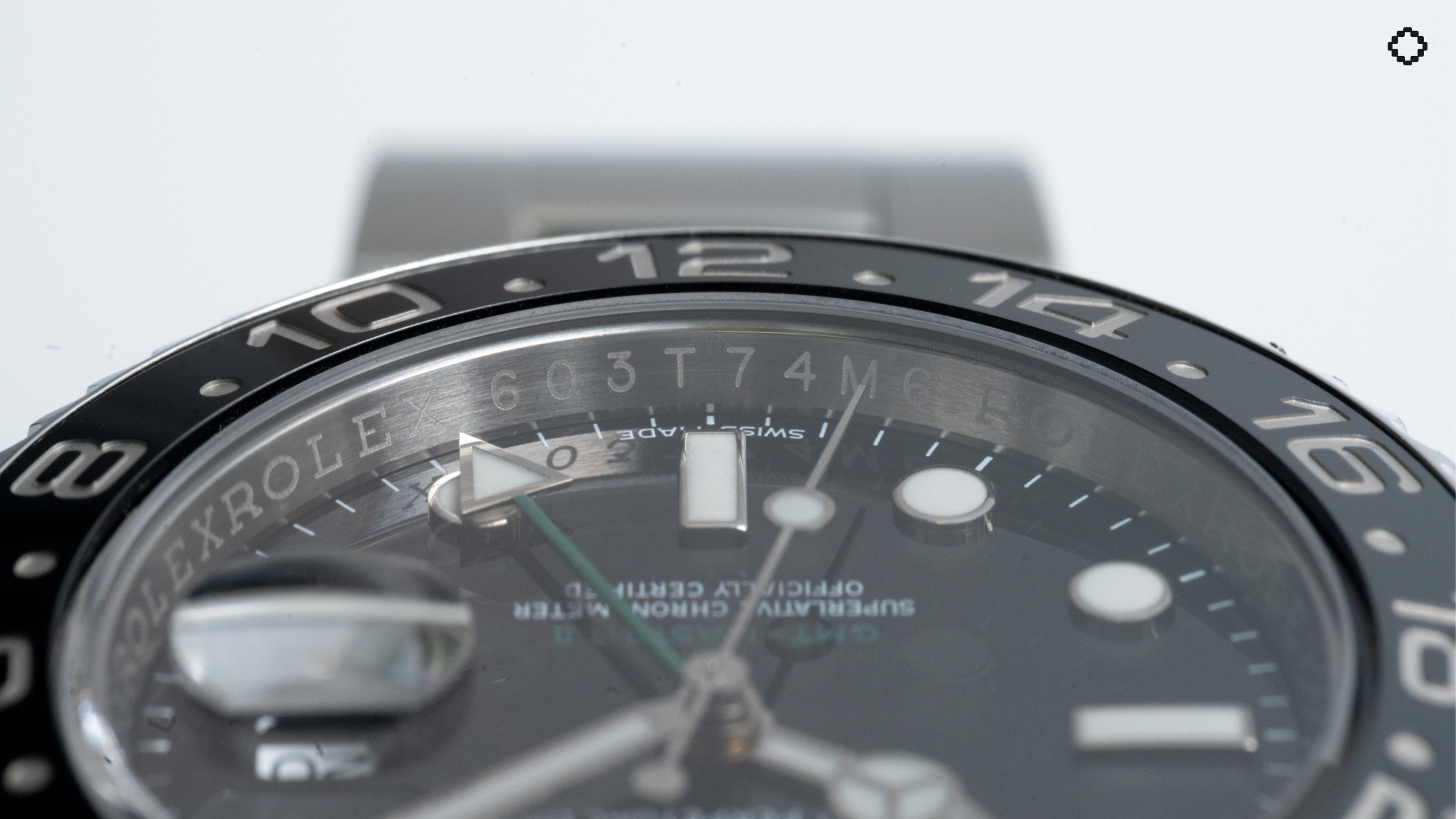
As part of Bezel’s standard intake process, our authentication team began by checking the watch's identifying numbers. The serial on the rehaut matched the serial between the lugs, which is what you want to see when those factory markings are consistent. At that stage, the watch appeared to be correct.
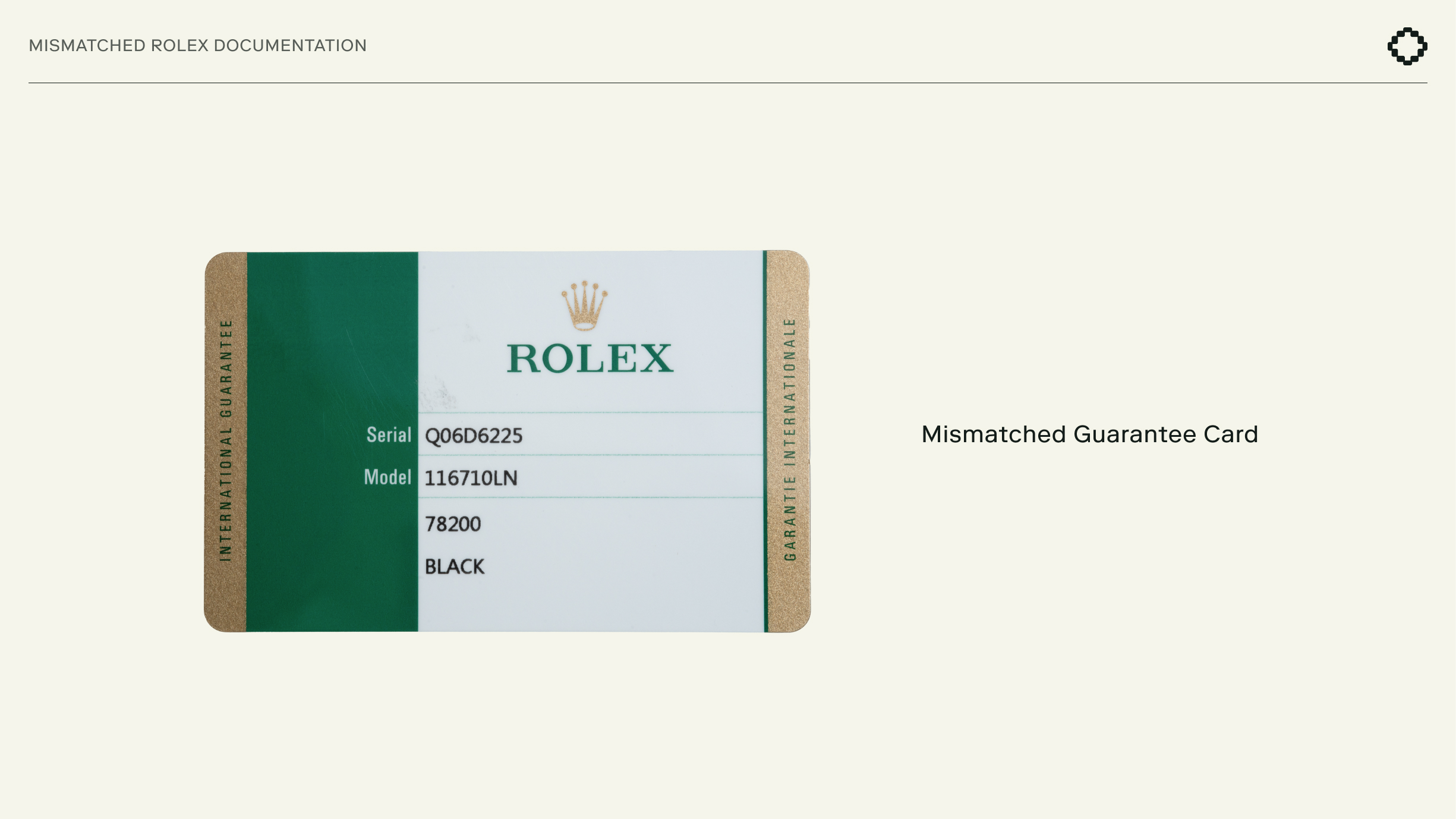
The first inconsistency emerged when those serial numbers were compared with the warranty card. The card was authentic, but the serial number printed on it belonged to a different watch. That mismatch shifted the review into a deeper lane, and the watch was brought to Bezel’s in-house watchmaking team for closer examination.
During the assessment of its movement, our watchmakers discovered an additional engraving on the inside of the caseback. Rolex factory engravings follow strict standards for placement, execution, and depth. This one did not align with known production methods.
The odd part was that it solved a problem Rolex had already solved. Modern Rolex watches carry serial information in more than one location, so adding another engraving inside the caseback served no functional purpose and only introduced new risk. In effect, the added marking was there to visually connect the mismatched warranty card to the watch.
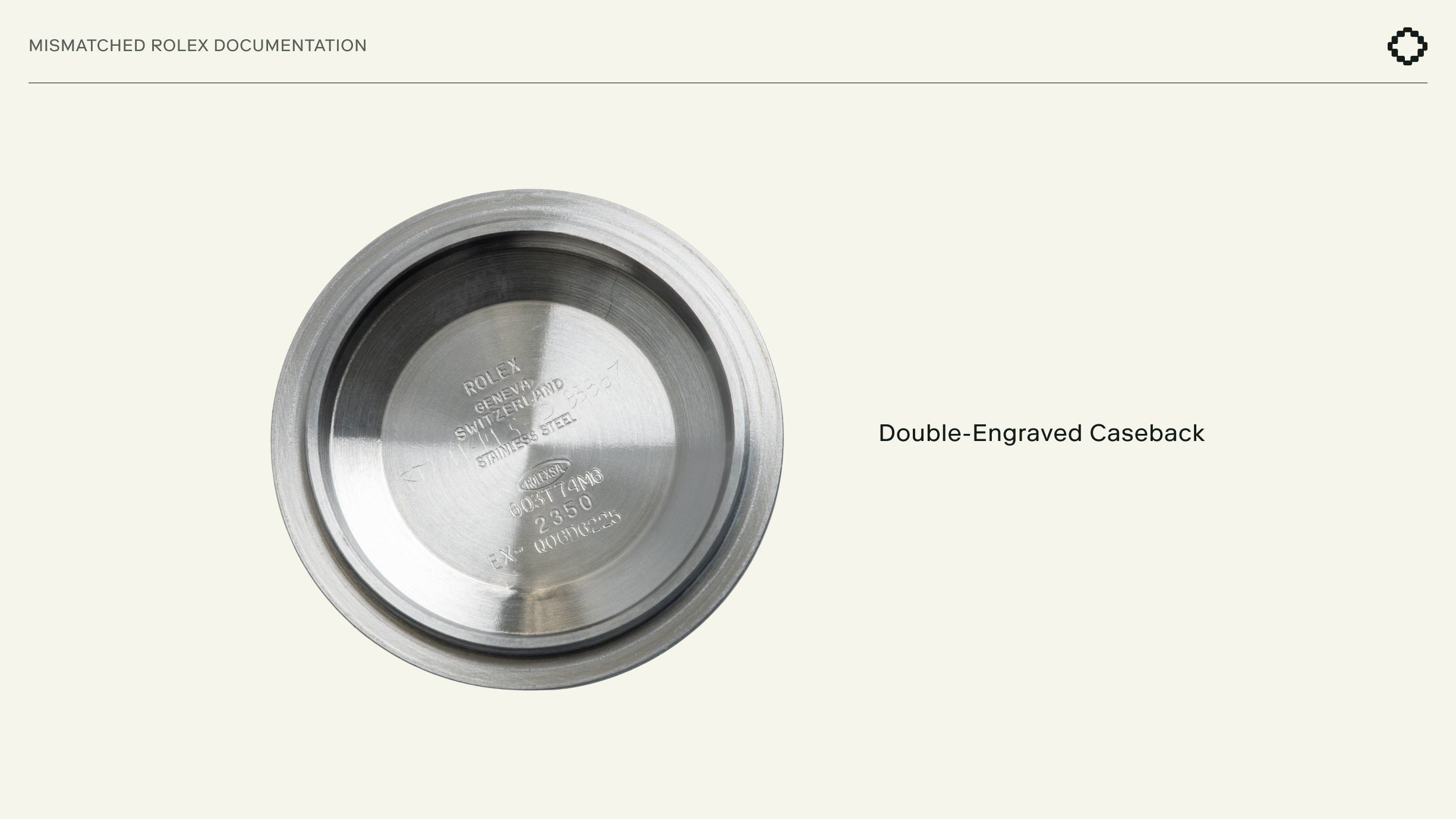
Aftermarket engravings can appear for benign reasons, such as personal inscriptions. This was not that. It touched identifying information and introduced a level of ambiguity that Rolex would not accept during service. Even though the watch itself was authentic, the alteration meant the manufacturer would refuse it, and that it would be difficult to represent it cleanly on the secondary market.
Cases like this are uncommon, but the takeaway is important. Situations like this show that authenticity is rarely black-and-white. Even when a watch is made up of original parts, certain alterations can change how it can be serviced, represented, or confidently sold in the future.
At a glance, nothing about the pairing would necessarily raise concern, especially to someone focused only on the watch as worn rather than the details hidden beneath the surface. In a traditional peer-to-peer transaction, a buyer might only discover the issue years later, often during a service attempt or resale.
As Bezel Chief Marketplace Officer Ryan Chong explains, “Buyers tend to focus on whether a watch is real. What’s less obvious is whether it remains serviceable and defensible long term. That’s where deeper inspection becomes critical.”
Every watch submitted to Bezel is assessed as a complete system. Authenticators verify external markings, serial consistency, and documentation, while experienced watchmakers conduct internal inspections to ensure mechanical integrity and authenticity. That structure makes it possible to catch problems that only appear when a watch is looked at from the inside out, not just across the counter.
Bezel CEO Quaid Walker adds, “Our responsibility isn’t just to confirm that a watch is genuine today. It’s to make sure it can be owned, serviced, and sold with confidence in the future.”
In this instance, the buyer was informed, refunded, and supported in sourcing another GMT-Master II that met Bezel’s authentication standards without compromise.
This case is a reminder that modern authentication extends beyond surface verification. Serial numbers, documentation, and engravings must tell the same story, not just individually, but collectively.
As watches grow more valuable and transactions become more global, unusual modifications and mismatched components are easier to miss and harder to undo. Careful review ensures that what looks complete on paper holds up when examined in the metal.
Bezel will continue to share insights like this so collectors can better understand the realities of the secondary market and move through it with clarity and confidence.
Bezel is the top-rated marketplace for buying and selling luxury watches. We give you access to tens of thousands of the most collectible watches from the world's top professional sellers and private collectors. Every watch sold goes through our industry-leading in-house authentication process, so you can buy, sell, and bid with confidence.
Download the Bezel app on the iOS App Store or start searching for your next watch today at getbezel.com.
Bezel is available to download on the App Store now. Please reach out to our concierge team if there is anything we can help you with!

©2026 Bezel Inc.
All rights reserved.