
A look at Omega’s history as Official Olympic Timekeeper, from 1932 Los Angeles to today’s high-precision timing systems.
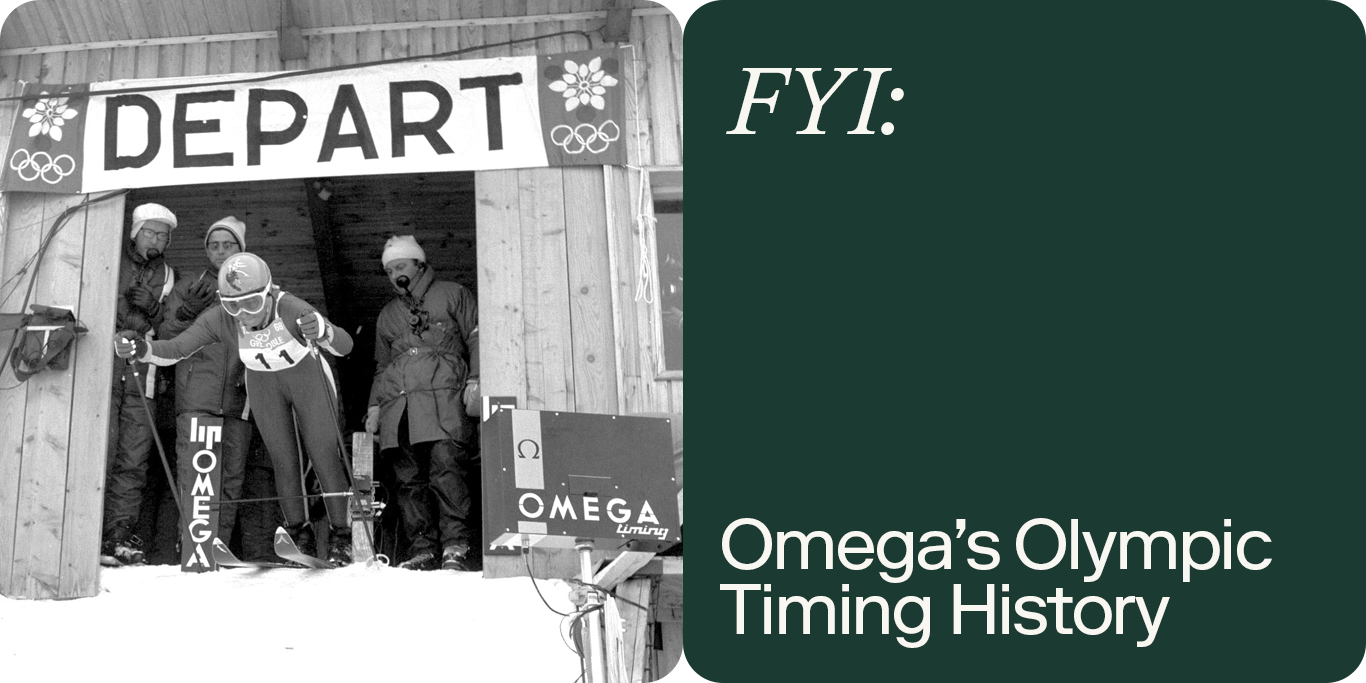
When the Olympic Games begin, there is a brief stillness before the start. The stadium settles, runners lean forward, swimmers grip the edge of the pool. Even the crowd seems to quiet itself.
Then the signal comes and everything moves.
In that instant, attention goes to the athletes. What almost never enters the frame is the system deciding the result. Not just the officials or the scoreboard, but the mechanism underneath it all. The structure that determines whether the margin was real.
For nearly a century, that responsibility has belonged to Omega. Not ceremonially. Functionally.

In 1932, Omega arrived at the Los Angeles Olympic Games with 30 split-seconds chronographs and a single technician. That was the entire operation.
It marked the first time one watchmaker was entrusted with timing every event at a single Olympics. Before that, methods varied. Officials relied on different devices, and recorded times were not always treated as definitive. Consistency was uneven.
The chronographs Omega brought to Los Angeles could measure to one-tenth of a second. Today that sounds modest. At the time, it introduced something more meaningful than incremental accuracy. It introduced uniform calibration across events.
Every athlete competed against the same standard. That alone shifted the tone of competition.
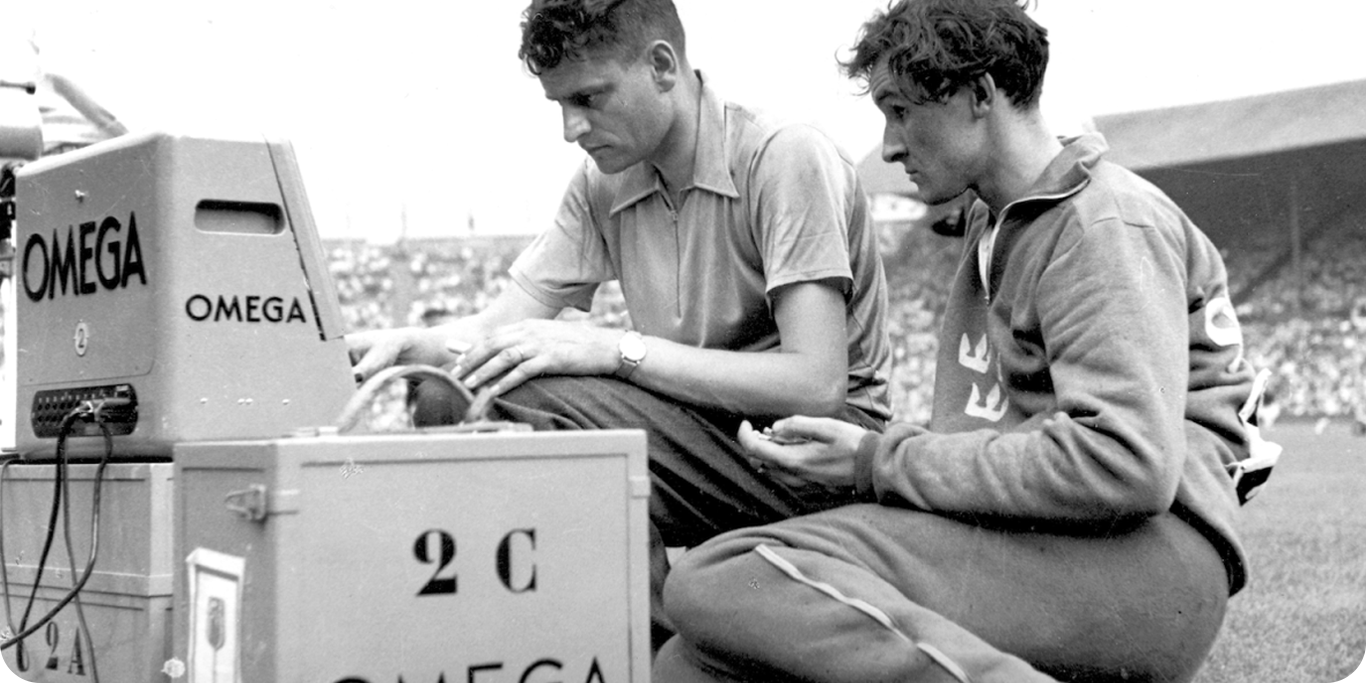
As performances improved, the limits of hand-operated timing became harder to ignore. Even the smallest delay between sight and reaction could alter a result.
At the 1948 London Games, Omega introduced photoelectric cells at the finish line. A beam of light replaced the human trigger. When the beam was interrupted, the clock stopped automatically. The difference was subtle to spectators but significant in the record.
By 1952, electronic chronographs capable of measuring to one-hundredth of a second were printing results almost immediately. The pause between finish and confirmation grew shorter. A hundredth of a second was no longer abstract. It decided outcomes.
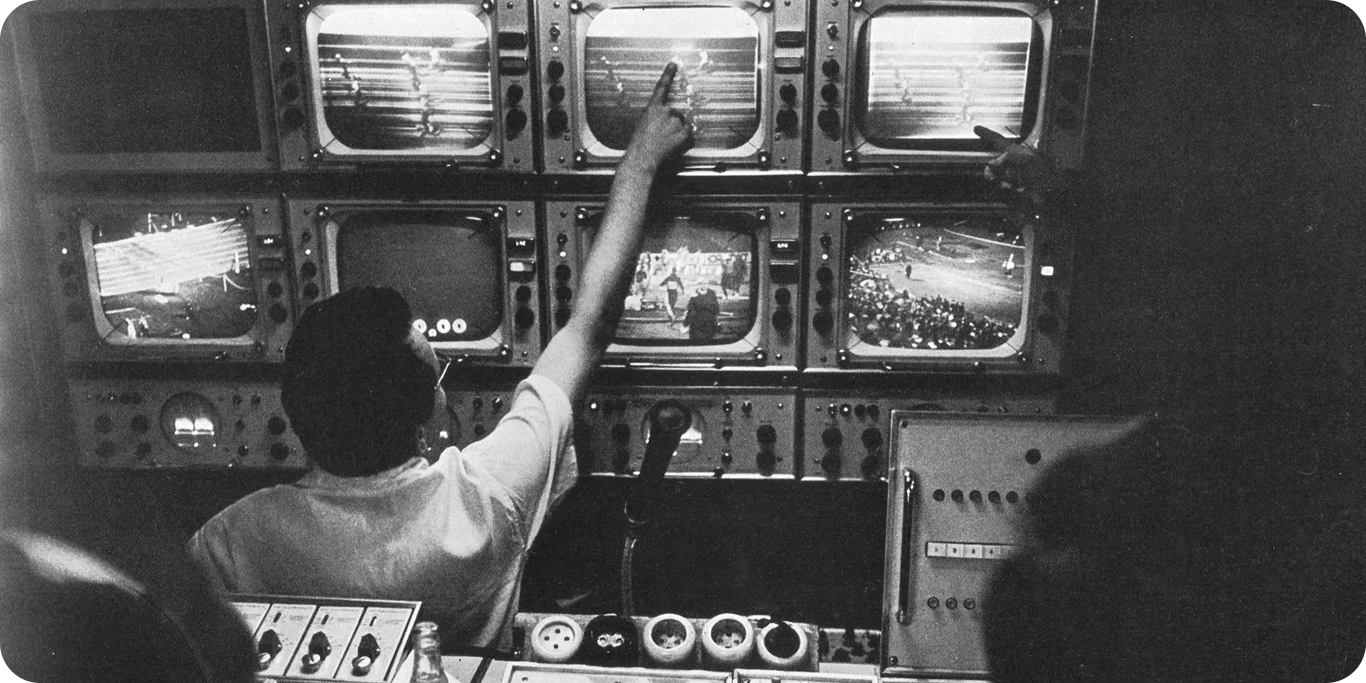
By the 1960s, the Olympics were no longer experienced solely inside the stadium. They were televised globally.
At the 1964 Tokyo Games, official timing graphics appeared directly on screen. Viewers could follow results as they happened. Four years later in Mexico City, electronic touchpads were installed in swimming pools, reducing the inconsistencies that came with hand-finished races. Photo-finish systems improved as well, producing images quickly enough to serve as final authority.
If two runners crossed together, the answer existed in the frame itself.
Timing was no longer something resolved behind closed doors. It was visible, and that visibility changed how audiences processed competition.
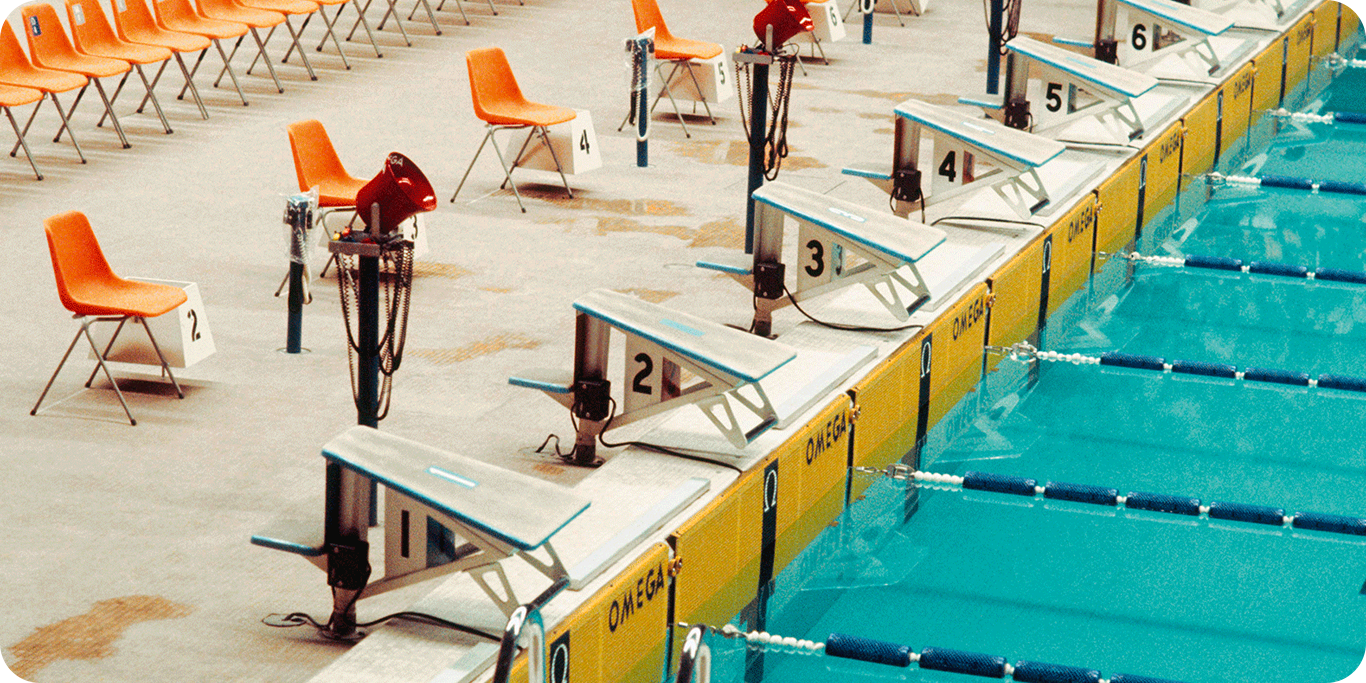
In 1984, pressure sensors embedded in starting blocks allowed officials to detect false starts using measurable data rather than visual judgment alone. Over time, even the starting pistol was updated, with sound transmitted electronically to speakers behind each athlete so that no lane benefited from proximity.
These adjustments rarely draw attention, yet they matter. When margins are measured in thousandths of a second, reducing uncertainty becomes part of the sport itself.
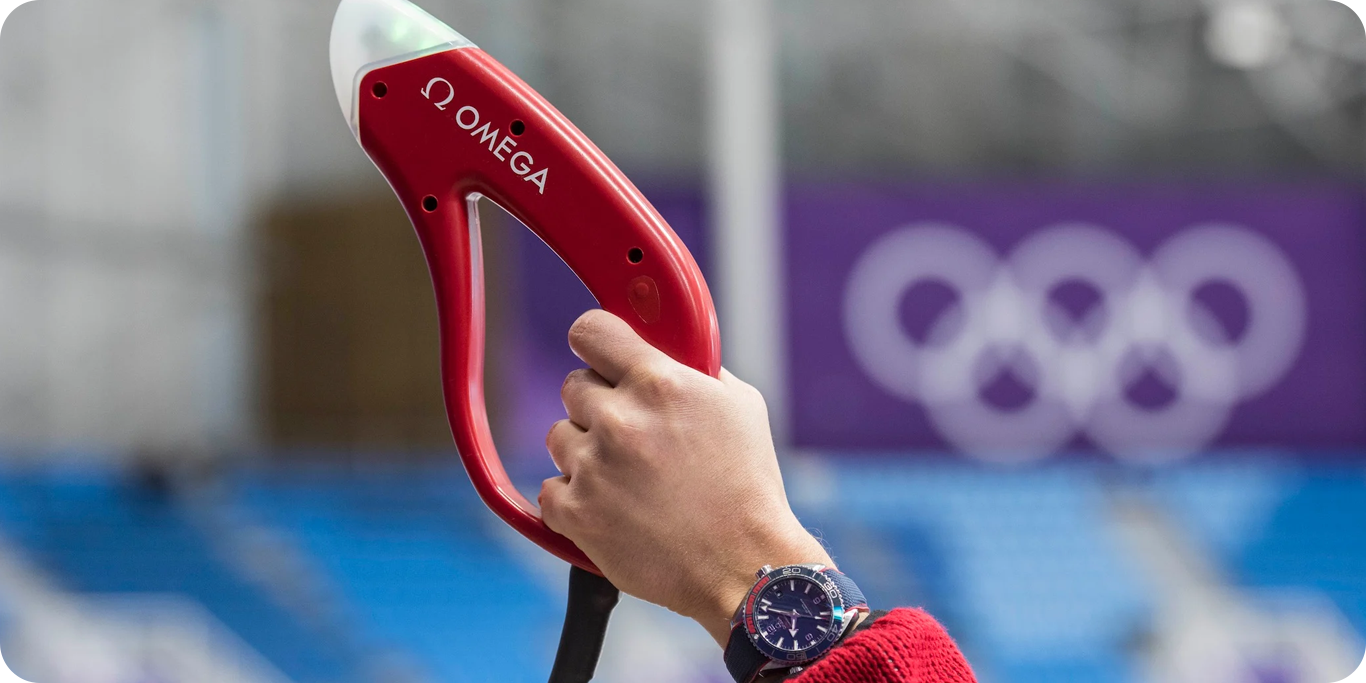
Today, Olympic timekeeping resembles a temporary technical infrastructure more than a watchmaker’s workshop. Modern Scan’O’Vision systems capture tens of thousands of digital images per second. Starting systems, touchpads, pressure sensors, and finish-line cameras feed data into centralized networks that distribute results instantly to judges and broadcasters.
At recent Games, Omega has deployed hundreds of timekeepers and transported hundreds of tons of equipment across dozens of sports. Tens of thousands of measurements are recorded over the course of a single Olympics.
The scale is extensive. The goal remains straightforward: determine who won, and ensure the result stands.
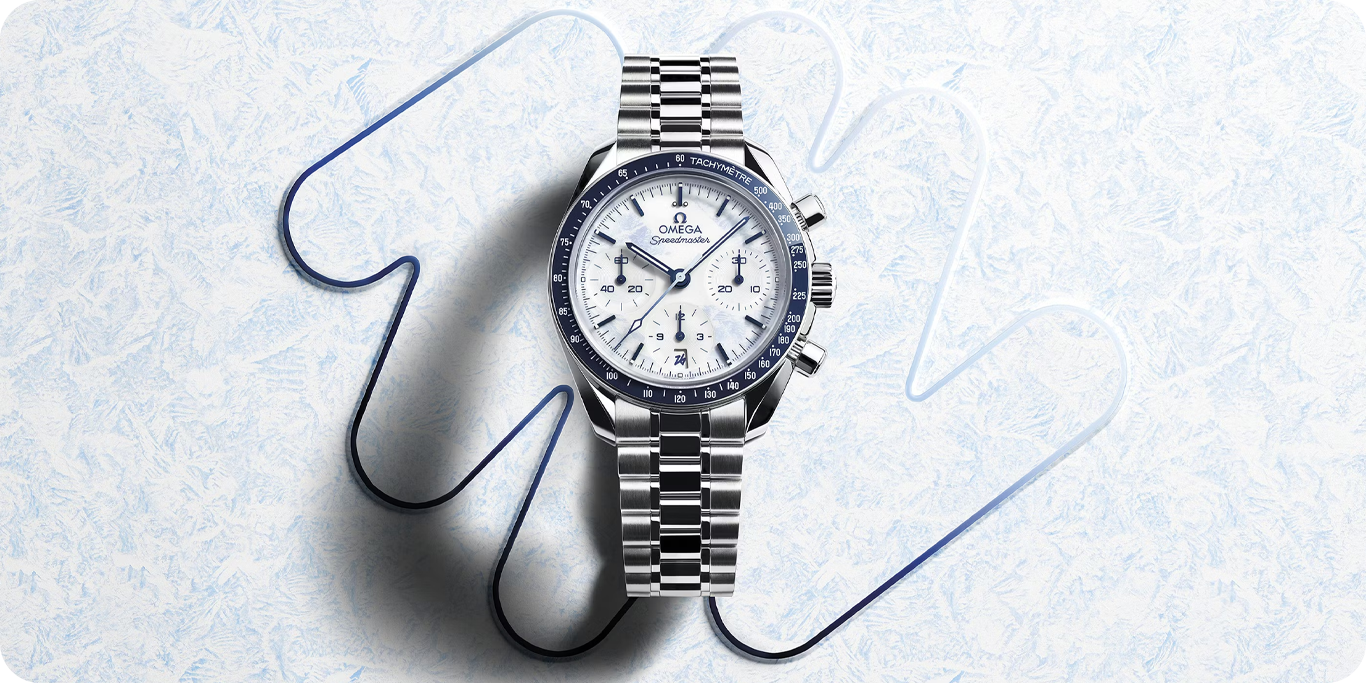
It would be easy to treat all of this as separate from the watches themselves, but the histories move alongside each other. Collections like the Speedmaster and Seamaster developed during decades in which performance timing was being refined at the highest level. Olympic editions produced for cities such as Tokyo, Rio, and Paris reference their host Games, but they also reflect that longer technical association.
A limited edition marks a moment in time, the systems behind it define the moment more precisely than the eye ever could.
Bezel is the top-rated marketplace for buying and selling luxury watches. We give you access to tens of thousands of the most collectible watches from the world's top professional sellers and private collectors. Every watch sold goes through our industry-leading in-house authentication process, so you can buy, sell, and bid with confidence.
Download the Bezel app on the iOS App Store or start searching for your next watch today at getbezel.com.
Bezel is available to download on the App Store now. Please reach out to our concierge team if there is anything we can help you with!

©2026 Bezel Inc.
All rights reserved.