
Patek Philippe marks 50 years of the Nautilus with three limited editions and a desk watch. Plus an all-new Celestial, a Cubitus Perpetual Calendar, Ellipse revival, and more.
Patek Philippe came to Watches & Wonders 2026 with something to prove, and not just because the Nautilus turns 50. The catalog pressure has been building: a new collection in the Cubitus still finding its footing, a deliberate retreat from steel, and a milestone anniversary the entire industry had circled on its calendar. Whatever Patek showed this week was going to be read for what it signals, not just what it is.
What it signals is sufficiency. Not nostalgia, not spectacle, though there's some of both. Across this year's releases, Patek is making the case that what it already does, done at the highest possible level, is enough.
The Nautilus at 50 gets a 1977 movement and no complications. The Golden Ellipse gets a discontinued reference revived largely unchanged rather than a reinvention. And in the same collection there's a grand complication with six patents and a world first, and the manufacture's first wristwatch automaton in its modern history.
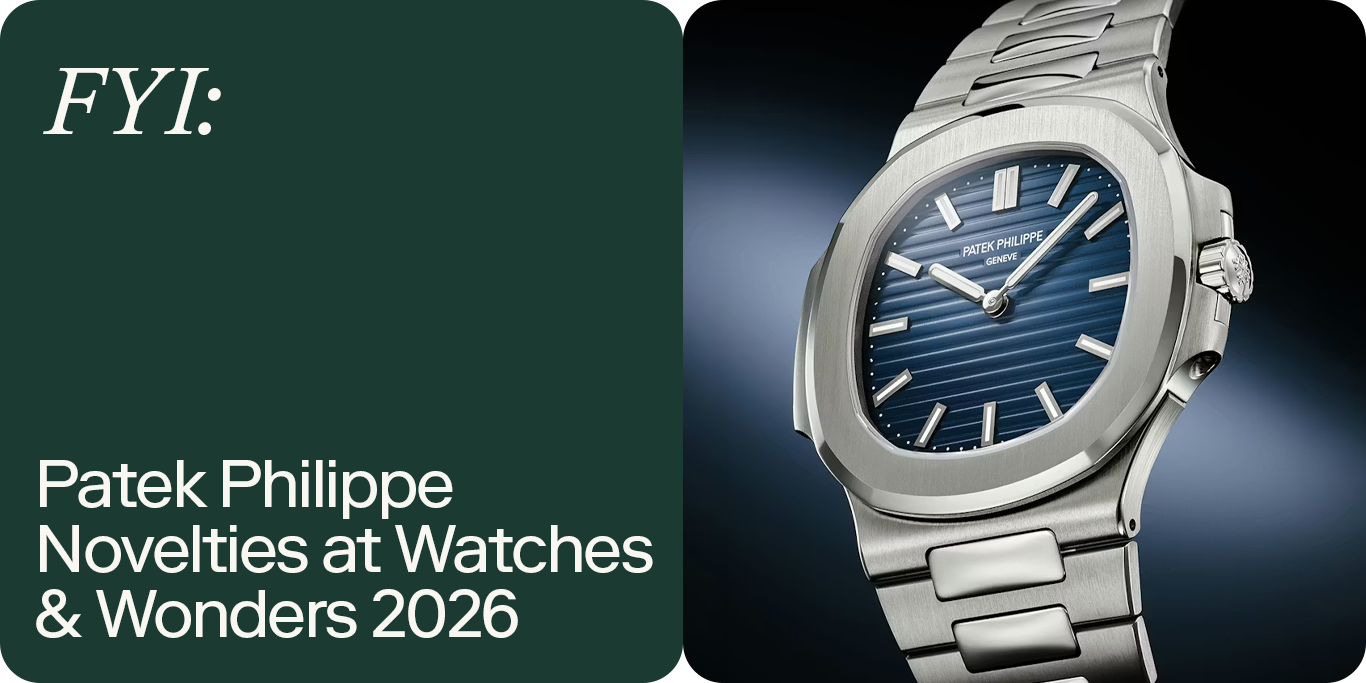
Patek Philippe Nautilus "50th Anniversary" Refs. 5810/1G-001, 5810G-001, 5610/1P-001, and 958G-001
Patek Philippe Celestial Ref. 6105G
Patek Philippe "The Crow and the Fox" Automaton Ref. 5249R
Patek Philippe Cubitus Skeleton Perpetual Calendar Ref. 5840P-001
Patek Philippe Annual Calendar Refs. 4946G-001 and 5396R-016
Patek Philippe Calatrava Alarm Ref. 5322G
Patek Philippe Perpetual Calendar Chronograph Refs. 5270P-015, 5270P-016, 5270P-017
Patek Philippe World Time Ref. 7129J-001
Patek Philippe Golden Ellipse Refs. 5738G-001 and 3738G/100G-014
What This Year's Novelties Add Up To
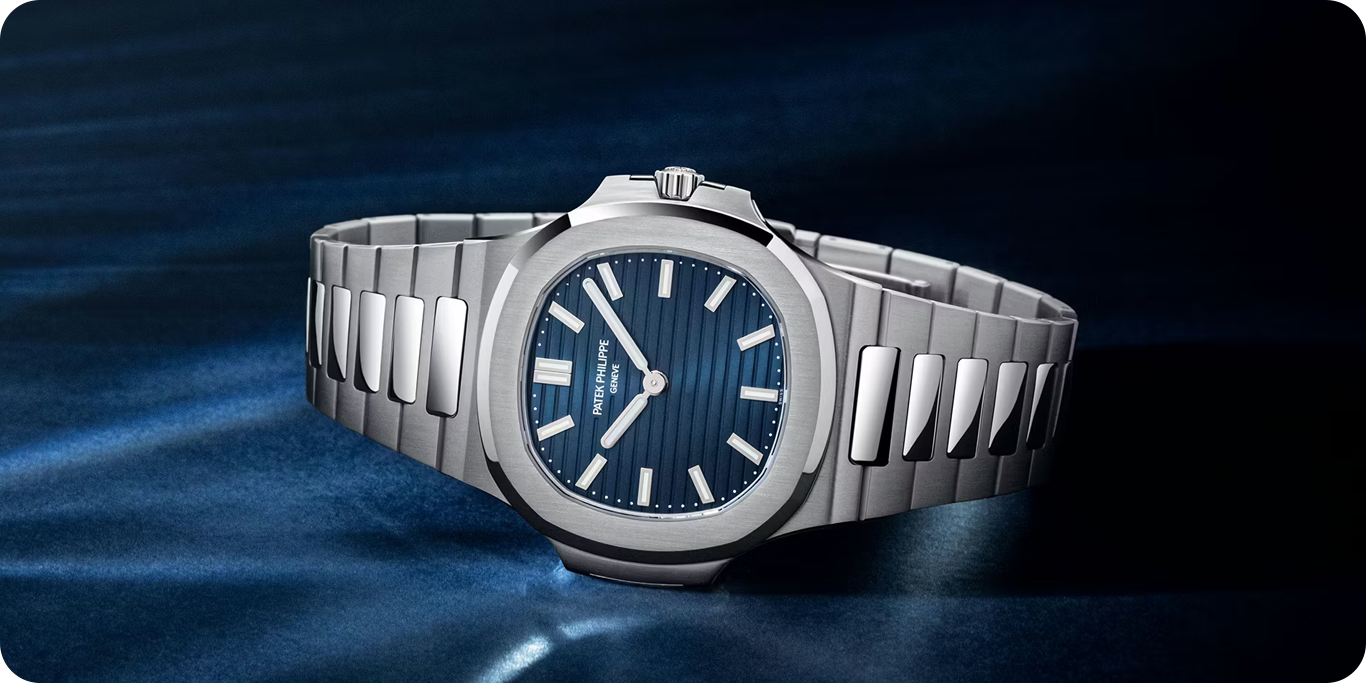
The Nautilus Ref. 3700 debuted in 1976, designed by Gérald Genta: steel case, integrated bracelet, octagonal bezel with rounded corners, horizontally embossed dial. A luxury sports watch priced in steel at a time when the category barely existed. The Ref. 3700 gave way to the Ref. 3800 in 1981, which ran until 2006 when the Ref. 5711 launched. At its peak in 2021 and 2022, the steel Ref. 5711 was trading on the secondary market at four to five times its roughly $34,000 retail price, a distortion that forced Patek's hand. They discontinued it in 2021, replaced it with the white gold Ref. 5811 in 2022, and have not offered a steel Nautilus as a current production reference since. Everything happening this week at W&W flows from that context.
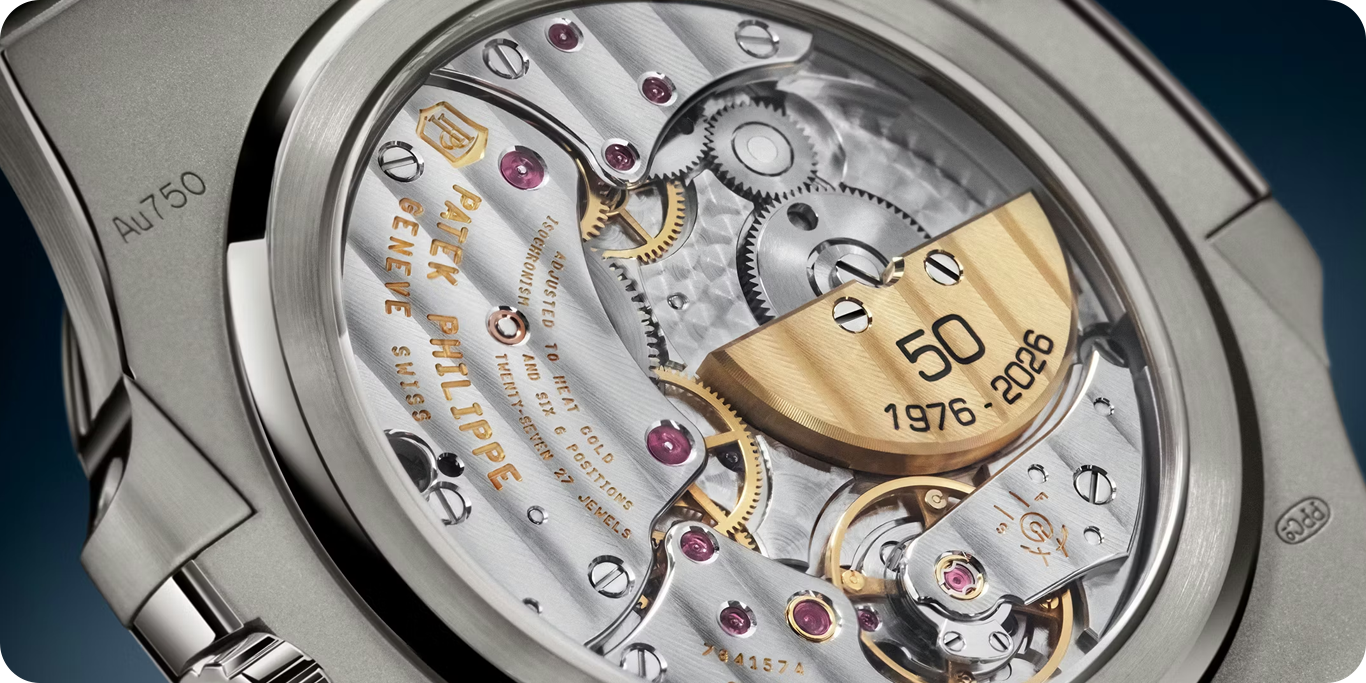
For its 50th, Patek went time-only on all three wristwatch references. No date, no center seconds. All running the Caliber 240, the 2.53mm self-winding movement with a 22k off-center micro-rotor that launched in 1977, one year after the watch itself. The rotor on each piece is engraved "50 1976–2026." All three measure 6.9mm thick, 1.3mm slimmer than the current Ref. 5811, partly because the simpler movement allows it.
The 41mm white gold Ref. 5810/1G-001 comes on an integrated bracelet with a fold-over clasp, limited to 2,000 pieces at CHF 75,000. Its sibling keeps the same case, moves to a navy composite strap with cream stitching, adds baguette-diamond hour markers across the dial, and comes in at CHF 60,000 across a run of 1,000 pieces. The 5610/1P-001 is the one worth watching most closely: 38mm, platinum, bracelet, a diamond set into the case per Patek's convention on platinum references, 2,000 pieces at CHF 90,000. At 38mm by 6.9mm it sits within half a millimeter of the old midsize 3800 in diameter, and notably thinner. For anyone who found the 41mm too large or the current white gold positioning too limiting, this is the opening. Dials across all three share the same sunburst decoration under blue PVD coating and horizontal relief embossing, closer in spirit to the original Ref. 3700 than the embossed anniversary dials from the 40th.
The restraint points directly at the steel question. At the 30th anniversary Patek launched six references including a moonphase and a chronograph. At the 40th, a 44mm chronograph and a platinum-cased, diamond-accented Ref. 5711. Here, a movement born in the same decade as the watch and nothing else competing for attention. No steel. No revisitation of the controversy. A clean close.
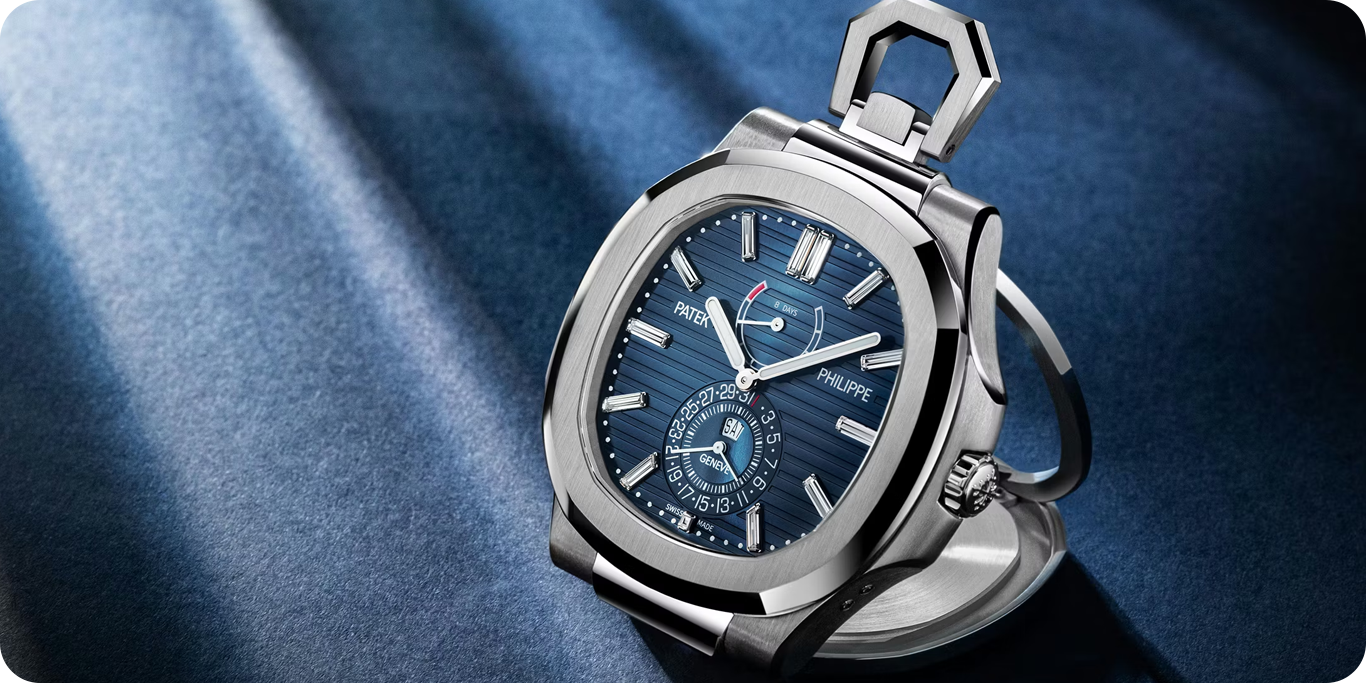
Though the Ref. 958G-001 has been called a pocket watch in some early coverage, it's technically a “desk watch.” The 50.65mm white gold case, 13.5mm thick, has a built-in hinge on the caseback that lets it stand upright on its own, with a dust cover protecting the sunburst dial beneath its blue PVD coating. The front dial carries baguette-diamond hour markers alongside a power reserve indicator, date, day, and running seconds, all framed by horizontal Nautilus relief embossing on the caseback with a satin-finished white gold Calatrava cross and an anniversary engraving around the movement. Inside, the hand-wound Caliber 31-505 8J PS IRM CI J, the same movement in the Ref. 5328G Calatrava, delivers an 8-day power reserve on two barrels across a run of just 100 pieces at CHF 205,000.
The pairing of watch and near-contemporary movement runs through all four pieces. At 50, Patek's position on the Nautilus is that it's enough as it is. Nothing in the anniversary lineup argues otherwise.
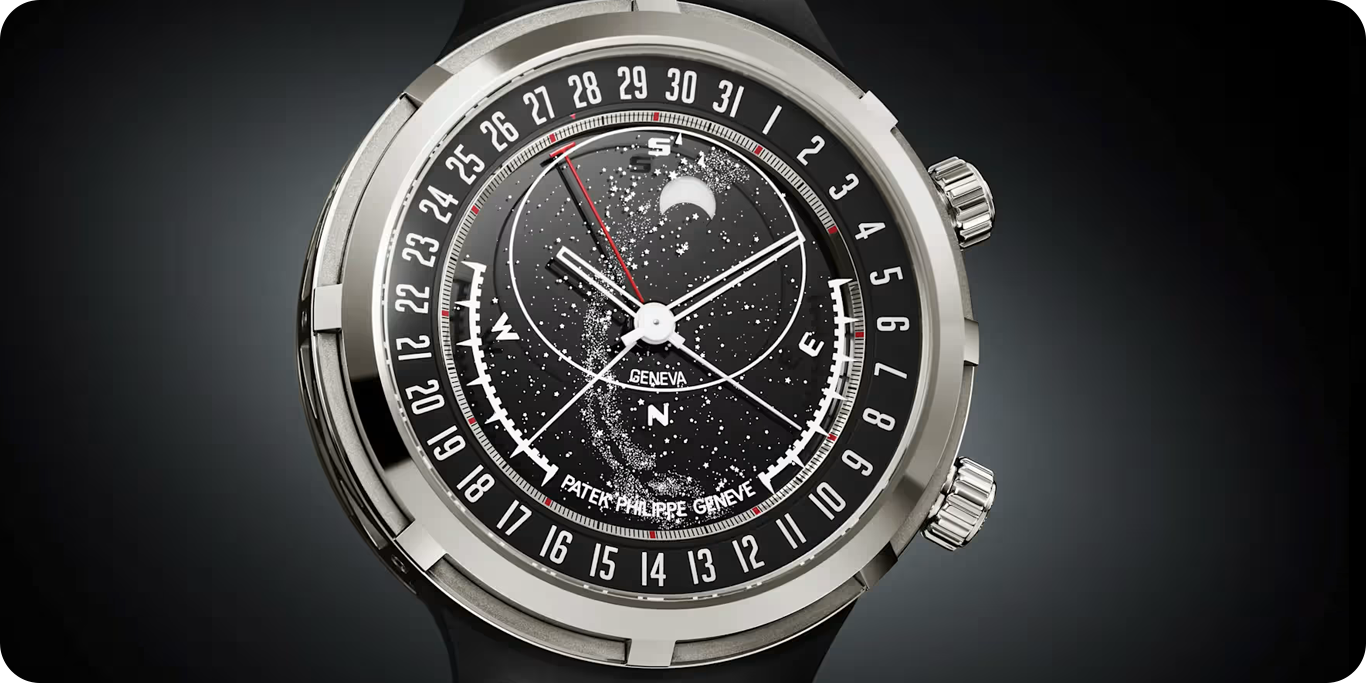
Boasting six patents and a 47mm lug-free white gold case, the Ref. 6105G builds on the existing Celestial platform, with a multi-layered dial featuring independently rotating stacked discs showing the night sky as seen from Geneva, star movement, and moon phases. What’s more, it adds sunrise and sunset times, a first for any Patek Philippe wristwatch. A pusher corrector adjusts those indications for summer or winter time, itself a world first. The integrated black composite strap with X-pattern decor connects directly to the caseback, with no lugs interrupting the profile.
The 47mm no-lug format will suit a narrow audience and Patek knows it. Grand complication buyers at this price aren't shopping for versatility. Six patents on a single movement suggests genuine new ground in astronomical display, not a refinement of the existing Celestial architecture but a real extension of it. This is where Patek chose to push, and at CHF 350,000, it had to be worth it.
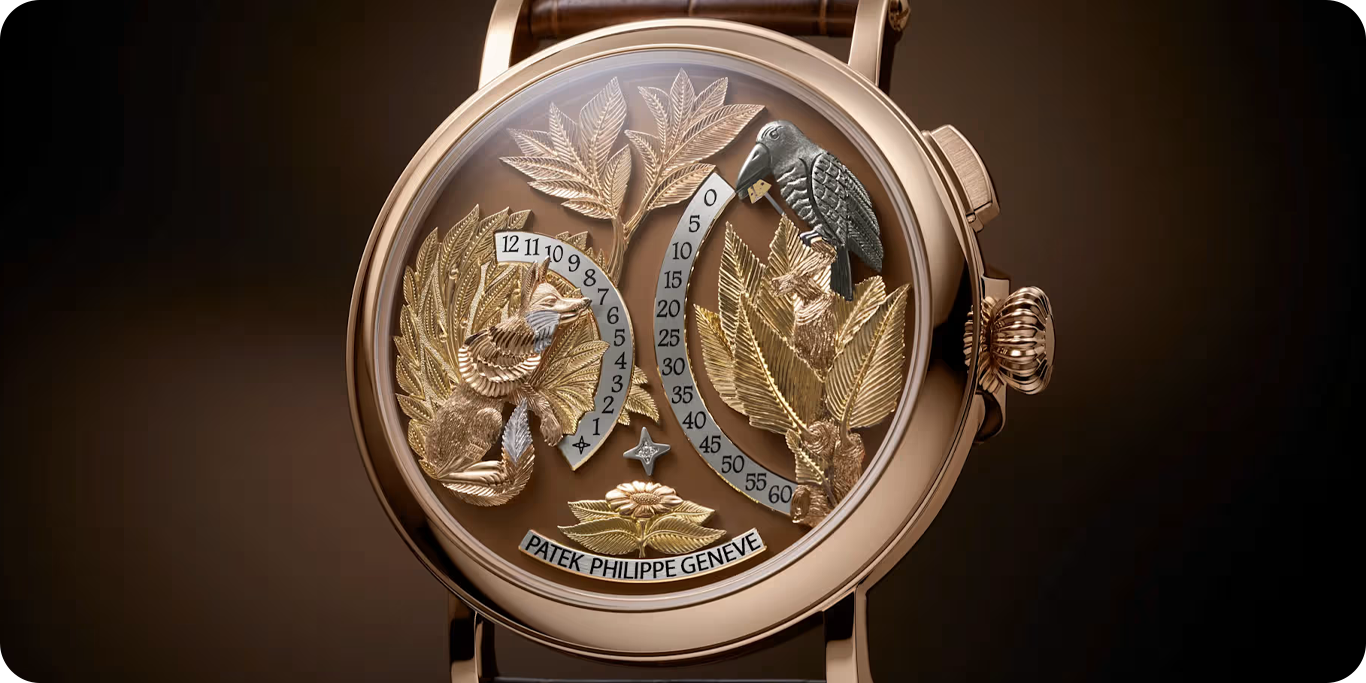
Of everything Patek showed this week, the Ref. 5249R sits furthest outside the catalog. It’s a 43mm rose gold watch that tells time on demand via an animated fable, based on La Fontaine’s Le Corbeau et le Renard. Press a pusher and the scene plays out, then returns to stillness.
Patek has never put an automaton in a wristwatch in its modern history. That’s the context. The idea isn’t new to the manufacture, there’s a 1958 pocket watch by Louis Cottier in the museum that works along similar lines, but bringing it into a wristwatch changes how it’s meant to be engaged with.
For a manufacture that tends to refine what it already does, this stands out. Not because of the complication, but because it exists at all.
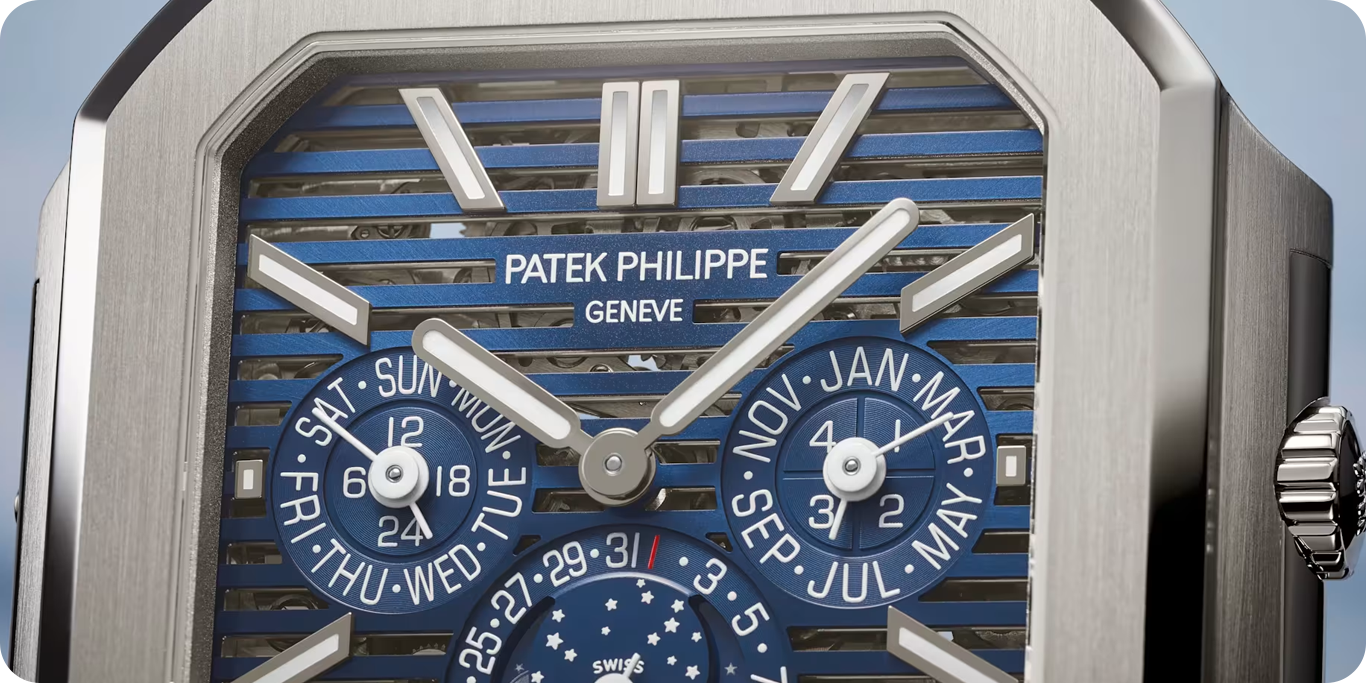
Every previous Cubitus ran a round caliber, a choice that drew its share of criticism given the rectangular case. The Ref. 5840P-001 addresses that with the caliber 28-28 Q SQU, a shaped movement evolved from the 240 Q perpetual calendar caliber, its bridges now conforming to the Cubitus silhouette. That's the news. The perpetual calendar complication, which automatically accounts for the varying lengths of all months, leap years included, without manual correction, is almost secondary to it.
The ribbed dial pattern has been partially laser-cut away to let the skeletonized architecture show through from the front, with the full picture visible through the sapphire caseback. Rhodium-plated bridges, heat-blued screws, a hand-engraved micro-rotor with blue varnishing, and clear sapphires in place of rubies for the pivots keep the monochromatic look consistent throughout. The perpetual calendar display is symmetrical across three subdials: day of the week and 24-hour indicator at 9, month and leap year at 3, date and moonphase at 6. That moonphase is a first for Patek's regular collection in this format, a larger single-moon display completing one rotation per lunar cycle, rendered in photorealistic style via black metalization and laser engraving. A baguette diamond sits in the bezel at 6 o'clock, consistent with Patek's platinum reference conventions.
The case stays at 45mm and gains only 0.4mm in thickness over the previous platinum Cubitus, landing at 10mm. Navy blue Cordura composite strap with textile motif, CHF 150,000. The round movement criticism had followed the Cubitus since day one. This reference answers it.
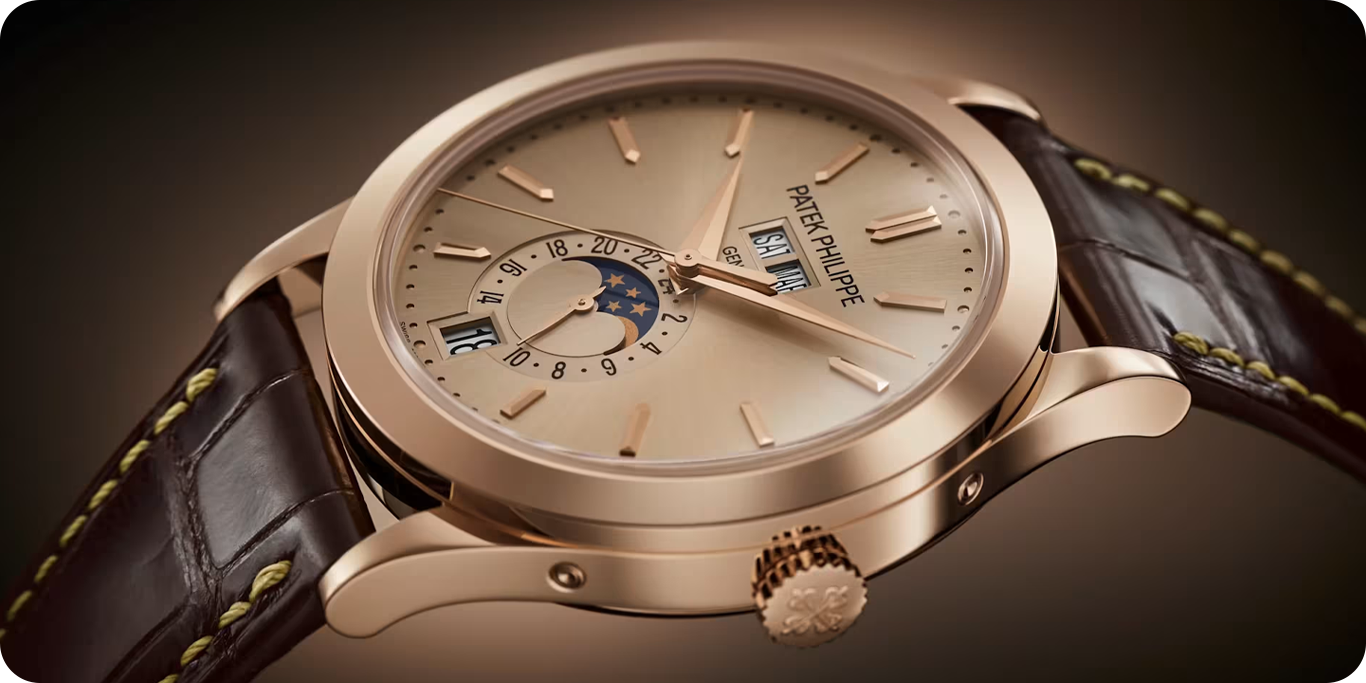
It’s been thirty years since Patek Philippe introduced the annual calendar into regular production, and the argument for it hasn’t really changed. It distinguishes between 30 and 31 day months, requiring one correction per year at the end of February. More practical than a perpetual without reducing to a simple date.This year, Patek presents it in two directions.
The Ref. 4946G-001, 38mm in white gold, moves decisively casual: blue-grey cross-brushed dial, luminescent Arabic numerals, and a calfskin strap treated to resemble denim. It’s an unusual combination for the manufacture, but it aligns with the complication itself. This is the one calendar in the catalog that benefits from being worn daily, and here it’s being treated that way.The Ref. 5396R-016 holds the opposite line. 38.5mm in rose gold, sand-beige dial, a continuation of a reference that’s been in the catalog since 2006. No attempt to reframe it, just a quieter iteration of something already established.
Between them, the positioning is clear. The annual calendar is still the one complication here that actually makes sense to wear every day.
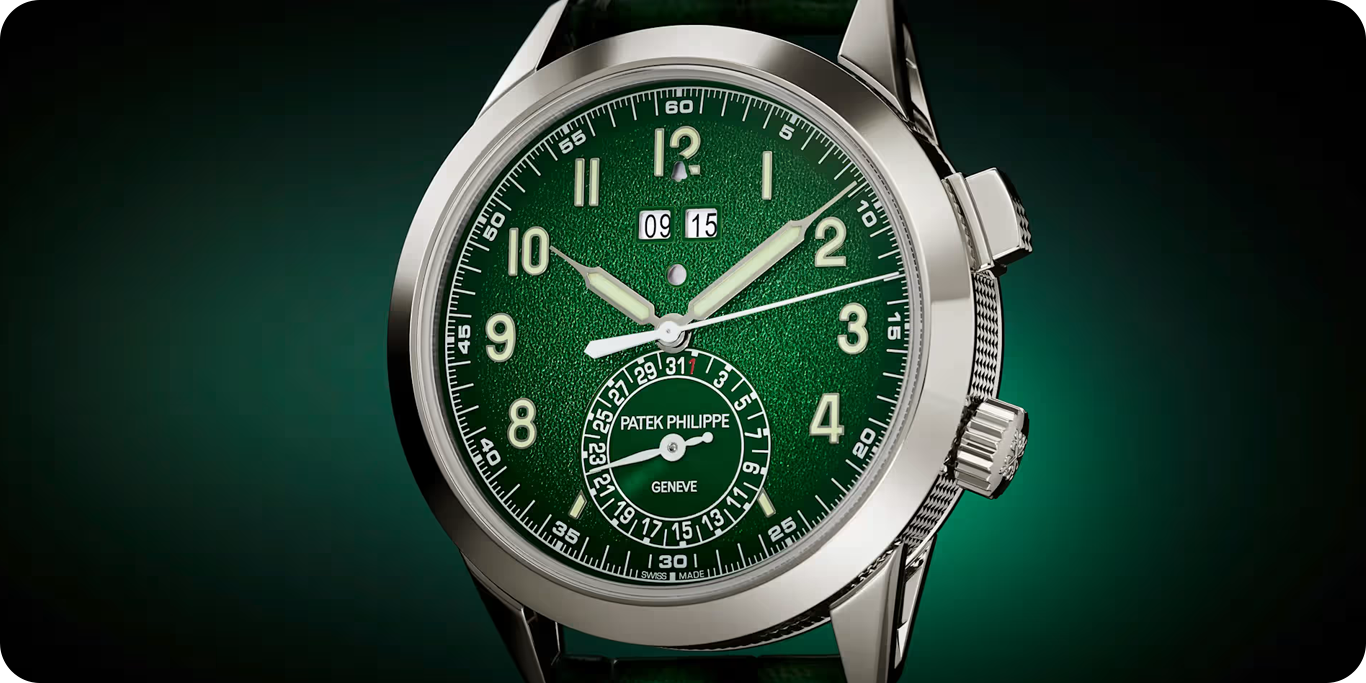
The Ref. 5322G replaces the Alarm Travel Time Ref. 5520, and the change is defined by what’s no longer there. The second time zone is gone. What remains is a single alarm.
That shift narrows the watch considerably. The previous reference positioned the alarm as a travel complication, tied to movement across time zones. This one removes that context. Calatrava case with hobnail pattern, gradient dial in green or blue, offered on textured calfskin or beige nubuck. The complication hasn’t changed, but it’s doing something different here.
At this level, removing functionality is a decision. This pulls the alarm away from travel and closer to something you’d actually use day to day. Simpler to read, simpler to set, and less tied to any one purpose.
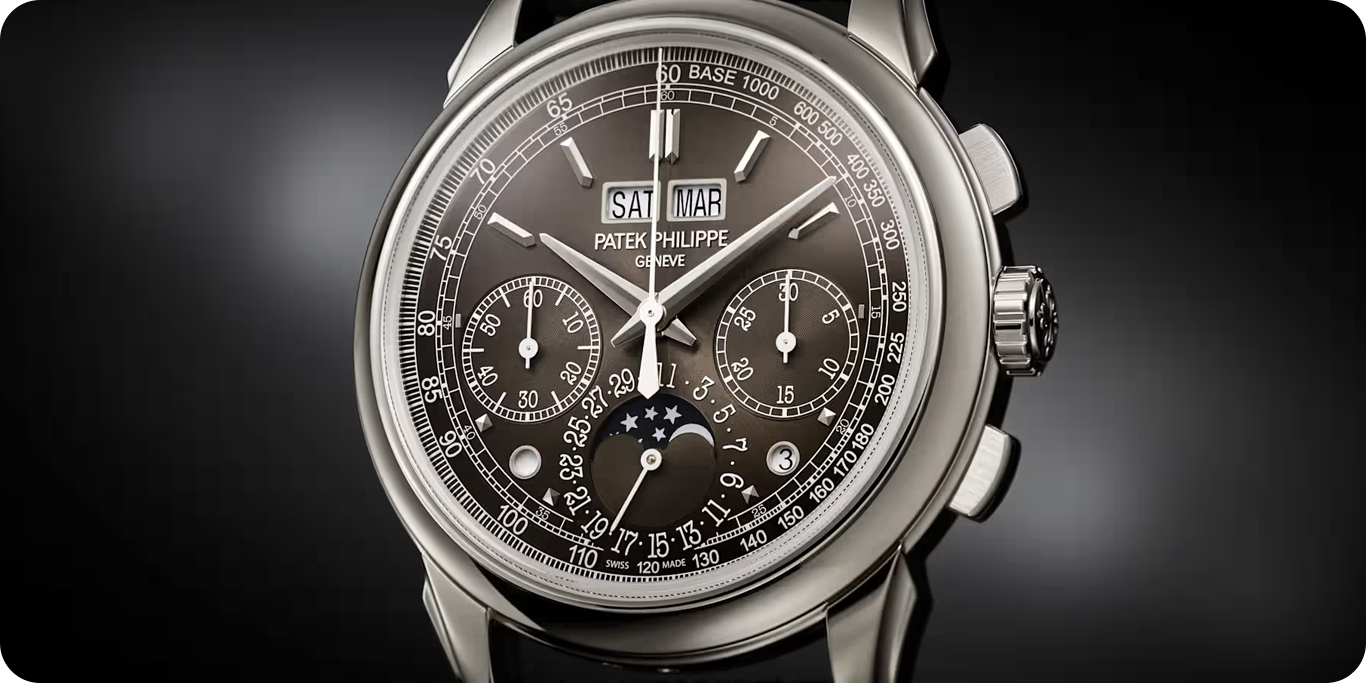
The 5270 isn’t doing anything radically new here. It’s still a perpetual calendar chronograph, and it still sits where it always has in the catalog, which is ultimately a good thing reflecting measured decision-making on Patek's part.
What’s changed is mostly around the case. A concave bezel and two-tier lugs shift the profile a bit, enough to notice if you’ve spent time with earlier versions. The three lacquered sunburst dials, charcoal grey, blue, and red, all with black-gradient rims, go a little further than usual, especially the red.
None of this really pushes the reference in a new direction. It just keeps it moving. In a year where other parts of the catalog stretch out or try something new, this one mostly stays put.
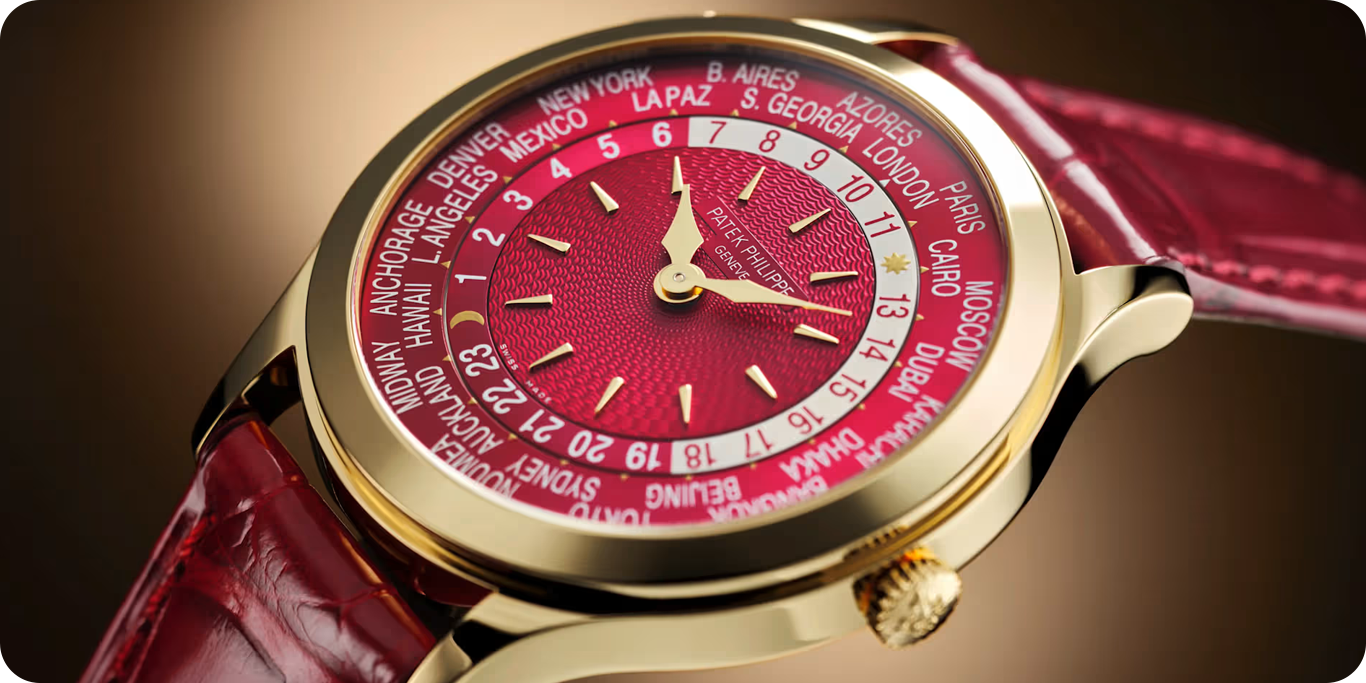
Patek's connection to the world time complication goes back to the 1930s and the work of Louis Cottier, whose city-ring-and-24-hour-disc system remains the mechanical basis today. The Ref. 7129J-001 is a 36mm yellow gold case running the automatic Caliber 240 HU, 3.88mm thin, with a single pusher at 10 o'clock that advances all displays simultaneously when crossing time zones without disrupting the timekeeping. That mechanism has been the practical appeal of the world timer since Cottier devised it. The Ref. 7129J doesn't change any of it.
The dial is where it goes. Carmine red lacquer with a hand-executed basketweave guilloché center, the 24-hour disk coded in the same red for day and rhodium-plated grey for night. It sits alongside the existing white gold Ref. 7130G and Ref. 7130R in the permanent collection, and it's the first non-gem-set 36mm world timer Patek has offered in yellow gold. If you want this complication in this size without diamonds, Carmine red is now the only way in, at CHF 46,000.
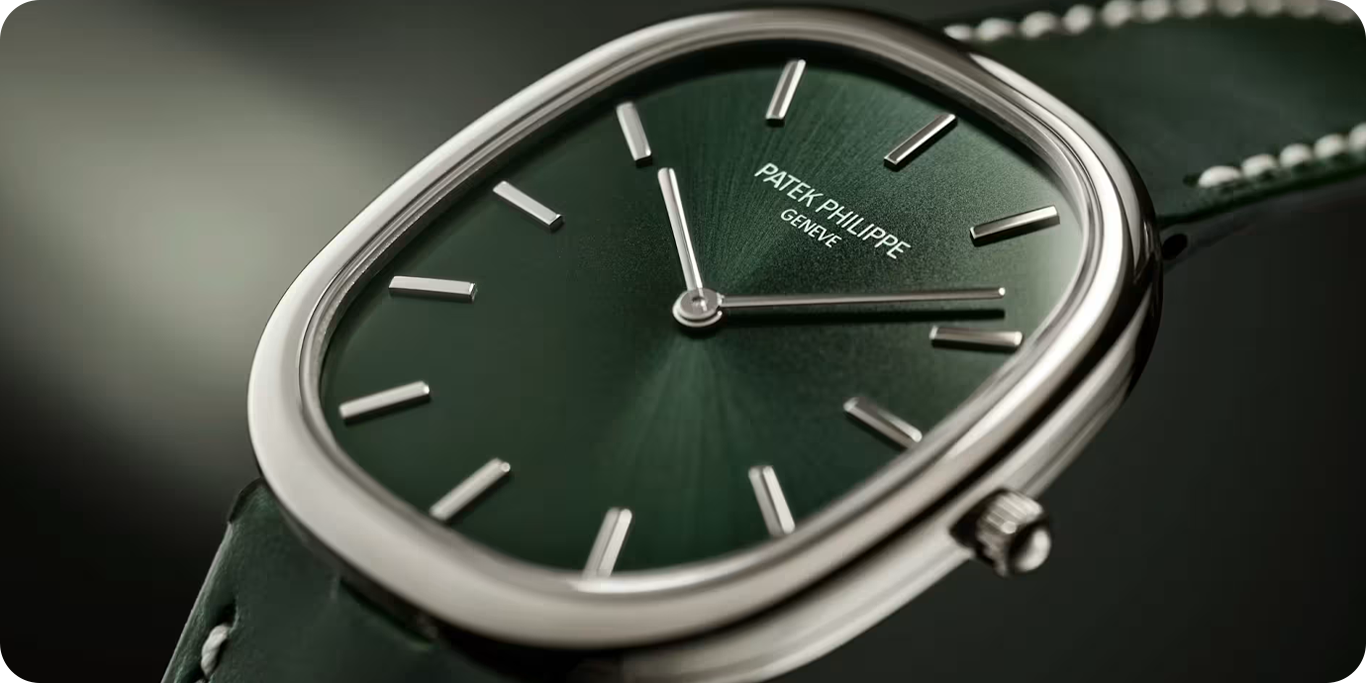
The Golden Ellipse launched in 1978, its case proportioned according to the golden ratio and powered by the Caliber 240. Medium-size Ellipse references have existed since the collection's early years, but the Ref. 3738, introduced in 1978, established the proportions most collectors associate with the collection at its peak through the late 1970s and early 1980s. Patek might've discontinued it in 2009, but it's back this week, largely unchanged, and for a manufacture that almost never reaches this far back into its own catalog for a direct revival, that's the story.
Both new references arrive in white gold with sunburst olive green dials and calfskin straps with cream contrast stitching. The returning 3738G/100G-014 restores the original 31.1 x 35.6mm medium proportions at CHF 32,400, while the larger Jumbo Ref. 5738G-001 at 34.5 x 39.5mm comes in at CHF 34,400. Neither breaks 6mm in thickness. The case, the movement, the applied white gold markers and slender hands are all essentially as they were. Olive green is new. Everything else is a restoration, and Patek is counting on that being enough.
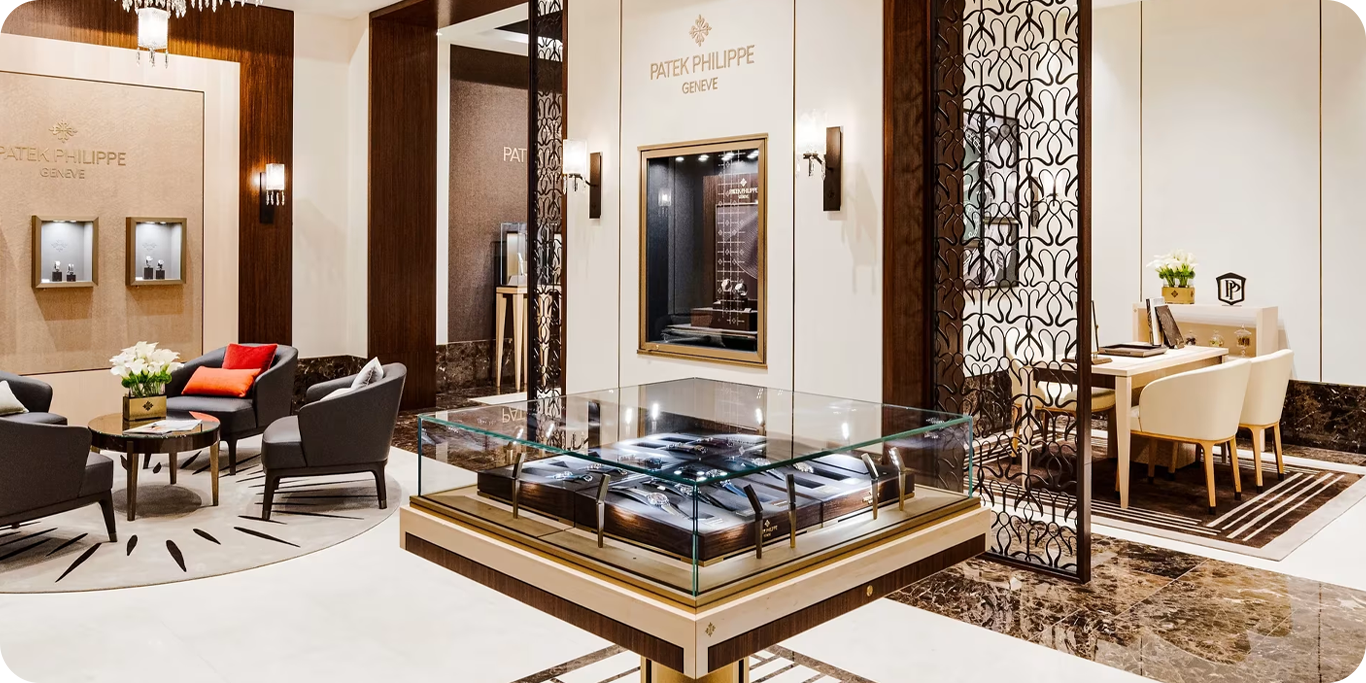
What Patek put together this week isn't organized around a single theme. It's a demonstration of range: a world-first astronomical complication sharing catalog space with a CHF 32,400 dress watch that hasn't existed in fifteen years, a first-ever wristwatch automaton sitting alongside an annual calendar dressed down enough to actually wear on a Tuesday. That last detail is small. It's also Patek acknowledging that its most practical complication deserves to be worn practically, which is the same argument the Nautilus at 50 is making in a different register.
The manufacture has spent five years carefully managing what the Nautilus means and who can have it. The 2026 anniversary pieces don't reopen that conversation. They close it, in precious metal, in limited quantities, with a movement born in the same decade as the watch itself. At the other end of the catalog, a 47mm astronomical complication with six patents and a world first sits at CHF 350,000, aimed at a buyer who isn't shopping for restraint. Both watches are making the same argument from opposite ends. Patek knows exactly what it is. That's enough.
Bezel is the top-rated marketplace for buying and selling luxury watches. We give you access to tens of thousands of the most collectible watches from the world's top professional sellers and private collectors. Every watch sold goes through our industry-leading in-house authentication process, so you can buy, sell, and bid with confidence.
Download the Bezel app on the iOS App Store or start searching for your next watch today at getbezel.com.
Bezel is available to download on the App Store now. Please reach out to our concierge team if there is anything we can help you with!

©2026 Bezel Inc.
All rights reserved.