
The racing chronograph explained: how Paul Newman's Daytona, McQueen's Monaco, and the Heuer Carrera turned motorsport's tool watches into the genre's most coveted.
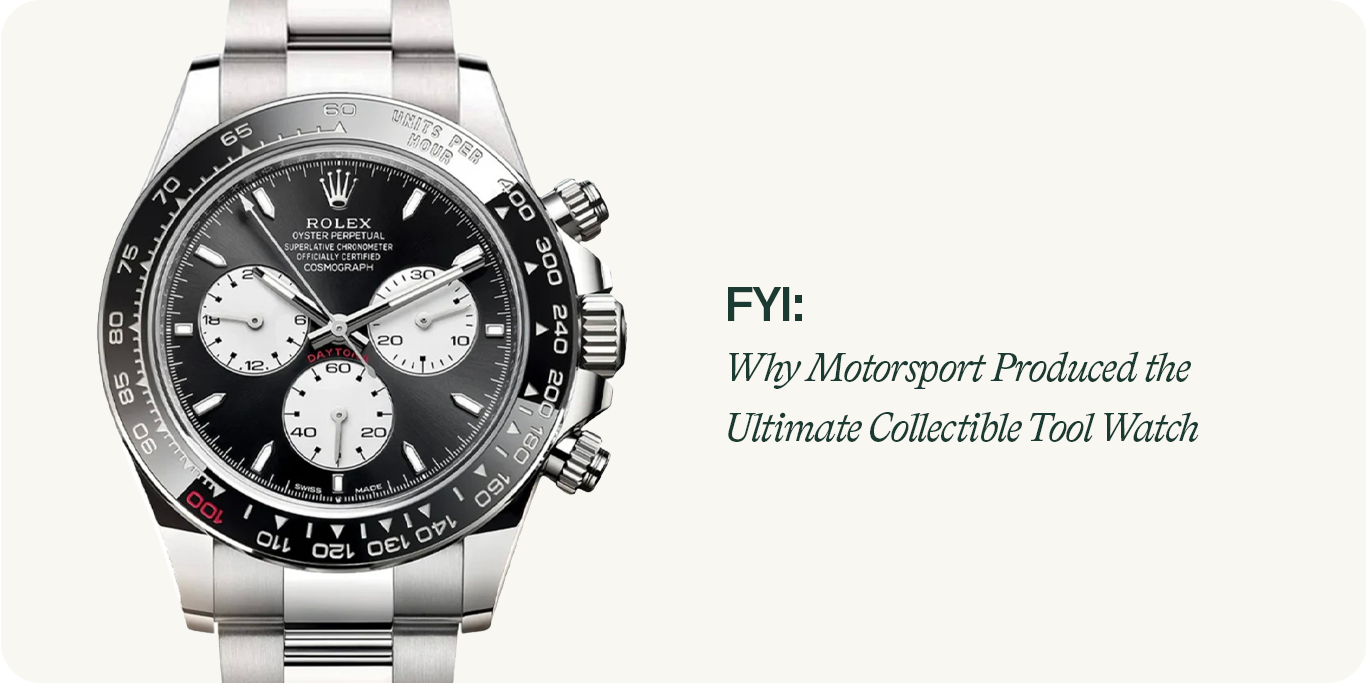
The racing chronograph is a strange kind of tool watch. It has only become more desirable as its original job has disappeared.
No serious race team needs a mechanical wristwatch to time a lap anymore. Modern motorsport runs on transponders, data feeds, pit wall computers, and timing systems precise to a level that makes a hand-wound chronograph look quaint. And yet the watches shaped by that world (Daytonas, Carreras, Autavias, Monacos, Compaxes and their many descendants) have become some of the most collectible objects in watch culture.
Motorsport gave the chronograph something rarer than function. It gave it theatre. Racing made time visible, dramatic, and public. A chronograph was not just measuring an abstract interval; it was attached to speed, risk, noise, petrol, heat, and consequence. It lived in a world where a second decided whether you were on pole, buried in the pack, or upside down in a gravel trap.
Plenty of watch categories have legitimate tool-watch origins. Dive watches went underwater. Pilot's watches lived in cockpits. Military watches got issued, used, abused, and sometimes forgotten. But racing chronographs had a different kind of advantage: their utility took place in public. Motorsport was photographed, filmed, sponsored, and televised almost as it happened. The watches were there not just as instruments but as visible participants in the drama, strapped to drivers, mechanics, actors, team owners, timekeepers, and the men who wanted to look like any of the above. The best motorsport watches do not just evoke cars. They feel like evidence.
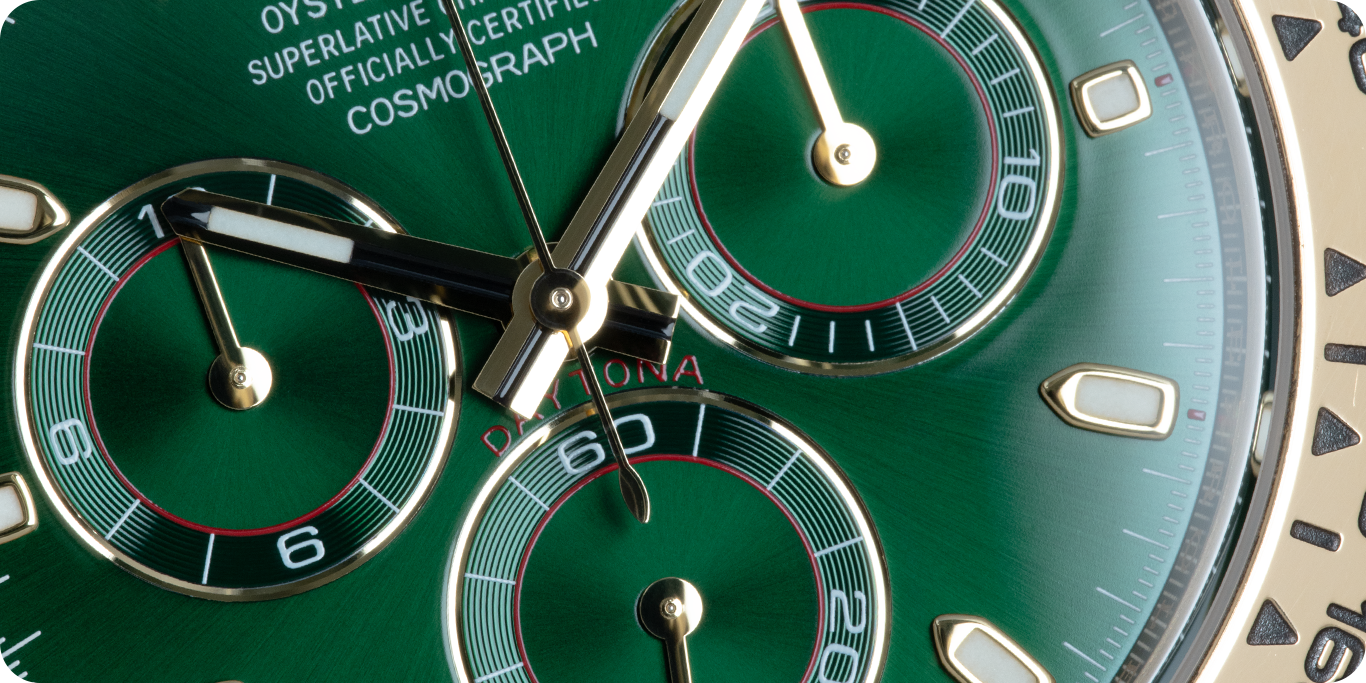
The racing chronograph's aesthetic wasn't born in a mood board. It was shaped by the need to read elapsed time quickly in a loud, distracted, high-pressure environment. Contrast mattered. Sub-dials, pusher feel, tachymeter scales, bold seconds hands, clear minute tracks, and bezels that could turn timing into speed or distance all earned their place by being useful first. The resulting watches have a visual honesty collectors respond to. A great Carrera isn't beautiful because someone tried to make it elegant. It's beautiful because almost nothing is wasted. The early Autavia became compelling because it descended from timing instruments and still looks faintly like one. The Daytona's bezel, registers, and pushers are now luxury signifiers, but they began as the grammar of use. Purpose ages better than decoration.
Motorsport also arrived at the right historical moment. The 1960s and early 1970s gave the racing chronograph its definitive shape, technically and culturally. This was the era when Heuer moved from dashboard timers and stopwatches into wrist chronographs perfectly suited to the pit lane. The Autavia became a wristwatch. The Carrera channeled Jack Heuer's obsession with legibility and the romance of the Carrera Panamericana. Rolex introduced the Cosmograph Daytona. The Monaco appeared at the end of the decade with a square case, a left-side crown, and the swagger of an object that seemed designed for television.
The timing matters because motorsport itself was changing. Racing was becoming more professional, more commercial, more visible. Sponsor logos spread across cars and suits. Drivers became international personalities. The paddock became a place where engineering, style, danger, and money collided. Watches fit naturally into that world, because a chronograph could be both a genuine instrument and a piece of identity. It told you what its owner wanted to be close to: speed, precision, nerve.
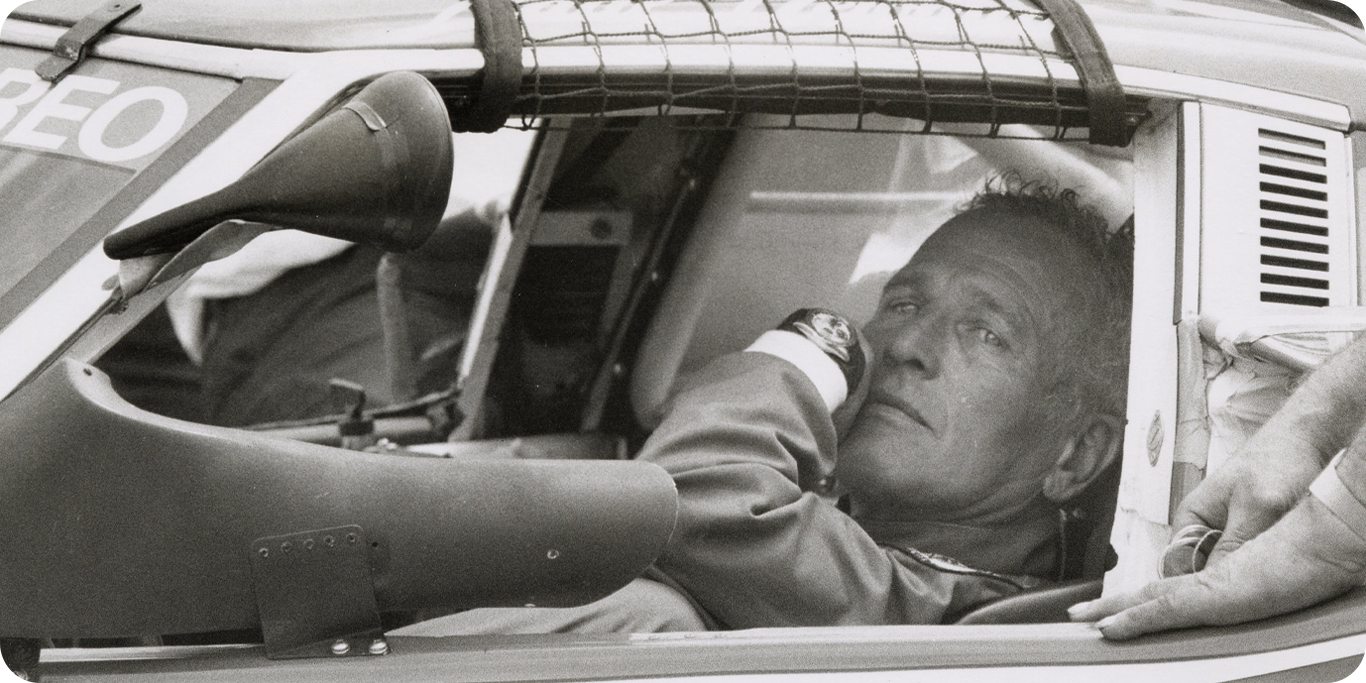
This is where motorsport watches separate themselves from most other tool categories. A watch connected to racing doesn't need to rely solely on technical merit. It can gather legitimacy through photographs, race history, team associations, famous owners, and cultural memory.
Paul Newman's Daytona is the unavoidable example, not because it explains the entire category, but because it proves the mechanism at its most extreme. The watch was already a Daytona. It was already a Rolex chronograph. But when it became Paul Newman's Daytona, tied to an actor, a racer, a style icon, and a specific human story, it turned into something else entirely. When it sold at Phillips in 2017 for $17.8 million, the price wasn't horological. It was narrative.
The same applies, in a different way, to the Heuer Monaco and Steve McQueen. McQueen wasn't wearing the Monaco because it was the obvious conservative choice. Quite the opposite. The Monaco was square, strange, blue, and aggressively modern. In Le Mans, on McQueen's wrist, it became fused with a particular image of motorsport: Gulf colors, fireproof suits, pit-lane tension, and a kind of laconic cool that watch brands have been trying to bottle ever since.
Then there are watches like the Universal Genève "Nina Rindt" Compax, which show how collector legitimacy can be built outside the most obvious brand hierarchy. Part of that watch's modern appeal comes from the fact that it appears connected to a real person moving through the world with real style. It was not born as a million-dollar trophy. It became desirable through taste, photographs, nickname culture, and the slow way collectors decide that a reference matters.
That's another reason motorsport has been so fertile for collectability. It creates nicknames and stories easily. A "Paul Newman" Daytona, a "Siffert" Autavia, a "Nina Rindt" Compax, a McQueen Monaco. These names are attempts to attach watches to human beings, and human beings are what make objects collectible at the highest level. Reference numbers matter, but they rarely move the heart on their own.
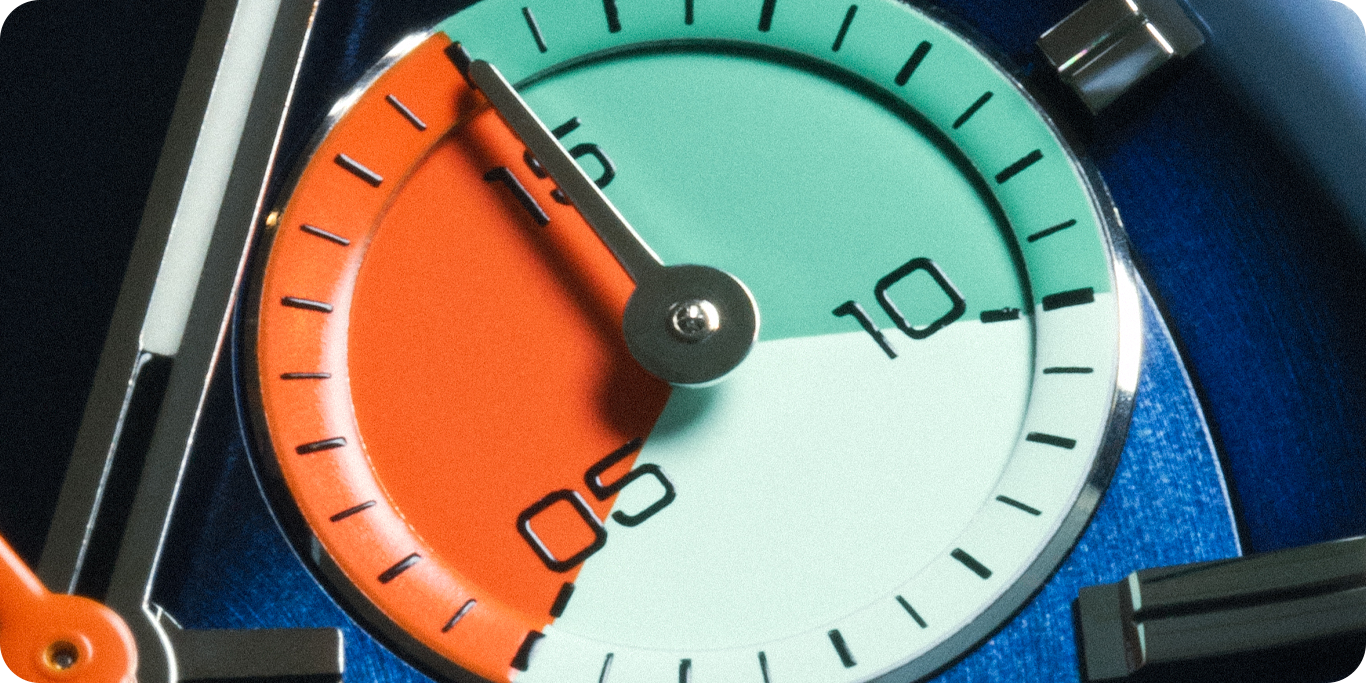
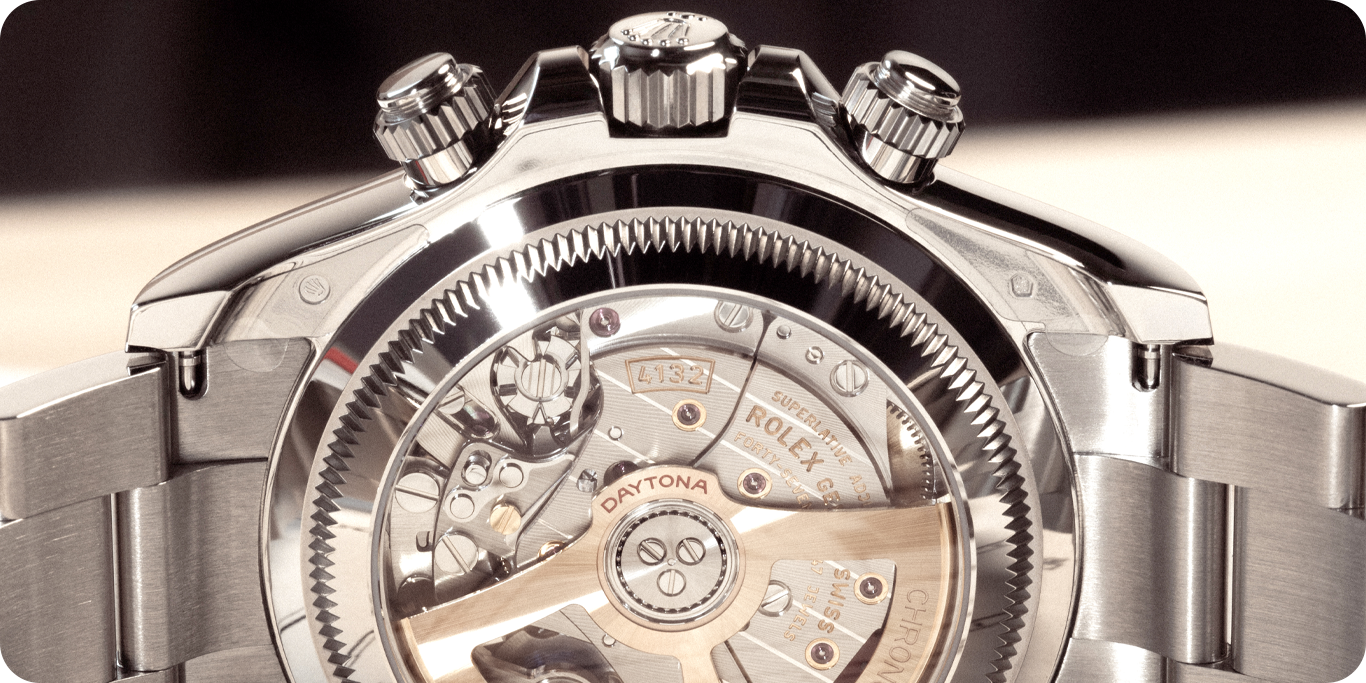
There's an irony in all of this. Motorsport watches became most powerful once motorsport no longer needed them. In their original context, a chronograph was useful. It could time a lap, calculate average speed, or help make sense of an interval. But as electronic timing took over, the mechanical racing chronograph was released from the burden of utility. It no longer had to be the best way to perform the task. It could become the memory of the task.
That's why these watches still work on the wrist. A modern owner is almost certainly not using a Daytona to calculate average speed over a measured mile. Most Carreras will never see a pit wall. Many Monacos will spend more time under a cuff than anywhere near a circuit. But the designs still carry the pressure of the environments that shaped them. The pushers, registers, scales, and hands remain as physical traces of a world in which timing mattered visibly.
The greatest motorsport watches aren't collectible because they're nostalgic accessories for car enthusiasts. They're collectible because they sit at the intersection of use and myth. They were designed to do a job, then absorbed the glamour and danger of the place where that job was done.
A dive watch suggests depth. A pilot's watch suggests altitude. A racing chronograph suggests the split second, which is inherently dramatic. That's why motorsport produced the ultimate collectible tool watch. It made time feel dangerous. It made function look glamorous. And for one extraordinary period, it made speed into something you could wear.
Bezel is the top-rated marketplace for buying and selling luxury watches. We give you access to tens of thousands of the most collectible watches from the world's top professional sellers and private collectors. Every watch sold goes through our industry-leading in-house authentication process, so you can buy, sell, and bid with confidence.
Download the Bezel app on the iOS App Store or start searching for your next watch today at getbezel.com.
Bezel is available to download on the App Store now. Please reach out to our concierge team if there is anything we can help you with!

©2026 Bezel Inc.
All rights reserved.